I rubbed plain yellow mustard over six raw pork chops before baking them, and here’s the short version: they came out bronzed, juicy, and gently tangy — and the mustard itself mostly disappeared into the seasoning. Nobody would guess it was there.
This isn’t a new idea. It’s one of those quiet, old-fashioned kitchen habits that costs almost nothing and adds maybe three minutes of work. But the difference in the pan was big enough that I keep doing it.
Here’s exactly what I used, why it works, and what to watch for so you get the same result.
What I Used
Six bone-in pork chops, each about 3/4 to 1 inch thick, just under 3 pounds total. Ordinary grocery-store chops — not heritage pork, and not those extra-thin breakfast chops that dry out if you look at them too long.
I patted them dry with paper towels first. I never skip this with meat headed for the oven, because a wet surface steams instead of roasts, and steaming means no color.
Then the mustard: about 1/3 cup of regular yellow mustard for all six chops, roughly a tablespoon each. I spread a thin, even layer over both sides with the back of a spoon. Clean hands work fine too. The meat should look covered, not caked. Think of it like the oil you’d use under a dry rub — a coating, not a sauce.
Over the whole pan, I seasoned with 1 1/2 teaspoons kosher salt, 1 teaspoon black pepper, 1 teaspoon garlic powder, 1 teaspoon onion powder, and 1/2 teaspoon smoked paprika. The mustard holds all of it right where you put it. No spices sliding off into the bottom of the dish.
Why the Mustard Works

Yellow mustard is just mustard seed, vinegar, water, and seasonings, and each part does a job. The vinegar brightens pork, which is a mild meat that can taste flat on its own. The mustard itself acts as a binder, gluing the spices to the surface so every bite is seasoned evenly instead of patchy.
The thin coat also helps the outside finish nicely in the oven. And no, the chops don’t come out tasting like a ballpark hot dog. The sharpness mellows a lot during baking. What’s left is a gentle zip underneath the savory, browned edges.
How I Baked Them
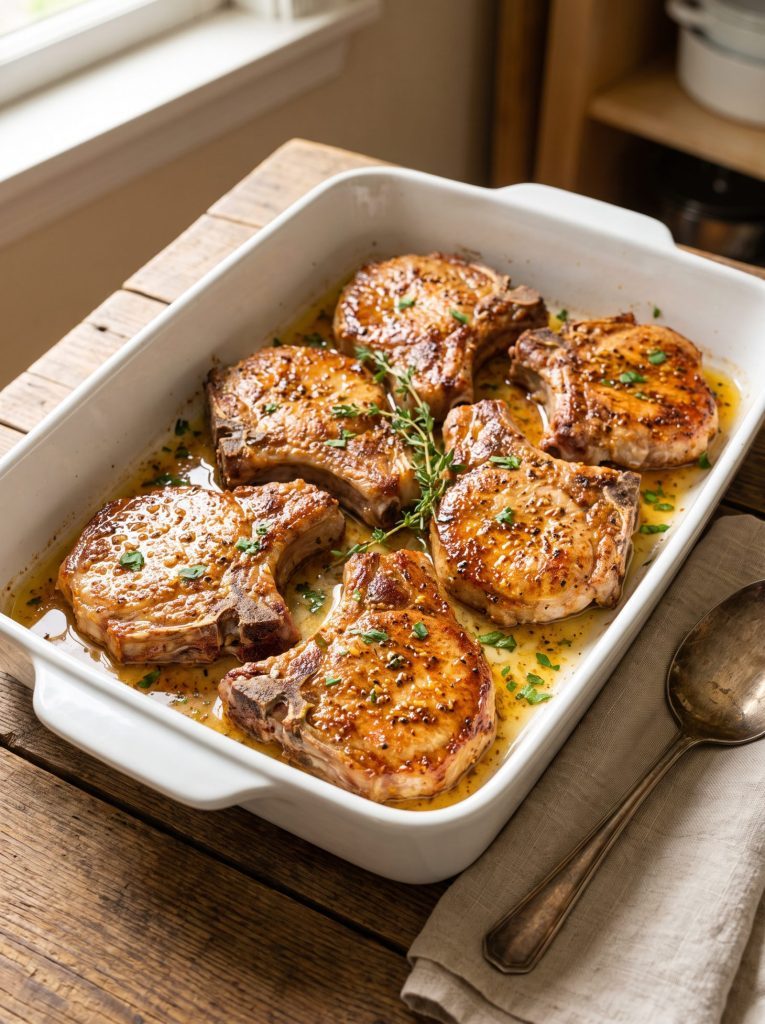
I arranged the chops in a single layer in a 9-by-13-inch baking dish with a little room between them. The oven was preheated to 375°F, and I baked them uncovered for 45 minutes. That’s right for medium-thick, bone-in chops.
If yours are thinner — say 1/2 inch — start checking around 25 to 30 minutes. Thin chops go dry in a hurry.
At the 30-minute mark, the tops were starting to deepen in color and a little pan juice had collected around the edges. By 45 minutes, the coating had settled into the meat and the spices had darkened just enough.
What Happened After 45 Minutes
The chops came out golden brown, lightly caramelized at the edges, and noticeably more fragrant than plain baked chops. There was no bright yellow layer sitting on top. The mustard had baked into the seasoning, leaving behind color and a subtle tang.
After a 5-minute rest, I cut into the first one. The inside was juicy and pale blush-white — not gray, not dry — and the juices stayed in the meat instead of flooding the plate. That’s always my test. A pork chop can look fine from across the room, but the knife tells the truth.
The flavor was fuller from the first bite, the pork tasting more savory and lively rather than sleepy. The outside had a delicate, lightly roasted finish instead of the rubbery or chalky feel oven pork sometimes gets. It wasn’t crispy like a fried chop, but it had structure. The coating also seemed to buy a little grace against overcooking — though any chop will dry out if you bake it to death.
Use a Thermometer, Not Just the Clock
The USDA safe temperature for pork is 145°F with a 3-minute rest. I pull chops when the thickest part reads 145°F to 150°F, then let them rest 5 minutes.
At 160°F or higher they’re still safe, but they start losing the tenderness you’re after. Ovens vary, baking dishes vary, and chop thickness varies — that’s why one person swears by 45 minutes and another says 28. The thermometer settles the argument.
Mistakes That Ruin the Trick
- Too much mustard. A heavy layer stays wet and overpowers everything. Keep it thin.
- Under-seasoning. Mustard is a helper, not a substitute for salt. Skip the proper seasoning and the chops still come out bland.
- Thin chops, full time. Half-inch chops left in for 45 minutes will disappoint you.
- Skipping the rest. Even 5 minutes on a plate, loosely tented with foil, lets the juices settle back into the meat.
Ways to Change It Up
Once you’ve tried the basic version, there’s room to play. Add 1 tablespoon brown sugar to the seasoning for a sweeter, glaze-like finish. Swap the smoked paprika for regular if you want it milder, or add a pinch of dried thyme or rosemary in colder weather.
Dijon works too, but it changes the personality — sharper, a little more grown-up. Yellow mustard keeps things humble and familiar, and I mean that as a compliment.
For sides, I served mashed potatoes made from 2 pounds of russets with butter and warm milk, plus green beans cooked with a little onion. The pan juices spooned over the potatoes are the best part. Buttered egg noodles, roasted carrots, fried cabbage, or a simple cucumber salad with vinegar and a pinch of sugar all fit right in.
Leftovers make a fine next-day sandwich — cold slices on white bread with mayonnaise and a few bread-and-butter pickles. To reheat, add a spoonful or two of broth to the pan, cover, and warm at 300°F for about 15 minutes so the meat doesn’t dry out. Chopped leftovers are also good stirred into fried potatoes with onions.
Would I Do It Again?
Without hesitation. A few tablespoons of yellow mustard turned an ordinary pan of pork chops into something juicier, more flavorful, and more memorable — for almost no money and almost no extra work. If you’ve got chops in the fridge and a bottle of mustard in the door, rub a little on before they hit the oven. Forty-five minutes later, you’ll see what I mean.