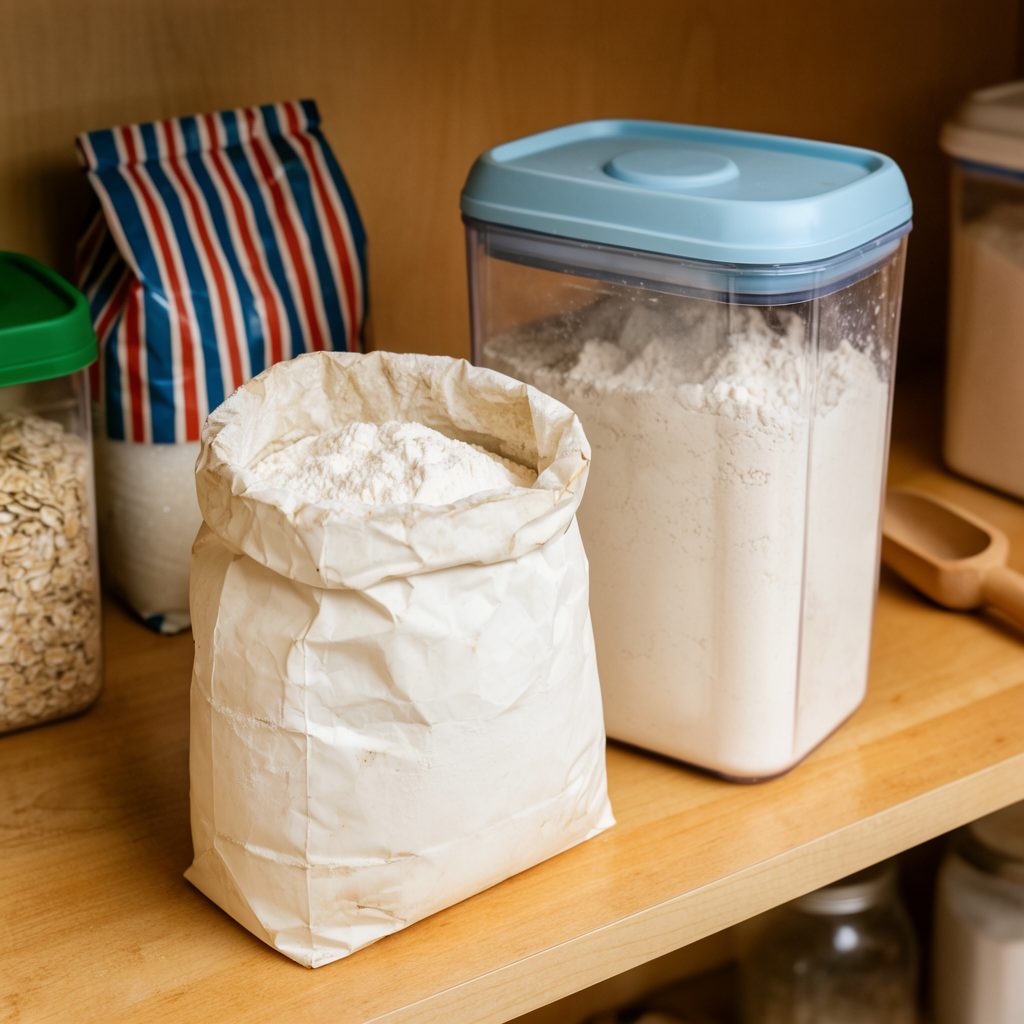
That bag of flour in the back of the pantry may still be usable long after its best-by date—but not always. White all-purpose flour keeps longer than whole-grain or nut flours, and smell, appearance, and storage matter more than the date alone.
A three-year-old bag is worth inspecting carefully. If it smells sour, musty, or like old oil, or if you see bugs, webbing, discoloration, or damp clumps, toss it. Cookies aren’t worth a rancid aftertaste.
The Type of Flour Makes a Big Difference

All-purpose flour lasts the longest because it has had most of its natural oils removed. Those oils are found in the grain’s bran and germ, and they’re what make whole-grain flours spoil faster.
Properly stored all-purpose flour can often last six to eight months past its best-by date. Some bags may stay acceptable longer, especially if they’ve been kept sealed in a cool place.
Whole-wheat and other whole-grain flours generally have a shorter window—often around three to six months. They contain more of the grain’s natural oils, which can turn rancid over time.
Gluten-free, nut-based, and specialty flours also need closer attention. Almond flour, for example, contains plenty of oil and can go stale or rancid much sooner than ordinary white flour.
A Best-By Date Isn’t an Automatic Toss Date
A best-by date usually refers to quality, not a hard safety deadline. Flour doesn’t suddenly become unusable at midnight on that date.
Still, age catches up with it. Flour slowly absorbs odors and moisture, and its oils can break down. Old flour may make baked goods taste flat, stale, bitter, or faintly oily. It can also affect texture: cakes may seem heavy, bread may not rise as well, and cookies can lose their clean, buttery flavor.
If the flour looks and smells normal and has been stored well, it may be fine for a simple batch of pancakes or biscuits. If you’re making a birthday cake, flaky pie crust, or your nana’s famous cookies, fresh flour gives you better odds of getting the result you wanted.
What Bad Flour Looks and Smells Like
Before you scoop old flour into a bowl, inspect it. You don’t need lab equipment—your eyes and nose will catch most problems.
Throw flour away if you notice:
- A musty, sour, or moldy smell
- A sharp rancid smell, similar to old nuts or stale cooking oil
- Bugs, larvae, webbing, or tiny moving specks
- Damp clumps that do not break apart easily
- Visible mold or unusual discoloration
- Signs that water got into the bag or container
Do not taste raw flour to test it. Raw flour can carry harmful bacteria, even when it looks perfectly clean, so a sniff and visual check are the safer route.
A few small lumps aren’t always a disaster. Flour can compact in storage, especially in a full container. But damp, hard clumps usually mean moisture got in, and moisture creates a much better environment for mold.
Why Flour Goes Bad
Flour’s main enemies are air, warmth, light, and moisture.
Whole-grain and nut flours spoil faster because their natural oils oxidize. That’s the same basic process that makes nuts, seeds, and old cooking oil taste rancid. Heat and light speed it up.
Moisture causes a different problem. It can make flour clump, encourage mold growth, and attract pantry pests. A paper bag tucked beside a steaming kettle or above the dishwasher is not doing the flour any favors.
Even white flour, which is relatively stable, can pick up pantry odors over time. Flour stored near onions, spices, cleaning products, or strongly scented foods may bring those flavors right into your muffins. Not the secret ingredient anyone wants.
The Best Way to Store Flour
The original paper bag is fine for short-term use, but an airtight container protects flour much better. Transfer it to a clean, dry container with a tight-fitting lid, then label it with the purchase date and flour type.
Store white flour in a cool, dark pantry away from the stove, dishwasher, and sunny windows. Keep the container dry, and always use a dry measuring cup or scoop.
For longer storage, refrigerate or freeze flour. Cold storage slows rancidity, especially in whole-wheat, gluten-free, and nut-based flours. Freezing can extend flour’s life to two years or more when it is tightly sealed.
Let refrigerated or frozen flour come closer to room temperature before baking if your recipe depends on precise dough temperature, as many yeast breads do. Keep the container closed while it warms so condensation does not form on the flour.
Don’t Expect Old Flour to Bake Like Fresh Flour
Flour that is merely old may not make you sick, but it can still let down your baking. Stale flour can produce dull-tasting cakes and cookies, while rancid flour brings an unpleasant bitter or oily flavor that baking won’t hide.
If flour has been sitting around for years, save yourself the disappointment and replace it. All-purpose flour is inexpensive compared with the butter, eggs, chocolate, and time that go into a batch of cookies.
Keep a date on every flour container, use older bags first, and store the rest airtight in a cool place. Your baking will taste better—and you won’t have to wonder what that three-year-old bag is doing in the pantry.