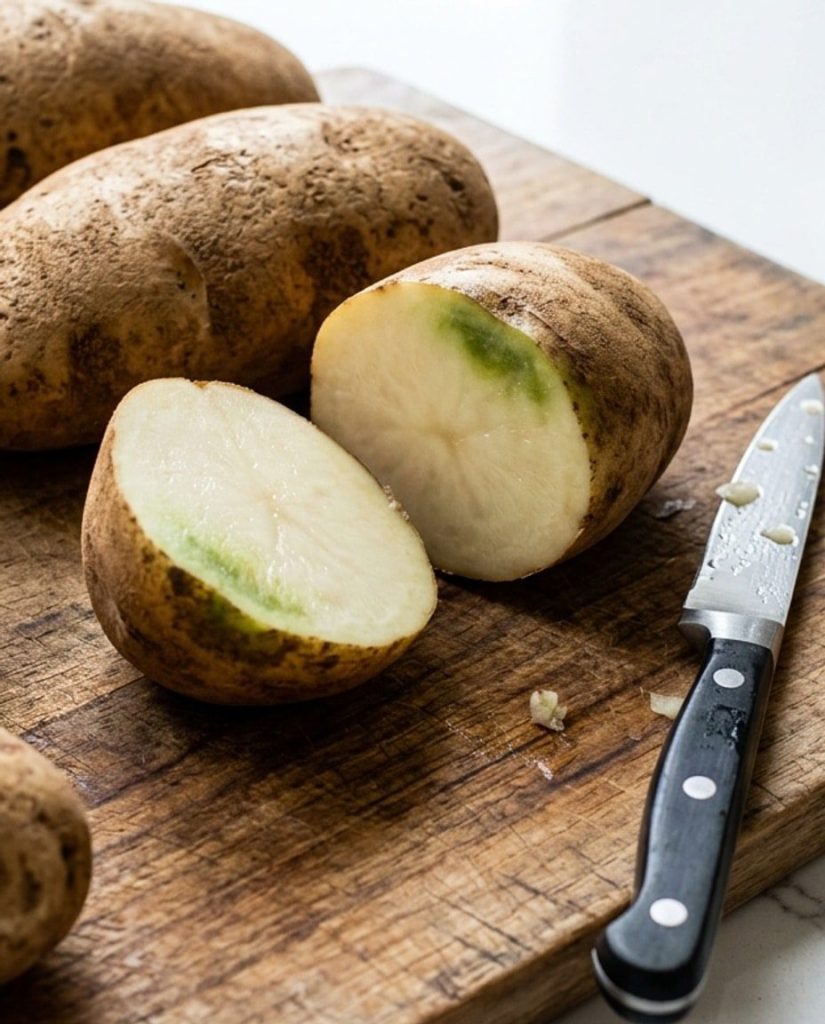
I reached into the bag for supper and pulled out a potato with a green patch under the skin. My sister says peel it and cook it. My mother always threw them out.
Here’s what that green really means.

What the Green Is
When potatoes sit in light, they make chlorophyll, the same green that’s in leaves. The green itself is harmless.
But light also makes potatoes produce more solanine, a natural bitter compound that can upset your stomach in large amounts. The green color is a warning sign that more solanine may be there too.
What to Do
Food-safety guidance is simple:
- Cut away all the green parts and any sprouts or “eyes.”
- Peel the potato. Most of the solanine sits close to the skin.
- If the potato is very green all over, or tastes bitter after cooking, throw it out.
A small green patch, cut off generously, is fine.
How to Keep Potatoes From Turning Green
- Store them in the dark. A paper bag in a pantry or a cupboard works well.
- Keep them cool and dry, away from the stove and sunny windows.
- Buy what you’ll use in a week or two.
- Check the bag when you bring it home. Clear plastic bags let in light.
Frequently Asked Questions
Does cooking get rid of it?
No. Boiling, baking or frying doesn’t remove solanine, so cut the green away first.
Are green potato chips or fries a problem?
An occasional green edge isn’t a worry. Skip any that taste bitter.
What about sprouted potatoes?
If they’re still firm, cut out the sprouts and use them. If they’re soft and wrinkled, toss them.
So, sister or mother? Both had a point: cut a little green away, but a potato that’s green all over goes in the trash.