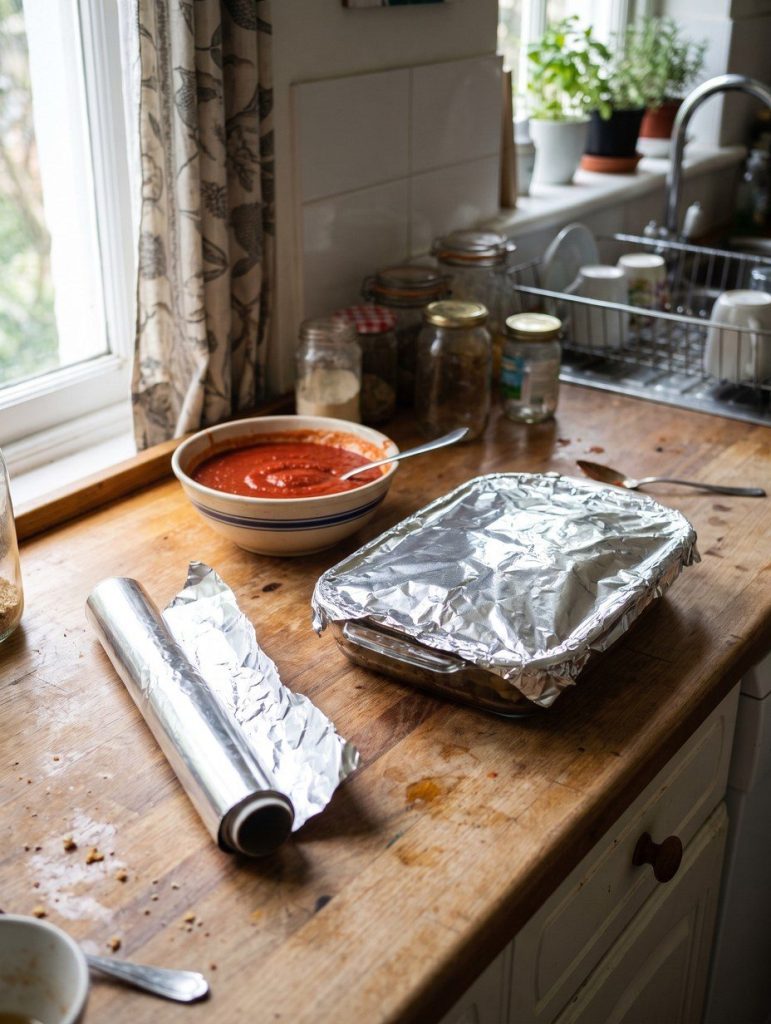
Foil is the thing I reach for without thinking. Cover the dish, line the tray, wrap the leftovers, done.
Then I wrapped half a pan of lasagna in it, put it in the fridge, and opened it two days later to small gray holes in the foil and a metallic taste through the top layer.
That sent me looking into it, and it turns out there are a handful of things foil genuinely doesn’t belong near.
1. Anything Acidic — Tomato, Citrus, Vinegar

This is the one that got me.
Acid reacts with aluminum. Leave tomato sauce, lemon, lime or vinegar in contact with foil for long enough and the foil starts to corrode — which is where the tiny holes come from. Some of that aluminum ends up in the food, and you can taste it.
Short contact is fine. Covering a tray of tomato-based pasta while it rests for ten minutes won’t hurt anything. It’s the hours in the fridge that do the damage.
For anything acidic going into the fridge, use a lid or a glass container. If you must use foil, put a layer of plastic wrap between the food and the foil.
2. Very Salty Foods, for Storage
Salt does the same thing as acid, through a different route. It speeds up the corrosion, which is why a heavily salted dish wrapped tight in foil can come out with the same gray patches.
Cured meats, brined things, salty leftovers — give them a container.
3. Leftovers You Want to Keep Properly
This one is about food safety rather than chemistry.
Foil doesn’t seal. It molds beautifully to a dish and looks like it’s sealed, but air moves in and out around every crease and fold.
That means food dries out faster, and — more importantly — it doesn’t cool down at a safe rate or stay protected the way an airtight container does.
Foil is a cover, not a seal. For anything going in the fridge for more than a few hours, use a container with a lid.
4. The Microwave
Most people know this one, but it’s worth being precise about why.
Microwaves are reflected by metal. Foil doesn’t heat the food — it bounces the energy around, and at any thin edge or crumpled corner the charge concentrates until it arcs. That’s the spark, and it can damage the oven or start a fire.
No foil in the microwave. No takeaway containers with foil lids either.
5. The Bottom of Your Oven
Lining the oven floor with foil to catch drips feels like a sensible bit of housekeeping. It’s one of the most common ways people damage an oven.
Foil on the floor blocks the heat vents and reflects heat back at the element. That throws the temperature off — often badly — and in many ovens it will void the warranty. On some it can crack the enamel.
If you want to catch drips, put a baking tray on the rack below whatever you’re cooking. Same effect, nothing blocked.
While We’re Here: Shiny Side or Dull Side?
It makes no difference.
The two sides look different purely because of how the foil is manufactured — it’s rolled in pairs at the final stage, so the sides touching the rollers come out shiny and the sides touching each other come out dull.
There’s no coating and no functional difference. Use whichever side comes up.
The one exception is non-stick foil, which genuinely is coated on one side, and the box will tell you which.
What Foil Is Genuinely Good At
Lining a baking sheet. Tenting a roast so the top doesn’t burn. Wrapping potatoes for the oven. Covering a casserole while it bakes. Keeping food warm on the short walk from oven to table.
All of those are short, hot, non-acidic jobs, and it’s excellent at every one.
It’s the long, cold, acidic ones where it quietly lets you down.