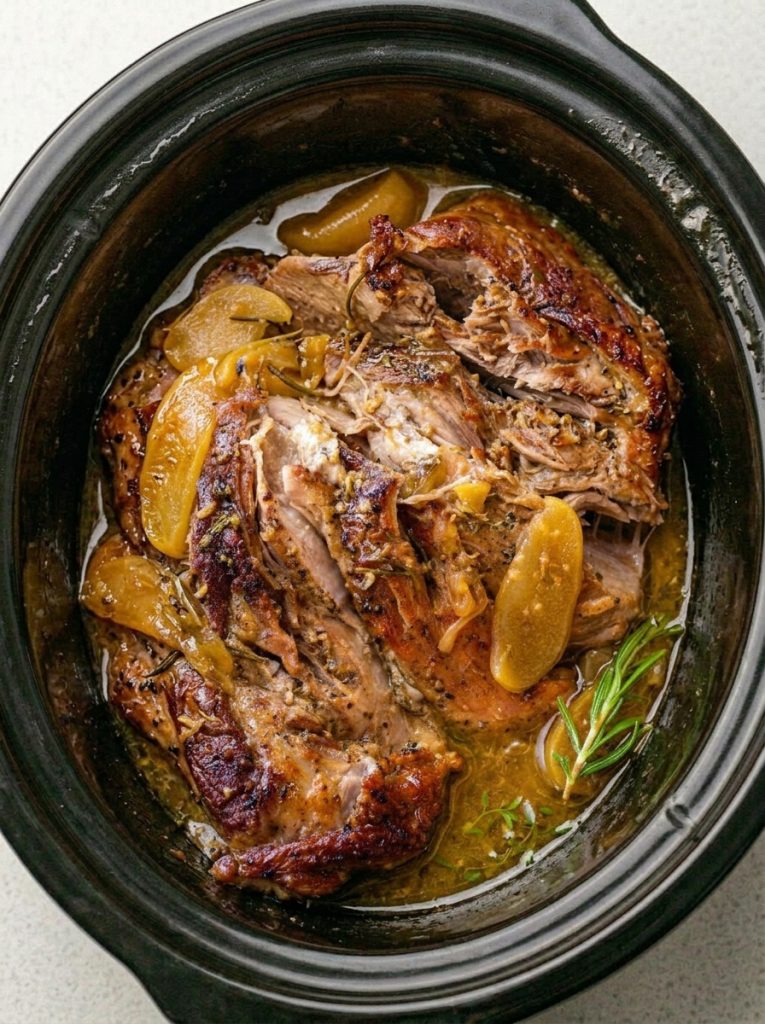
This slow cooker apple cider pork roast is one of those dinners that does all the heavy lifting for you. Four ingredients, five minutes of morning prep, and you come home to fall-apart pork in a glossy, sweet amber glaze that tastes like you spent all day on it.
Why You’ll Love It
Only 4 ingredients — pork shoulder, apple cider, apples, brown sugar. That’s the whole list.
Truly hands-off cooking — everything goes in before work and dinner is ready when you walk in the door. Try our 3-Ingredient Slow Cooker Pork and Sauerkraut next.
Fall-apart tender — low and slow gives you pork that shreds effortlessly with two forks, coated in a sticky, sweet glaze.
Incredibly versatile — serve it over mashed potatoes, pile it on buns, or use the leftovers in quesadillas, grain bowls, or stuffed sweet potatoes.
Leftovers are even better — the pork soaks up the juices overnight and reheats beautifully all week.
A Few Notes on the Ingredients
The apple cider is the thing — and I mean real cider, the unfiltered cloudy kind, not the clear juice that’s just pretending. In a pinch, unsweetened apple juice works, but the cider has this tart depth to it that the juice doesn’t. Do not, under any circumstances, accidentally grab the apple cider vinegar. I’ve seen it happen. It’s a bad day. If you like this, you'll love our Slow Cooker Kalua Pig – A Taste of Hawai‘i Without Leaving Home.
For the apples, honestly almost anything sweet works — Gala, Honeycrisp, Fuji. I’ve used whatever was on its way out in the fruit bowl and it’s been fine. The apples basically dissolve into the juices by the time it’s done, so nobody’s eating discrete apple slices. They’re more like… apple-flavored softness woven through everything.
Pork shoulder is the cut you want. It goes by a few names — pork butt, Boston butt, whatever the butcher is calling it that week. It has enough fat marbled through that it stays moist through a long slow cook. Pork loin will work if that’s what you have, but you’ll need to pull it earlier and it won’t have quite the same lush, falling-apart quality. It’s still good. Just different.
The brown sugar — I use light brown, packed, half a cup. My mother probably would have used more. She had a sweet tooth and strong opinions about both, and I’ve probably landed somewhere in between her and what the original recipe would have said, though I’ve made this so many times I’m not sure I remember where I got it from anymore.
Ingredients
3 to 4 pounds boneless pork shoulder, trimmed of the hard, waxy fat (the soft stuff can stay)
2 cups apple cider — the good cloudy kind
2 large apples, cored and sliced into wedges (I do maybe eight slices per apple, I don’t measure)
About half a cup of light brown sugar, packed — maybe a little more if your apples are tart

How to Make It
The night before, you do nothing. That is the first step: nothing. For another easy option, see our Slow Cooker 3-Ingredient BBQ Pulled Pork.
In the morning — and I mean early enough that you have eight hours before dinner — lay your apple slices across the bottom of the slow cooker. This matters more than it sounds like it does. The apples create this little elevated bed that keeps the pork from sitting directly in liquid, and they release their own juice as they cook down. It’s a small thing but it makes a difference.
More recipes you might like


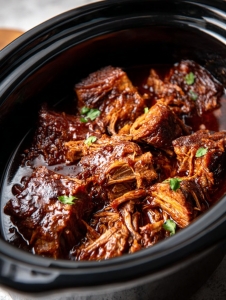
Put the pork on top of the apples. If there’s a fat cap on one side, put that side up — as it cooks, the fat sort of bastes the whole thing from above, and it’s worth the effort of flipping it if yours came out the other way.
Sprinkle the brown sugar over the top and sides of the pork. Don’t just dump it — pat it gently so it actually adheres. It’ll melt into a sticky crust and then into the cooking juices, and that’s where the glaze comes from.
Pour the apple cider around the sides, not over the top. You don’t want to wash off that sugar. The liquid should come about halfway up the roast — if your slow cooker is on the larger side, you might need a splash more cider, or a bit of water. Don’t stress about this.
Put the lid on and walk away.
Cook on LOW for eight to ten hours. I almost always do ten, because I leave before seven and don’t get home until after five, and it’s still perfect. If you want to do HIGH, that’s four to five hours, and it’ll be fine — but low and slow is the thing. I’ve done it both ways and the low version is noticeably softer. There’s something about the patience of it.
When you get home, the house will smell like caramel and autumn and something savory underneath. That’s a normal reaction, yes.
Use two forks to pull the pork apart right in the slow cooker. It shouldn’t resist you at all — if it’s fighting back, give it another half hour. Stir the shredded meat with the cooked apples and all those glossy amber juices. Taste it. Adjust sweetness if you want, though I rarely do.
If the juices seem thin, you can leave the lid off, turn it to HIGH, and let it reduce for fifteen or twenty minutes while you set the table. It thickens up into something almost syrupy. That’s when I start sneaking bites directly from the pot. You might also like our Slow Cooker 4-Ingredient Kalua Pig.
Variations
A version with a cinnamon stick thrown in at the start and a splash of bourbon added in the last hour is excellent, though I’d never put it in the base recipe because then it becomes five ingredients and I lose my whole talking point.
I’ve also done this with a pork loin when that was what was on sale — it works, but you have to watch it closer and pull it sooner. Probably six hours on low. You lose a little of the richness but it’s still very good.
If you want a hint of spice, just add a pinch of cinnamon or nutmeg when you serve it. At the table. Keeps the base recipe clean.
Leftovers
This is actually why I usually make the larger roast even when it’s just two of us. The leftover pork is, maybe, better the next day. I’m not sure why. Something about the juices settling back in overnight.
We’ve done it in quesadillas with sharp cheddar — unexpected, genuinely great. Stuffed into baked sweet potatoes. Spooned over egg noodles with a little extra cider drizzled on top. One time I mixed the shredded pork with the cooking juices and poured it over a simple green salad as a warm dressing situation. My husband looked at me like I’d lost my mind. He went back for seconds. Try our Slow Cooker Hoisin Pork with Pineapple and Bell Peppers next.
Keeps in the fridge for four or five days. Freezes beautifully if you store it with some of the juices so it doesn’t dry out — up to three months, though I’ve never actually managed to keep it that long. If you like this, you'll love our The 4-Ingredient Slow Cooker BBQ Pork That’s Basically a Warm Hug in Food Form.
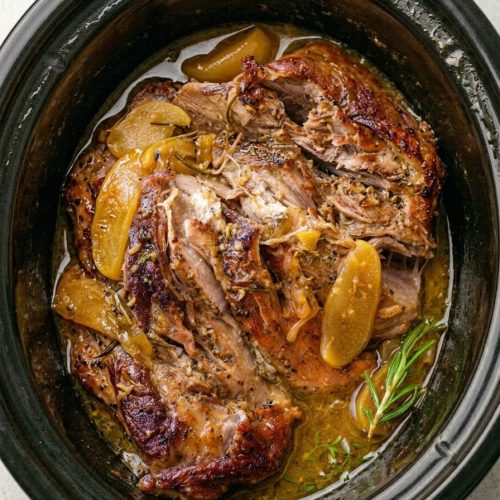
Slow Cooker Apple Cider Pork Roast
Want This Recipe Later?
Ingredients
- 3 to 4 pounds boneless pork shoulder trimmed of the hard, waxy fat; soft fat can stay
- 2 cups apple cider use real cloudy apple cider, not apple cider vinegar
- 2 large apples cored and sliced into wedges, such as Gala, Honeycrisp, or Fuji
- 1/2 cup light brown sugar packed; use a little more if the apples are tart
Instructions
- Lay the apple slices across the bottom of the slow cooker to create a bed for the pork.
- Place the pork shoulder on top of the apples, positioning it fat-side up if there is a fat cap.
- Sprinkle the brown sugar over the top and sides of the pork, patting it gently so it adheres.
- Pour the apple cider around the sides of the pork, not over the top, so the sugar stays in place; the liquid should come about halfway up the roast.
- Cover and cook on LOW for 8 to 10 hours, or on HIGH for 4 to 5 hours, until the pork is very tender.
- The pork should pull apart easily with two forks; if it resists, cover and cook for another 30 minutes.
- Use two forks to pull the pork apart right in the slow cooker.
- Stir the shredded pork together with the cooked apples and glossy apple cider juices until well coated.
- If the juices seem thin, leave the lid off, turn the slow cooker to HIGH, and let the juices reduce for 15 to 20 minutes before serving.
Notes
Nutrition
Nutrition values are estimates based on the listed ingredients and serving count. Actual values vary with brands, cuts and portion sizes.