Most people think of mustard as something you squeeze onto burgers at cookouts or spread onto a deli sandwich when lunch feels a little sad. Fair enough. But tucked behind that bright yellow color and sharp tang is an old-school remedy that’s been hanging around medicine cabinets, farmhouse kitchens, and folk traditions for generations.
And honestly? Some of it still holds up surprisingly well.
Long before fancy muscle rubs and menthol patches filled drugstore shelves, people reached for mustard to ease aches, calm cramps, and even help with chest congestion. Not because it was trendy. Because it was there — cheap, potent, and weirdly effective when used correctly.
That last part matters.
A lot of people use mustard the wrong way. They slather it on too thick, leave it on too long, or skip basic precautions entirely. Then they wonder why their skin feels irritated instead of soothed. Here’s the thing: mustard is powerful. It’s not some gentle spa ingredient pretending to heal your body with cucumber slices and soft music in the background.
Used properly, though, mustard can offer temporary relief for minor discomforts. Burns, cramps, stings, congestion — there’s a reason this remedy has survived for centuries.
Let me explain.
Wait… Mustard as Medicine?
It sounds strange at first. A little like the kind of advice your grandmother gives while stirring soup and refusing to measure ingredients. But mustard’s medicinal history is surprisingly extensive.
Ancient Greek and Roman healers used mustard seeds for their warming effects. In Ayurvedic traditions, mustard was valued for stimulating circulation and easing inflammation. Across Europe and parts of North America, mustard plasters became common home remedies during cold winters when chest congestion hit hard.
And there’s actual chemistry behind it.
Mustard seeds contain compounds called glucosinolates. When combined with water, they create allyl isothiocyanate — the same pungent compound responsible for mustard’s sharp smell and that unmistakable sinus-clearing kick.
That compound acts as a counterirritant. In plain English? It creates warmth and stimulation on the skin’s surface, which can distract the nervous system from deeper aches or discomfort.
Kind of like rubbing a sore elbow after bumping it into a doorframe. The new sensation competes with the original pain.
Not magic. Just biology doing its thing.
The Biggest Mistake People Make
People assume more mustard equals more relief.
It doesn’t.
In fact, applying thick layers directly onto skin is probably the fastest route to irritation. Mustard is potent stuff. Leave it sitting too long and you may end up with redness, burning, or even mild skin damage — especially if your skin leans sensitive.
That’s why traditional mustard remedies usually involved dilution. Flour. Cloth barriers. Vinegar mixtures. Thin applications.
There was a method to the madness.
And yes, some old remedies were definitely over-the-top. Victorian-era mustard plasters occasionally bordered on torture devices. But modern home use can be gentler and safer if you keep it simple.
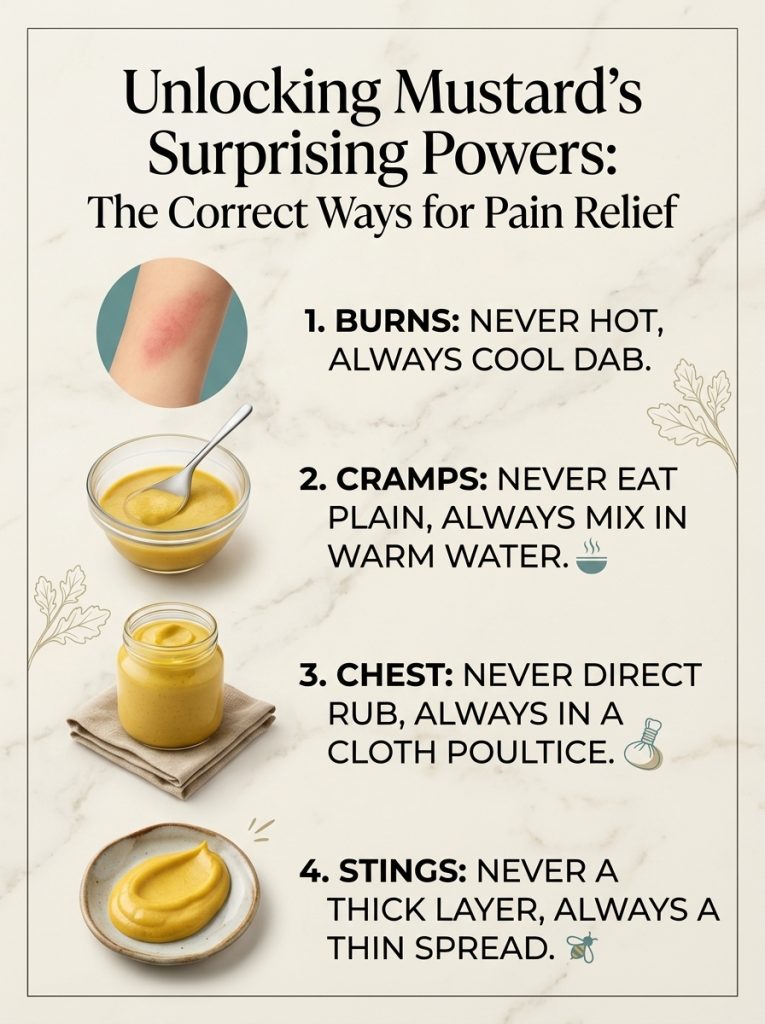
For Minor Burns: Cooler Is Better
A lot of people instinctively think warmth helps pain. Sometimes it does. But fresh burns are different.
The first step for a minor kitchen burn is always cool running water. Not ice. Not butter. Not toothpaste — somehow that myth still survives. Just cool water for several minutes.
After that, some people use a thin layer of cool mustard paste for temporary soothing.
The key word is thin.
Spread a light coating over the affected area and leave it on briefly — about 15 to 30 minutes at most. Then rinse thoroughly.
Why does it help? Partly the cooling sensation, partly the counterirritant effect. Some users also report that mustard helps reduce that lingering heat sensation after a small burn.
Still, this only applies to minor burns. Anything blistered, severe, or widespread needs proper medical care. No condiment belongs anywhere near a serious injury.
That should go without saying, but here we are.
Muscle Cramps? There’s a Reason Athletes Talk About Mustard
You may have heard about athletes taking mustard packets during endurance events. Marathon runners, pickleball players, cyclists — it pops up more often than you’d expect.
Part of the interest comes from mustard’s magnesium content and its possible role in muscle relaxation. Another theory suggests the sharp compounds in mustard trigger sensory receptors that interrupt cramping signals temporarily.
The science is still somewhat mixed, honestly. Some studies support the sensory-receptor theory more than the mineral explanation. But anecdotal reports keep piling up.
For topical relief, many people mix:
- 1 tablespoon mustard
- 1 tablespoon apple cider vinegar
- A pinch of salt
Massage it gently into cramped muscles, then rinse after about 20 minutes.
It’s warming without being overpowering. Well — unless you overdo it. Then your calf may smell like a sandwich shop for the rest of the afternoon.
Small tradeoff, maybe.
The Old Mustard Poultice Still Exists for a Reason
Chest congestion remedies have changed a lot over the years, but mustard poultices never fully disappeared.
There’s something deeply old-fashioned about them. The kind of remedy that feels pulled from a handwritten recipe card stained with soup stock and tea rings.
But many people still swear by them during cold season.
A basic mustard poultice usually combines mustard powder with flour and water to soften the intensity. The paste gets spread onto cloth rather than directly onto skin.
That barrier matters.
Placed on the chest for about 15 minutes, the poultice creates warmth that may help loosen congestion and encourage easier breathing. Similar idea to vapor rubs, though stronger and earthier.
Not exactly glamorous, but neither is being congested at 2 a.m.
For Stings and Bites: Less Really Is More
When dealing with minor insect stings, mustard’s anti-inflammatory properties may help reduce swelling and discomfort temporarily.
Again — thin layer. Very thin.
After cleaning the area, dab on a small amount and leave it briefly before rinsing off. The warming sensation can help distract from itching or soreness.
Some people overapply because they assume the stronger burn means it’s “working better.” That’s usually not true. Irritated skin just becomes another problem to manage.
And nobody wants to explain a mustard-shaped rash.
Mustard Oil vs. Mustard Paste — They’re Not the Same Thing
This trips people up constantly.
Mustard oil is concentrated and commonly used in massage traditions, especially in South Asian households. It’s powerful, deeply warming, and typically used sparingly.
Mustard paste is milder and easier for casual home remedies.
If you’re experimenting with simple topical applications, paste is generally the safer starting point. Oil can feel intense very quickly, especially on sensitive skin or after hot showers when pores are more open.
A little caution goes a long way here.
Let’s Talk Safety for a Second
Natural remedies sometimes get treated like they’re automatically harmless. They’re not.
Poison ivy is natural too.
Before using mustard topically:
- Test a small patch first
- Avoid broken or damaged skin
- Never leave it on too long
- Rinse thoroughly afterward
- Stop immediately if burning becomes intense
And if pain is severe, persistent, or unexplained, see a healthcare professional instead of trying to DIY your way through it with pantry ingredients.
Home remedies can complement care. They shouldn’t replace real medical evaluation when something serious is going on.
So… Does Mustard Actually Work?
Sometimes, yes.
Not as a miracle cure. Not as internet folklore promising impossible results. But as a modest, old-school remedy for temporary relief? There’s enough history — and enough science — to explain why people still use it.
That’s probably the most interesting part.
In an era packed with expensive wellness gadgets and aggressively marketed recovery products, one of the oldest pain-relief tricks around still comes from a yellow bottle sitting next to the ketchup.
Funny how that works.