A funny thing happens when emotions get loud — the kitchen suddenly becomes very interesting.
You’re not necessarily hungry. You already ate dinner an hour ago. Yet there you are, standing in front of the fridge with the door open, staring at leftover pasta like it personally understands your problems. Most people have done it. Some of us do it more than we’d like to admit.
Food and emotions have always been tangled together. Long before wellness podcasts and calorie-counting apps existed, people cooked when they celebrated, baked when they grieved, and gathered around meals when life felt heavy. So emotional eating isn’t some strange modern failure. It’s human. Messy, sometimes frustrating, but human.
The trouble starts when food becomes the main way we handle stress, loneliness, boredom, or exhaustion. That’s when cravings stop feeling comforting and start feeling automatic. You eat to soothe yourself, then feel guilty afterward, which somehow makes you want another snack. Kind of cruel, really.
Still, not every craving is meaningless. Sometimes your body — and honestly your brain too — is trying to ask for support in the only language it knows. And weirdly enough, certain foods really can help stabilize mood, calm the nervous system, or make rough days feel a little more manageable.
Not magically. Not overnight. But enough to matter.
Why Emotions Send Us Looking for Snacks
Here’s the thing nobody explains very well: emotional eating usually isn’t about weakness. It’s chemistry mixed with habit, memory, stress, and convenience.
When people feel overwhelmed, the brain looks for relief fast. Foods high in sugar or fat trigger dopamine, the little reward chemical that says, “Ahhh, yes, this feels better.” Stress also pushes cortisol levels higher, and cortisol has a habit of making people crave salty, comforting, carb-heavy foods. Which explains why nobody stress-craves plain lettuce.
The brain wants relief. Quick relief.
And sometimes food works for a minute. That’s why the pattern sticks.
But once you start paying attention to what you crave during certain moods, things get interesting. Certain foods tend to help particular emotional states more than others. It’s not some mystical wellness trick. A lot of it comes down to nutrients affecting neurotransmitters, blood sugar, and the nervous system.
So let’s talk about it — the real-life version, not the sterile textbook version.
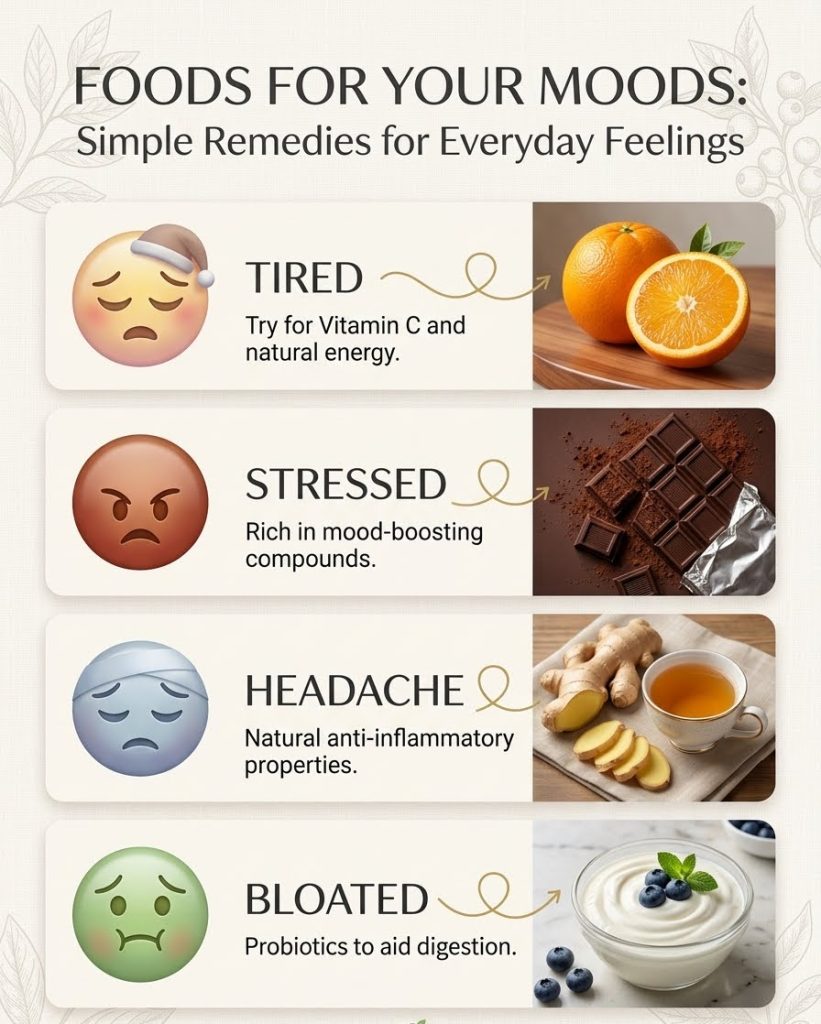
When Stress Hits Hard, Dark Chocolate Usually Wins
Not the waxy candy-bar kind. Real dark chocolate.
A square or two of dark chocolate — especially higher cocoa varieties — can actually help reduce stress hormones while nudging serotonin upward a little. There’s also something ritualistic about it. You slow down. You savor it instead of inhaling it from a vending machine while answering emails.
And honestly? That pause matters as much as the chocolate sometimes.
People love pretending stress can be solved with productivity hacks, but occasionally your nervous system just wants you to sit down for five minutes and stop clenching your jaw.
Exhausted? Your Body Probably Wants Stability, Not Sugar
This one catches people off guard.
When you’re tired, sugary snacks feel like the answer because they give fast energy. But then comes the crash — the heavy-eyed, irritable, “why am I suddenly angry at the dishwasher?” feeling.
Foods with protein and healthy fats tend to work better. Greek yogurt, almonds, walnuts, peanut butter…they keep energy steadier instead of throwing your blood sugar onto a roller coaster.
There’s growing research about the gut-brain connection too, which sounds trendy until you realize your stomach and mood genuinely influence each other all day long. Ever felt anxious and suddenly nauseous? Same system.
Bodies are weird. Fascinating, but weird.
Feeling Bloated and Miserable? Keep It Simple
Most people make bloating worse by panic-snacking through it.
Salty chips. Fizzy drinks. Random handfuls of crackers. Then suddenly they feel even more uncomfortable.
Cucumber, ginger tea, watermelon — lighter foods with high water content often help more. Ginger especially has this calming effect on digestion that feels almost immediate sometimes.
Warm tea helps too, though maybe part of that is emotional. A warm mug has a way of convincing your brain everything might be okay eventually.
Anxiety Has a Funny Relationship With Carbs
Ever notice how anxious people rarely crave grilled chicken breast?
Anxiety burns through energy quickly, and the brain starts looking for comfort and stability. Oatmeal, bananas, whole grain toast — these slower carbs can help support serotonin production and keep blood sugar from swinging wildly.
That’s important because blood sugar crashes can mimic anxiety symptoms: shakiness, sweating, irritability, racing thoughts. Sometimes people think they’re emotionally spiraling when they actually just haven’t eaten properly all day.
Not always. But often enough.
Anger Craves Crunch Sometimes
This sounds ridiculous until you experience it.
Crunchy foods can genuinely feel satisfying when you’re irritated because they release physical tension. Carrots, popcorn, pumpkin seeds — there’s something grounding about the act of chewing when your brain feels loud.
Chamomile tea can help too, especially if anger is really stress wearing a different outfit.
Because let’s be honest, a lot of adults aren’t actually angry. They’re overstimulated, underslept, and one minor inconvenience away from losing patience in a grocery store parking lot.
Sadness Usually Wants Comfort More Than Perfection
When people feel low, they often swing between two extremes: eating everything in sight or trying to “eat clean” to regain control.
Neither approach feels particularly comforting.
Foods rich in omega-3 fats, like salmon or walnuts, may support mood over time. Avocados help too. But emotional comfort matters alongside nutrition. A homemade soup, warm rice bowl, roasted potatoes, buttery toast — foods connected to memory and familiarity tend to calm people for a reason.
Humans attach emotions to meals. Always have.
Certain smells can drag you straight back to childhood kitchens without warning. That isn’t weakness. It’s memory mixed with survival instinct.
Loneliness Changes Appetite in Strange Ways
Some people overeat when they feel lonely. Others completely lose interest in food.
Both are common.
Warm meals tend to help because warmth itself creates a subtle sense of safety. Sweet potatoes, turkey, soups, oatmeal — foods that feel grounding often work better than hyper-processed snacks that leave you feeling empty again twenty minutes later.
And honestly, eating while distracted usually makes loneliness worse. Scrolling TikTok while absentmindedly eating chips rarely satisfies anything emotionally.
Sitting down properly helps more than people expect.
Craving Comfort Food Isn’t Automatically Bad
This part matters.
There’s a huge difference between comforting yourself with food sometimes and depending on food for every emotional need. One is normal. The other usually signals something deeper going on.
Warm soup after a brutal day? Human.
Eating until you feel numb because you don’t know how else to cope? That’s different.
The goal isn’t perfection. It’s awareness.
You start noticing patterns:
- stress makes you crave sugar
- boredom sends you toward crunchy snacks
- exhaustion pushes you toward caffeine and carbs
- loneliness makes late-night eating feel strangely comforting
Once you notice the pattern, you can respond more intentionally instead of automatically.
That’s where change actually begins.
Food Helps, But It Can’t Carry Everything
A banana won’t heal heartbreak. Green tea won’t erase burnout. Dark chocolate cannot fix a toxic relationship, unfortunately.
Still, nutrition affects mood more than many people realize. Stable blood sugar, hydration, healthy fats, magnesium, protein — these things influence emotional resilience in quiet ways that add up over time.
And maybe that’s the better way to look at it.
Not as “good foods” versus “bad foods.” Not as punishment or reward. Just support. Small acts of care repeated often enough that your body starts trusting you again.
Some days that looks like salmon and leafy greens.
Other days it looks like mac and cheese eaten on the couch while life feels complicated.
Honestly? Both can exist.