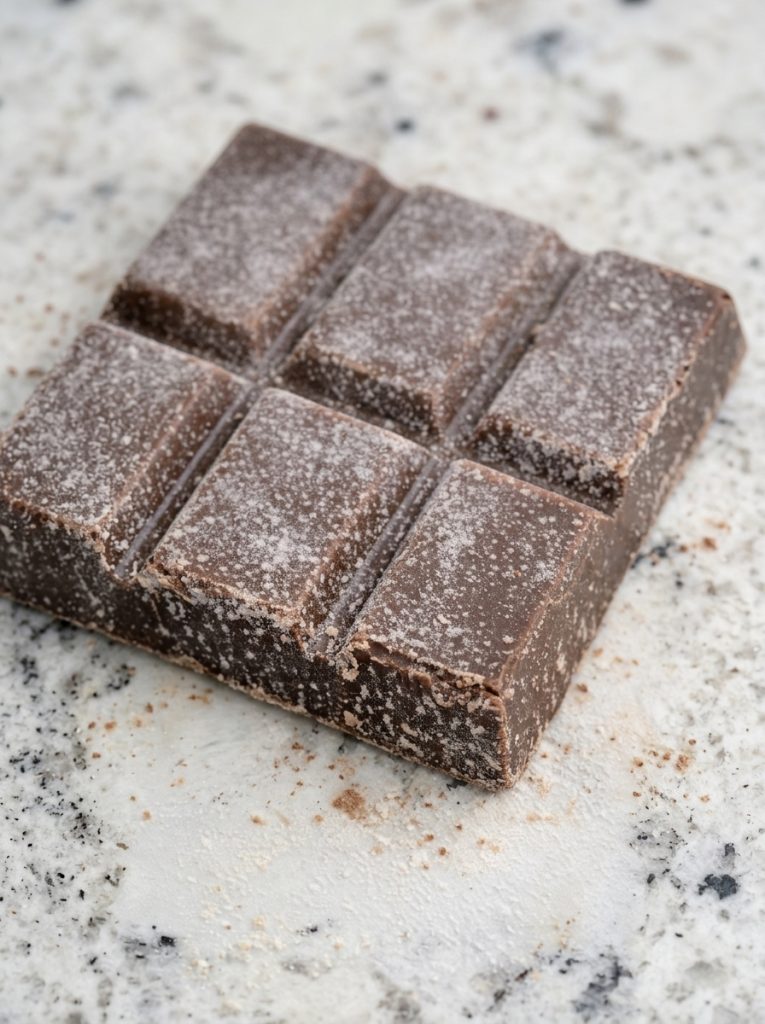
You tear open a chocolate bar expecting that glossy, silky finish — and instead, there it is. A pale, dusty-looking coating spread across the surface like someone accidentally dropped flour on it.
Honestly, it’s a little unsettling the first time you see it.
A lot of people assume the chocolate has gone bad immediately. Others scrape the white stuff off with a fingernail and eat it anyway while wondering if they just made a terrible life choice. And then there are the folks who toss the whole bar straight into the trash without a second thought.
But here’s the surprising part: that white coating is usually completely harmless.
In fact, professional bakers and chocolatiers deal with it all the time. There’s even a name for it — chocolate bloom — and while it definitely changes how the chocolate looks, it rarely means the candy is unsafe to eat.
Still, there’s more going on here than most people realize. Temperature swings, humidity, cocoa butter chemistry, storage habits… even something as simple as moving chocolate from the fridge to the counter too quickly can trigger it. Chocolate is oddly dramatic like that.
So let’s break down what bloom actually is, why it happens, how it affects taste and texture, and when you really should throw chocolate away.
Because sometimes ugly chocolate is perfectly fine. And sometimes? Not so much.
So… What Is That White Coating?
That dusty or streaky white layer on chocolate is called bloom.
Not the prettiest term, admittedly, but chocolatiers use it constantly.
Bloom happens when either fat or sugar inside the chocolate shifts around and settles on the surface. The chocolate itself hasn’t necessarily spoiled. It’s more like the structure got disrupted.
There are actually two different types:
- Fat bloom
- Sugar bloom
They look similar at first glance, but they happen for very different reasons.
Fat bloom usually appears as smooth, pale streaks or cloudy patches. Sugar bloom tends to look rougher or more powdery. Sometimes it even feels gritty when you touch it.
And yes — both can happen on the same chocolate bar at once, which feels a bit unfair.
The important thing is this: bloom is generally a quality issue, not a food safety issue.
That distinction matters.
The Science Gets Weird Fast
Chocolate is surprisingly temperamental. Seriously. It behaves less like a shelf-stable snack and more like a tiny edible science experiment.
The main culprit behind fat bloom is cocoa butter.
Cocoa butter is what gives chocolate that smooth snap and melt-in-your-mouth texture. But it’s picky about temperature. When chocolate warms up even slightly, the cocoa butter crystals can loosen and migrate toward the surface. Then, when the chocolate cools again, the fat hardens unevenly.
That leaves behind pale streaks or a grayish-white film.
You’ve probably seen this happen after chocolate sat in a warm car for a while or near a sunny kitchen window. Even repeated temperature swings inside a pantry can trigger it over time.
Sugar bloom works differently.
This one involves moisture.
When condensation lands on chocolate, it dissolves tiny amounts of sugar on the surface. Once that moisture evaporates, the sugar recrystallizes into rough little deposits. That’s why sugar bloom often feels grainy instead of smooth.
And weirdly enough, refrigerators are often the problem.
People refrigerate chocolate trying to “protect” it, but unless it’s sealed extremely well, the humidity inside the fridge can create sugar bloom fast. Especially when the chocolate warms back up after being removed.
Chocolate likes consistency. Not chaos.
Is Bloomed Chocolate Safe to Eat?
Short answer?
Yes. Usually completely safe.
Bloom might make chocolate look old or stale, but it does not automatically mean the chocolate is spoiled.
That white coating is not mold in most cases. It’s simply fat or sugar that has shifted around because of temperature or moisture changes.
The flavor may be slightly different. The texture definitely can be. But safety-wise, bloomed chocolate is generally fine to eat.
That said, your senses still matter here.
If the chocolate smells sour, rancid, musty, or just plain “off,” don’t eat it. Chocolate contains fats that can eventually go rancid over time, especially milk chocolate products with dairy ingredients.
A good rule?
- White streaks alone = probably fine
- White fuzz plus strange smell = throw it away immediately
Your nose usually knows.
Why Texture Changes More Than Taste
Here’s the thing people notice first with bloomed chocolate: the mouthfeel changes.
Good chocolate has that smooth melt. That clean snap. That creamy finish that slowly softens on your tongue.
Bloom interferes with all of that.
Fat bloom can make chocolate feel waxy or crumbly. Sugar bloom creates a gritty texture that almost feels sandy. The flavor itself often remains surprisingly similar, but texture is deeply tied to how we experience taste.
That’s why bloomed chocolate can seem “stale” even when the actual flavor compounds haven’t changed much.
It’s kind of like eating slightly freezer-burned ice cream. Technically edible? Sure. But the experience just isn’t the same anymore.
And honestly, texture matters more than people admit.
Why Chocolate Blooms So Easily
A lot of everyday habits accidentally trigger bloom.
Some common causes include:
Temperature fluctuations
This is the biggest one. Chocolate hates warming up and cooling down repeatedly.
Humid storage
Kitchens get steamy. Pantries near ovens get warm. Bathrooms — oddly enough — are terrible places for hidden candy stashes.
Refrigeration mistakes
Cold chocolate pulled into warm air creates condensation fast.
Sunlight exposure
Even indirect heat can soften cocoa butter enough to start bloom.
Warm hands
Holding chocolate too long can slightly melt the surface. Tiny issue, but it happens.
And cheaper chocolate products sometimes bloom faster because they contain alternative fats instead of pure cocoa butter.
That’s one reason premium chocolate often stays stable longer when stored correctly.
Bloom vs. Mold: How to Tell the Difference
This is where people get nervous.
Because yes, mold on food is bad news. But chocolate mold is actually pretty uncommon due to chocolate’s low moisture content.
Bloom and mold behave differently.
Bloom usually:
- Looks smooth or dusty
- Appears evenly spread
- Smells normal
- Stays flat against the surface
Mold usually:
- Looks fuzzy or raised
- Appears in spots or patches
- Smells sour or musty
- May show green, blue, or black coloring
If the chocolate simply looks pale or streaky, it’s almost certainly bloom.
If it looks alive… don’t risk it.
Can You Fix Bloomed Chocolate?
Actually, yes.
At least sometimes.
Professional chocolatiers often melt bloomed chocolate down and re-temper it. Tempering basically resets the cocoa butter crystal structure so the chocolate hardens properly again.
Sounds fancy, but it’s really controlled melting and cooling.
At home, you can do a simplified version:
- Melt the chocolate gently
- Stir slowly
- Let it cool gradually
- Avoid moisture during the process
A double boiler works best because direct heat can scorch chocolate fast.
Sugar bloom is tougher to fully reverse because the sugar crystals have already formed. But even then, bloomed chocolate still works beautifully in:
- Brownies
- Cookies
- Hot chocolate
- Ganache
- Chocolate sauce
- Cake batters
Honestly, once melted into a recipe, nobody notices.
And chefs know this well. Restaurant kitchens rarely waste perfectly edible chocolate just because it lost its shine.
The Best Way to Store Chocolate
Chocolate storage is simpler than people think.
You want:
- Cool temperatures
- Stable temperatures
- Low humidity
- Darkness
That’s basically it.
The ideal range sits around 59–64°F (15–18°C). Slightly cool room temperature works perfectly for most homes.
A pantry away from:
- ovens
- dishwashers
- windows
- direct sunlight
…is usually best.
And despite what many people assume, refrigeration should be the backup plan, not the default.
If you must refrigerate chocolate:
- seal it tightly
- use an airtight container
- let it warm to room temperature before opening
That last part matters a lot because it prevents condensation.
Tiny detail. Huge difference.
Does Bloom Affect Nutrition or Shelf Life?
Not really.
Bloom changes appearance and texture far more than nutrition.
The cocoa solids, sugar, and fats are still there. You’re not losing antioxidants or calories because bloom appeared.
Shelf life also stays mostly the same — assuming the chocolate wasn’t exposed to extreme moisture or contamination.
Dark chocolate especially lasts quite a long time due to its lower dairy content.
Milk chocolate and white chocolate have shorter shelf lives because dairy fats spoil faster.
Still, bloomed chocolate can remain edible for months.
Maybe not gift-worthy anymore, but edible.
When You Should Absolutely Toss Chocolate
There are times chocolate should go straight into the trash.
Watch for:
- sour smells
- rancid odors
- fuzzy growth
- unusual colors
- insect contamination
- strange taste
And if the chocolate has been sitting somewhere hot for weeks — like inside a car or garage — quality degradation can become severe enough that it’s not worth saving.
Sometimes common sense wins.
If you hesitate after smelling it, trust yourself.
What Professional Bakers Actually Do
Here’s something interesting: pastry chefs almost never panic over bloom.
Why?
Because appearance matters differently depending on the use.
Fancy chocolate bars for display? Bloom is a problem.
Chocolate headed into brownies or mousse? Nobody cares.
Many professionals simply remelt bloomed chocolate and use it in:
- ganache
- truffles
- sauces
- fillings
- cakes
- cookies
Some even intentionally buy discounted bloomed chocolate for baking projects since it’s still perfectly usable.
Which honestly feels like a smart little kitchen secret.
The Bottom Line
That weird white coating on chocolate looks alarming, but most of the time, it’s harmless bloom — not spoilage.
It happens because chocolate is sensitive to heat, moisture, and temperature swings. The texture may suffer a bit. The shine may disappear. But the chocolate itself is usually still safe to enjoy.
And honestly? Once it’s melted into brownies or stirred into hot cocoa, nobody would ever know.
So next time you unwrap a chocolate bar and spot those pale streaks, don’t panic immediately.
Your chocolate probably just had a rough day.