Let’s not pretend this is rare.
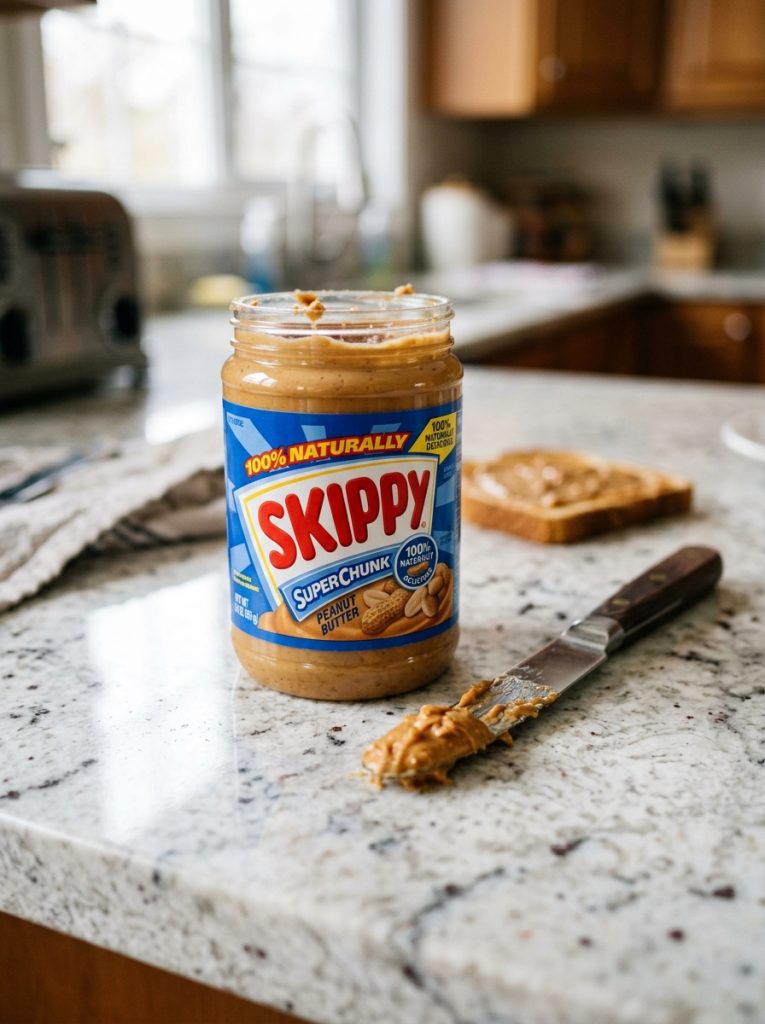
You open a jar of peanut butter, make a sandwich, maybe another one the next day… and then it just kind of lives on the counter. Or in the pantry. Or somewhere in between. Days pass. Weeks pass.
Then one day you look at it and think, “Wait… is this still okay?”
Yeah. Fair question.
Peanut Butter Is Weirdly Low-Drama (Food-Wise)
Here’s the thing people don’t always realize: peanut butter is pretty resilient.
It’s mostly fat, very little water, and not exactly a welcoming place for bacteria. So unlike leftovers or dairy, it doesn’t “turn” in an obvious, scary way.
No sour smell overnight. No fuzzy science experiment by day three.
It just… slowly changes.
And honestly, that’s why it’s confusing.
What Actually Happens Over Time?
Nothing dramatic. That’s the short answer.
But if you pay attention (and most people don’t until they suddenly do), a few subtle shifts start creeping in:
- The flavor dulls, then slightly sharpens in a weird way
- The smell gets a bit… off. Not awful, just different
- The texture might stiffen or dry out a little
If it’s natural peanut butter, you’ll also get that oil separation thing—which, by the way, looks suspicious but is completely normal.
Still, it feels like something’s wrong, even when it isn’t.
Okay, But a Whole Month?
Let’s get to it.
If your peanut butter has been sitting in a cupboard (not in direct heat, not open to air, lid on properly), then after a month—it’s very likely fine to eat.
Not amazing. Not peak peanut butter experience. But fine.
That said… “fine” is doing a bit of heavy lifting here.
Because what people really mean is: Will it make me sick?
Probably not.
Will it taste exactly how you remember?
Also probably not.
Where People Get It Slightly Wrong
A lot of advice out there makes it sound like you must refrigerate peanut butter after opening.
You don’t.
Plenty of people never do, especially with the classic processed brands. They sit in pantries for months and nobody thinks twice about it.
But then you try natural peanut butter—and suddenly it’s a different story. It separates faster, tastes off sooner, and just feels… less stable.
So yeah, both sides are kind of right.
Helpful, I know.
Pantry vs Fridge (The Ongoing Debate)
Let me put it this way:
- Pantry = easier, softer, tastes better day-to-day
- Fridge = slower aging, but firmer and slightly less enjoyable
It’s not really about safety. It’s about preference.
Some people hate cold peanut butter. Others hate when it turns oily and weird after a few weeks.
Pick your annoyance.
Quick Reality Check: When Should You Actually Toss It?
This part’s simple, even if everything else isn’t.
If you open the jar and notice:
- A sharp, almost chemical smell
- A noticeably bitter taste
- Any mold (rare, but yeah—don’t argue with that one)
- Or it just feels off in a way you can’t explain
Then just throw it out.
Peanut butter isn’t expensive enough to second-guess your instincts.
A Small Habit That Helps More Than You’d Think
Not groundbreaking, but still:
Close the lid properly.
That’s it.
Air is what slowly ruins peanut butter—not time alone. So every time it sits loosely covered, it’s aging faster than it needs to.
Also… maybe don’t dip your knife in after spreading jam. That’s a whole separate issue.
So, Final Answer?
Yes—you can eat peanut butter that’s been left out for a month.
Assuming it’s been stored reasonably well and doesn’t show obvious signs of spoilage, it’s safe.
But—and this is the honest part—it might not be great.
And peanut butter should be great. That’s kind of the point.
If you’re ever unsure, just trust your senses. Peanut butter doesn’t fail quietly—you’ll notice when something’s off.
And if you don’t?
Well… you’ll probably notice after the first bite.