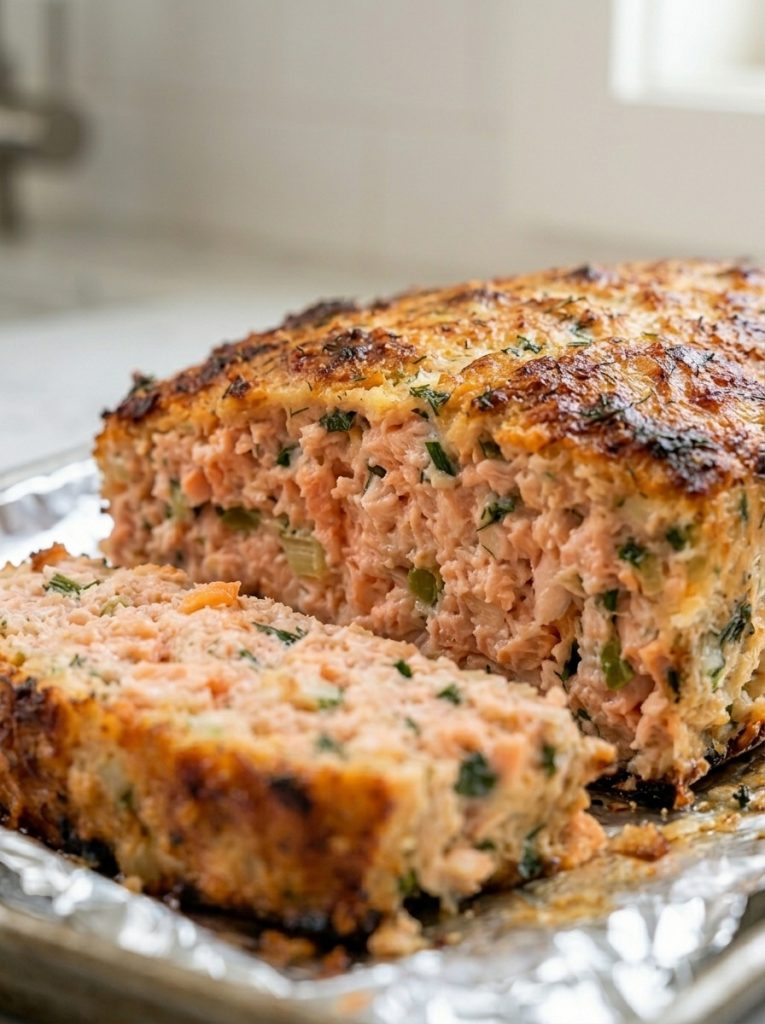
This retro oven-baked salmon loaf is a budget-friendly, pantry-based dinner that comes together in minutes and tastes way better than it looks on paper. Six ingredients, tender and golden from the oven, and it’s the kind of satisfying weeknight meal that doesn’t ask much of you — but always delivers.
Why You’ll Love It
Only 6 ingredients — mostly pantry staples you probably already have on hand
Tender inside, golden outside — the egg-to-cracker ratio gives it an almost custardy center with a lightly firm crust Try our Southern 5-Ingredient Salmon Patties next.
Ready with under 10 minutes of prep — shape the loaf, slide it in the oven, and you’re done
Budget-friendly comfort food — canned salmon keeps the cost low without sacrificing flavor
Great leftovers — slices reheat well and make an excellent cold sandwich the next day
A Few Notes on the Ingredients
The salmon: I use pink salmon, which is more affordable and more mellow in flavor. You can absolutely use red (sockeye) if that’s what you have — the flavor will be a little stronger, a little more salmon-forward, and some people prefer that. I don’t stress about the bones. You can remove them if you want — they’re soft enough to eat and apparently good for you — but I pick mine out of habit.
Crackers: Saltines, always. Original, not the low-sodium kind unless you’re actively watching your sodium, in which case, fine. Some people use Ritz for a slightly richer flavor and I’ve done that when I was out of saltines — it works, tastes a little different, not worse. You want them crushed fine, not pulverized into dust. There should still be some texture. If you like this, you'll love our SOUTHERN FRIED SALMON PATTIES.
Milk: Whole milk gives the best texture. I’ve used 2% plenty of times. It’s fine. I wouldn’t go skim.
Onion: Fresh, minced small. This matters more than you’d think. If you don’t feel like dealing with an onion, dried minced onion works and has a slightly different (some would say more old-fashioned) flavor. Fresh feels better to me, but either works.

Ingredients
2 cans (14–15 oz each) pink salmon, drained and flaked — bones and skin removed if you want, left in if you don’t
1 cup finely crushed saltine crackers — about 24 crackers, give or take
2 large eggs, lightly beaten
½ cup whole milk (2% works fine)
¼ cup finely minced onion — I probably use a little more, honestly
1 tablespoon dried parsley flakes, plus a little extra to sprinkle on top
Salt and pepper, to taste — optional if your crackers are already salty, which they probably are For another easy option, see our Creamy Chicken Ranch Bacon Sliders on Hawaiian Rolls.
You’ll also want a little nonstick spray or oil for the foil. Don’t skip lining with foil. You’ll thank yourself at cleanup.
How to Make It
Preheat your oven to 350°F. Line a baking sheet — not a loaf pan, a flat baking sheet — with foil and give it a light coat of cooking spray. This is important. The first time I made this I used parchment paper with no spray and it stuck terribly and I lost part of the crust, which was tragic.
More recipes you might like



In a big bowl, combine the crackers, beaten eggs, milk, onion, parsley, and salt and pepper if you’re using them. Stir it around until the crackers are moistened and it all comes together into a kind of thick paste. It’ll look a little weird at this stage. That’s fine.
Add the salmon. Fold it in gently — I use my hands for this part because I find a spatula tears the fish apart too aggressively, and you want some texture in there, not a completely homogeneous blob. Mix until everything is combined but don’t overwork it. Press a little together in your palm. If it holds, you’re good. If it feels really wet, add a few more crushed crackers, a tablespoon at a time.
Turn it out onto the foil-lined pan and shape it into a loaf. About eight inches long, three or four inches wide. Pat the top smooth. Sprinkle a pinch of parsley over the top if you like — it gives it a nice speckled look.
Bake on the center rack for 35 to 40 minutes. You’re looking for firm to the touch, lightly golden on top, set at the edges. If you want a little more crust on top you can go another five minutes, but watch it — it can dry out fast at that point, and a dry salmon loaf is a sad thing.
Let it rest for five or ten minutes before you slice it. I know that feels like forever when you’re hungry but it really does make a difference in how cleanly it slices.
Variations,
A couple tablespoons of mayonnaise swapped in for some of the milk makes the interior slightly richer and more tender — very much in the spirit of the original mid-century recipe. I don’t do it regularly but it works. You might also like our Zucchini Tomato Pie.
A teaspoon of dried dill is nice if you want to lean into the herby direction. Celery seed is another option that pushes it toward a more old-school flavor. I’ve added both at once and it was good. I’ve also forgotten both many times and it was still good, so don’t panic if your spice drawer is sparse.
If you want to use fresh salmon, you can. Cook it first, flake it, use about 24 to 28 ounces cooked. It’ll have a slightly different texture and might need a few extra crackers. It’s good — maybe better, technically — but the canned version has a nostalgic quality that’s hard to replicate.
Storage
Leftovers keep in the fridge for three days. Maybe four, but I always feel a little uncertain past three. Cover it well — salmon has opinions about absorbing other refrigerator smells.
To reheat, low and slow in the oven is best — about 300°F until it’s warmed through. I’ve microwaved it in a pinch and it’s fine but the texture suffers a little. Cold leftover salmon loaf in a sandwich with lettuce, pickles, and a little mayo is something I look forward to almost as much as the original dinner.
Don’t leave it out for more than two hours. Eggs and fish. You know. Try our Bacon-Wrapped Stuffed Chicken That’ll Make You Feel Like a Kitchen Rockstar next.
Serve it with mashed potatoes if you want the full experience. Buttered peas. A lemon wedge. A squeeze of lemon over the slices does something nice — cuts through the richness a little. Tartar sauce on the side if you have it, though honestly I usually just mix a little plain yogurt with a small spoonful of Dijon when I don’t feel like opening a jar. If you like this, you'll love our Ground Beef Chow Mein Casserole.
Oven-Baked Retro Salmon Loaf
Want This Recipe Later?
Ingredients
- 2 cans pink salmon drained and flaked
- 1 cup saltine crackers finely crushed
- 2 eggs lightly beaten
- 0.5 cup milk
- 0.25 cup onion finely minced
- 1 tbsp dried parsley
Instructions
- Preheat oven to 350°F and line a baking sheet with foil; lightly grease.
- Mix crackers, eggs, milk, onion, parsley, and seasoning until combined.
- Gently fold in salmon until just combined.
- Shape into a loaf on the prepared baking sheet.
- Bake for 35–40 minutes until firm and lightly golden.
- Rest 5–10 minutes before slicing and serving.
Notes
Nutrition
Made this recipe? Tap a star to rate it.
Nutrition values are estimates based on the listed ingredients and serving count. Actual values vary with brands, cuts and portion sizes.