Mashed potatoes seem simple. Potatoes, butter, milk, maybe a little garlic if someone in the house is feeling ambitious. Yet somehow this side dish manages to start surprisingly heated debates at dinner tables everywhere.
Mention instant mashed potatoes around certain people and you’d think you confessed to microwaving Thanksgiving dinner.
Others? They swear by the boxed flakes sitting quietly in the pantry. Fast, affordable, dependable. Honestly, after a long workday, a five-minute side dish can feel less like cheating and more like survival.
So who’s right?
Well… both sides kind of have a point.
Fresh mashed potatoes absolutely have qualities instant versions struggle to fully replicate. But instant mashed potatoes aren’t the culinary disaster some people make them out to be either. In fact, depending on your schedule, budget, and expectations, they can be surprisingly useful.
Let’s talk about why this potato debate refuses to die — and whether instant mashed potatoes deserve their bad reputation.
Why People Feel So Strongly About Mashed Potatoes
There’s something emotional about mashed potatoes.
Maybe it’s because they show up during holidays, Sunday dinners, or cold evenings when everyone’s tired and hungry. They’re comfort food in the purest sense — soft, buttery, warm, familiar.
Fresh mashed potatoes also carry a certain ritual with them. Peeling potatoes at the sink. Steam fogging the kitchen windows. Someone sneaking a spoonful before dinner’s ready. It feels homemade because it is homemade.
Instant potatoes interrupt that image a little.
Instead of peeling and boiling, you’re pouring dehydrated flakes into hot liquid. Efficient? Absolutely. Romantic? Not exactly.
But here’s the thing people sometimes forget: convenience matters too.
A lot.
The Real Appeal Of Instant Mashed Potatoes
Honestly, instant mashed potatoes exist for a reason.
Life gets busy. Really busy.
There are nights when cooking from scratch sounds lovely in theory, but the reality is you’ve got laundry half-folded on the couch, a sink full of dishes, and someone asking what’s for dinner every eight minutes.
That’s where instant potatoes shine.
Most varieties are ready in under five minutes. Some only need boiling water. Others call for milk and butter, but even then, the effort is minimal.
No peeling.
No boiling giant pots of water.
No draining.
No potato masher covered in sticky starch.
And for busy parents, college students, exhausted shift workers, or honestly anyone trying to get food on the table quickly, that convenience can feel pretty wonderful.
Especially during colder months when comfort food cravings hit hard but energy levels don’t exactly cooperate.
But Fresh Potatoes Still Win In One Big Area
Flavor.
Fresh mashed potatoes simply taste more alive.
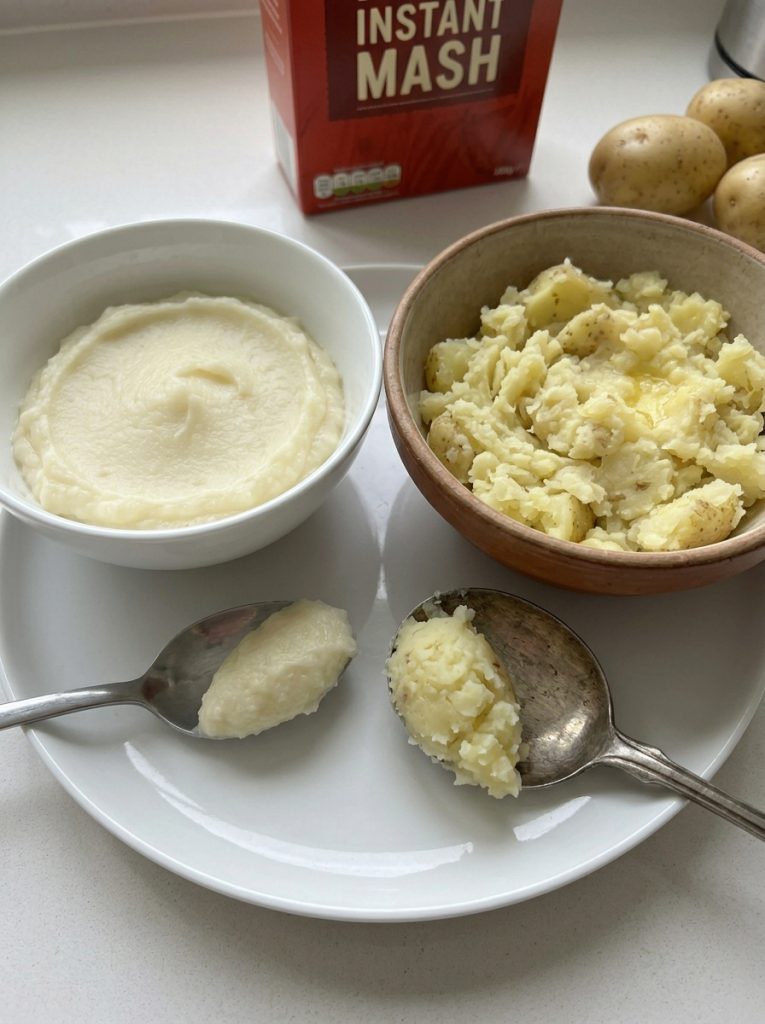
The potato flavor feels fuller, earthier, and more natural. The texture has variation too — fluffy in some spots, creamy in others. You can control exactly how smooth or rustic they become.
Instant mashed potatoes, even the good ones, tend to be more uniform. Sometimes almost too uniform.
And texture matters more than people realize.
Fresh potatoes can absorb butter, cream, roasted garlic, herbs, and cheese in a way that feels rich and layered. Instant potatoes sometimes absorb flavors differently because the starch structure changes during processing.
That said, food technology has come a long way. Some modern instant brands are shockingly decent. Especially when dressed up properly.
If you’ve only tried plain instant potatoes made with water and nothing else, honestly, you haven’t really given them a fair shot.
Nutrition: Fresh Potatoes Usually Come Out Ahead
Fresh potatoes are naturally loaded with nutrients people often overlook.
They contain:
- potassium
- vitamin C
- fiber
- vitamin B6
- antioxidants
Potatoes have somehow developed an unfair reputation over the years, mostly because they’re often paired with deep fryers or mountains of cheese. But plain potatoes themselves are fairly nutritious.
Instant mashed potatoes lose some nutritional value during processing. Many brands also add sodium, preservatives, stabilizers, or artificial flavoring.
Not always — but often.
That doesn’t automatically make them unhealthy. It just means label reading matters.
Some brands keep ingredients surprisingly simple:
- dehydrated potatoes
- salt
- milk powder
- butter flavoring
Others read more like a chemistry worksheet.
So if nutrition is your top priority, fresh potatoes generally offer more control and fewer additives.
Still, instant potatoes can absolutely fit into a balanced diet. Especially when paired with vegetables and protein instead of treated like the entire meal.
Here’s The Weird Part: Instant Potatoes Can Actually Be Useful In Cooking
This surprises people all the time.
Instant mashed potatoes aren’t only for making mashed potatoes.
They’re secretly one of those old-school pantry ingredients that show up in all kinds of recipes.
People use them to:
- thicken soups and chowders
- make potato bread softer
- coat fried chicken or fish
- create crispy textures in casseroles
- bulk up meatloaf
- make quick potato pancakes
Honestly, some cooks keep potato flakes around purely for kitchen emergencies.
Need thicker potato soup without adding flour? Potato flakes work beautifully.
Want extra crispy breading? Same story.
Fresh potatoes are versatile too, obviously, but they require more prep and cleanup every single time.
Instant potatoes sometimes win simply because they’re easy to work with.
Cost Depends On How You Look At It
Fresh potatoes are usually cheaper pound-for-pound.
A big bag of russets can feed an entire family for very little money, especially during fall and winter when potato prices tend to stay reasonable.
But there’s another angle here.
Waste.
Fresh potatoes eventually sprout, soften, or go bad if forgotten in the pantry. And honestly, everybody has discovered a sad bag of potatoes hidden in the back corner at some point.
Instant potatoes last much longer.
That longer shelf life means less waste, which can save money over time — particularly for smaller households or people who don’t cook potatoes regularly.
So while instant potatoes may cost more per serving upfront, the convenience and reduced spoilage can balance things out.
Especially these days, when grocery prices feel unpredictable basically every week.
The Environmental Side Gets Complicated
At first glance, fresh potatoes seem like the more natural option.
And in many ways, they are.
But food sustainability is rarely simple.
Fresh potatoes require transportation, refrigeration during storage, and can contribute to food waste if unused. Instant potatoes involve industrial processing and extra packaging, which increases manufacturing impact.
So which is better environmentally?
Honestly, it depends on factors like:
- local sourcing
- packaging materials
- household food waste
- production methods
Buying local fresh potatoes from nearby farms can reduce transportation emissions significantly. Meanwhile, shelf-stable instant potatoes may reduce waste in households that struggle to use fresh produce quickly.
There isn’t a perfect answer here.
Just trade-offs.
Chefs Usually Prefer Fresh — But Even They Make Exceptions
Professional chefs almost always prefer fresh potatoes for restaurant-quality mashed potatoes.
No surprise there.
Fresh potatoes allow better control over texture, seasoning, butter content, and consistency. In high-end kitchens, details matter.
But even chefs admit instant potatoes have practical uses.
Camping trips.
Large-scale catering.
Emergency pantry meals.
Recipe shortcuts.
And honestly? Plenty of restaurant kitchens use shortcuts people never talk about publicly. Convenience products exist because even professionals sometimes need efficiency.
Nutritionists tend to land somewhere in the middle too.
Most agree fresh potatoes provide stronger nutritional value, but they also recognize that convenient foods help people cook at home more often — and that matters.
Because realistically, instant mashed potatoes alongside roasted chicken and green beans is still a far better dinner than fast food seven nights a week.
There’s Probably A Middle Ground Here
A lot of families eventually settle into compromise without even realizing it.
Fresh mashed potatoes for:
- holidays
- Sunday dinners
- special meals
- comfort-food weekends
Instant potatoes for:
- busy weeknights
- quick lunches
- backup pantry meals
- cold-weather comfort cravings
Some people even combine them.
A little fresh potato mixed with instant flakes can create surprisingly creamy mashed potatoes while cutting down prep time. Purists may groan at that idea, but honestly, it works better than you’d think.
And food doesn’t always need to be all-or-nothing.
The Truth? Instant Potatoes Aren’t Evil — They’re Just Different
People sometimes treat food debates like moral issues instead of practical choices.
Fresh mashed potatoes are wonderful. Rich, comforting, nostalgic. When made well, they’re hard to beat.
But instant mashed potatoes solve real problems too.
They save time.
They reduce effort.
They last forever in the pantry.
And on exhausting nights, they can help get dinner onto the table faster — which counts for something.
A lot, actually.
Because cooking at home consistently matters more than cooking perfectly every single time.
So no, instant mashed potatoes probably won’t replace buttery homemade mashed potatoes at Thanksgiving anytime soon.
But are they really so bad?
Honestly? Not even close.