This skillet flatbread is one of those recipes you’ll come back to again and again. All you need is flour, instant yeast, and a handful of pantry staples — and each piece cooks up in about five minutes flat. No oven, no pizza stone, just a hot skillet and dough that practically makes itself.
Why You’ll Love It
Ready in about an hour — that includes two short rest periods, and the hands-on time is minimal
Cooks in a skillet — no special equipment, no blazing hot oven required Try our Crab and Shrimp Seafood Bisque — Creamy, Cozy, and Just a Little Fancy next.
Makes ten pieces — enough for a full dinner spread, with leftovers worth saving
Goes with everything — soup, hummus, eggs, wraps, or just torn and dipped in olive oil
Freezer-friendly — make a batch, freeze the extras, and you’ve always got fresh bread on standby
A Note on the Ingredients
The yeast matters here — and I feel like I should say that plainly because I’ve seen people swap instant yeast and active dry yeast like they’re the same thing. They’re not. This recipe was made with instant yeast, and that’s what you want. Instant yeast gets going with warmer water, around 120 to 130 degrees, which is hotter than you might expect. I use a thermometer because I’ve definitely killed yeast before by being impatient, and there is nothing more deflating than dough that doesn’t rise. The water should feel more than just warm — almost too warm on your wrist. If you like this, you'll love our Amish Hamburger Steak Bake: A Comforting and Hearty Casserole.
Sugar: just a teaspoon. I sometimes use honey when I can’t find the sugar easily, which is more often than I’d like to admit given the state of my pantry. It helps the yeast get started and it’s not optional.
Flour: all-purpose, plain and simple. I’ve used bread flour a few times and it works, but then the texture is a little different — chewier, which some people love.
Salt: two teaspoons. And here’s the thing — you can add dried herbs into this. Rosemary, oregano, thyme. I’ve done rosemary and it’s beautiful. This isn’t in the original recipe I was working from, but I read it as a suggestion somewhere and now I do it whenever I remember, which is maybe half the time.
Olive oil: for the dough and for the pan. I brush a little on the finished flatbreads too, while they’re still hot. This is optional in the sense that nothing terrible will happen if you skip it, but it’s not optional in my house.
How to Make It
Everything goes into the stand mixer bowl at once — the flour, the yeast, the sugar, the oil, the salt, and the water. Mix on low for two minutes first, just to bring it together, then kick it up to medium-low for six minutes. The dough should be smooth and a little tacky but not sticky. If it’s sticking badly to the bowl, add flour a tablespoon at a time. I usually don’t need to, but humidity is a real factor and I live somewhere that gets muggy, so.
Grease the bowl lightly — I just use a little olive oil, kind of swirl the dough around in it — and cover it with a kitchen towel. Thirty minutes. It’ll double. Set a timer or you’ll forget, which I say from experience. For another easy option, see our Roasted Garlic-Parmesan Zucchini, Squash, and Tomatoes.
Divide it into ten pieces. This is not a precise science in my kitchen. I use a bench scraper and eyeball it. Some pieces are a little bigger, some smaller — honestly the bigger ones are good because they cook the same way and you just get more flatbread, which is not a problem.
Shape them into little balls, dust them with flour, put them on a baking sheet, and let them sit covered for another twenty minutes. This second rest matters — I skipped it once when I was impatient and the flatbreads were fine but they weren’t as good. Slightly tougher. Not worth rushing.
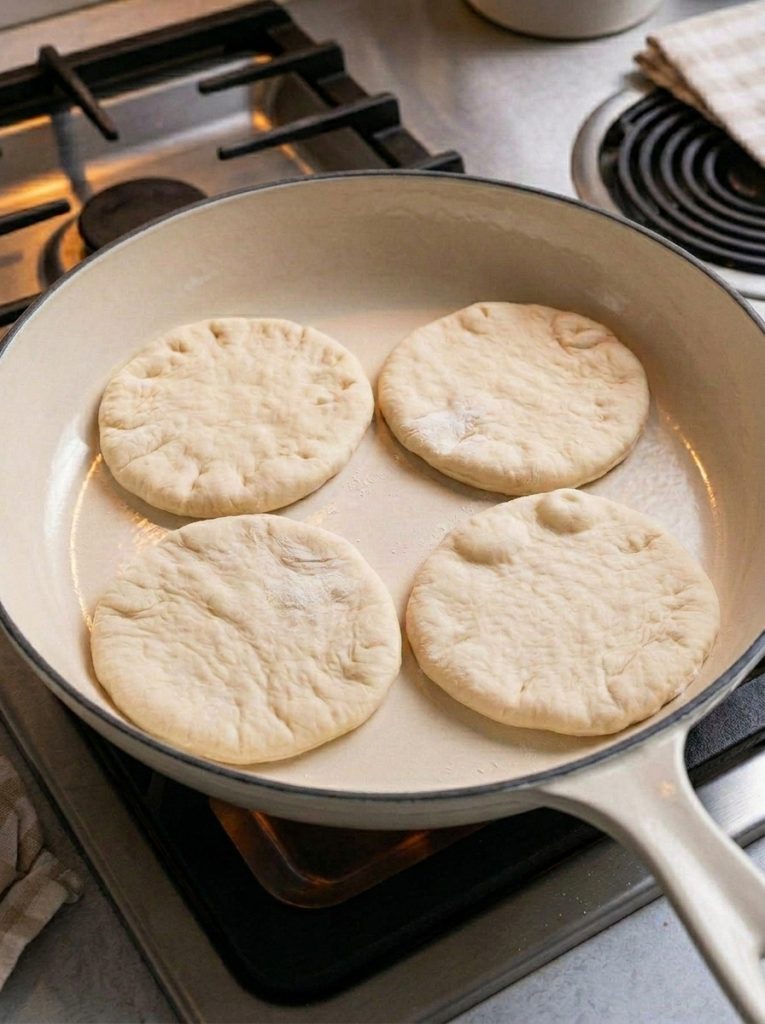
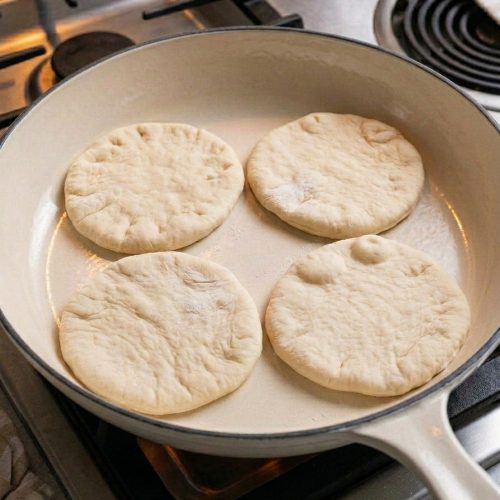
Get your skillet going over medium heat with a little olive oil. Roll one of the dough balls out to about seven or eight inches — I aim for a rough circle, mine are never perfect — and carefully lay it in the pan. Two minutes on the first side. You’ll see bubbles start to appear on the surface; that’s when you know it’s ready to flip. Another two minutes and it should be golden underneath.
While one is cooking, I’m usually rolling the next one out. Kind of a rhythm once you get going.
The kitchen towel trick at the end — keeping the cooked ones covered while you work through the rest — actually matters. It keeps them soft. If you leave them out uncovered they’ll dry out and stiffen up faster than you’d expect.

Variations
A half-and-half mix of whole wheat and all-purpose flour works really well here — a little earthier, a little more texture. Just add a touch more water since the whole wheat absorbs differently. You might also like our Ricotta‑Filled Arancini.
I’ve also made these with a little garlic powder in the dough. Not everyone’s thing, but I like it.
Storage
Wrapped up well, these last a week to ten days in the fridge, which I find remarkable. In the freezer they’ll go two to three months — wrap them in foil, press the air out, and when you want them, throw them in a hot oven for a few minutes. Good as new. Or close enough.
Room temperature is really only good for a couple days before they start to get that stale-bread feeling. Try our How to Make Gravy from Drippings next.
I’ve left them on the counter overnight more than once with just a towel over them. They were fine for breakfast the next morning. I’m not recommending this officially. I’m just saying it happened. If you like this, you'll love our Greek Chicken Bowls.
Easy Flatbread Recipe
Want This Recipe Later?
Ingredients
- 4 cups all-purpose flour plus more as needed for dusting and adjusting the dough
- 2 1/4 teaspoons instant yeast use instant yeast, not active dry yeast
- 1 teaspoon sugar or honey
- 2 teaspoons salt
- 2 tablespoons olive oil plus more for greasing the bowl, oiling the skillet, and brushing the finished flatbreads if desired
- 1 1/2 cups warm water about 120 to 130 degrees F
- dried herbs optional; rosemary, oregano, or thyme
- garlic powder optional variation
Instructions
- Add the flour, instant yeast, sugar, olive oil, salt, and warm water to the bowl of a stand mixer, adding optional dried herbs or garlic powder if using.
- Mix on low speed for 2 minutes, just until the dough comes together.
- Increase the mixer to medium-low speed and knead for 6 minutes, until the dough is smooth and a little tacky but not sticky.
- If the dough is sticking badly to the bowl, add more flour 1 tablespoon at a time until it becomes smooth and tacky.
- Lightly grease the bowl with olive oil, swirl the dough in it, cover with a kitchen towel, and let it rest for 30 minutes, or until doubled.
- Divide the dough into 10 pieces using a bench scraper or knife.
- Shape the pieces into small balls, dust them with flour, place them on a baking sheet, cover, and let them rest for another 20 minutes.
- Set a skillet over medium heat and add a little olive oil.
- Roll one dough ball into a rough 7- to 8-inch circle and carefully lay it in the hot skillet.
- Cook for about 2 minutes on the first side, flip when bubbles appear, and cook for another 2 minutes until golden underneath; repeat with the remaining dough, keeping cooked flatbreads covered with a kitchen towel and brushing with olive oil while hot if desired.
Notes
Nutrition
Nutrition values are estimates based on the listed ingredients and serving count. Actual values vary with brands, cuts and portion sizes.