
Save This Recipe
There’s something weirdly frustrating about pork chops.
They look simple. They’re sold everywhere, usually affordable, and honestly? They should be one of the easiest dinners to pull off on a busy weeknight. Yet somehow, so many pork chops end up tasting like cardboard with grill marks. Dry in the middle. Tough around the edges. A little sad.
And the worst part is that most people think that’s just how pork chops are supposed to be.
They’re not.
A good pork chop should be juicy, savory, deeply flavorful, and tender enough that you don’t need a steak knife and a prayer to get through dinner. When cooked properly, pork has this rich, almost buttery quality that people forget exists because they’ve spent years overcooking it.
Honestly, pork chops have been misunderstood for decades.
And a lot of it comes down to old habits that never really left American Kitchens.
Pork Got Stuck With A Weird Reputation
For years, pork was marketed as “The Other White Meat.” You probably remember the slogan. The campaign worked — maybe a little too well.
People started treating pork like Chicken breast. Lean, pale, cooked until absolutely no pink remained anywhere. That mindset quietly trained generations of home cooks to overcook pork by default.
The thing is, pork isn’t Chicken. It never was.
Good pork has richness. It has fat. It has character. And unlike chicken breast, pork actually tastes incredible with just a hint of blush in the center.
The USDA now recommends cooking pork to 145°F followed by a short rest period. That’s safe. Completely safe. And yes, the middle may still look slightly pink.
That tiny bit of pink? That’s usually where the magic lives.
The Fear Of Pink Pork Runs Deep
Let me explain.
A lot of people grew up hearing horror stories about undercooked pork and trichinosis. Back in the day, those concerns were legitimate. Pork production standards were different decades ago, and people were taught to cook pork until it was thoroughly gray all the way through.
But modern pork farming changed dramatically.
Today, trichinosis in commercially raised pork is incredibly rare in many countries, including the United States. Yet the fear stuck around anyway. Food fears tend to do that. They linger longer than the actual problem.
So people still cook pork chops like they’re trying to survive a frontier winter.
And that’s where things start going sideways.
Because pork doesn’t politely stay juicy while you overcook it. Especially modern pork.
Modern Pork Is Leaner — Which Sounds Good… Until Dinner
Here’s the thing nobody really tells you at the grocery store: modern pork is much leaner than it used to be.
On paper, that sounds great. Lean meat! Less fat! Healthier dinners!
But fat carries flavor and moisture. When you remove a lot of that natural fat, you also remove the built-in protection against overcooking.
That means today’s pork chops have a much smaller margin for error.
Even an extra minute or two in the pan can push them from juicy to dry. Fast.
Especially those super lean center-cut loin chops that look neat and tidy in the package. They’re convenient, sure, but they’re also the easiest chops to ruin.
You know what usually tastes better?
Bone-in rib chops with visible marbling. Not excessively fatty — just enough to protect the meat while it cooks. Those little streaks of fat matter more than people think.
It’s kind of like choosing a well-marbled steak instead of the leanest one in the butcher case. The extra fat creates forgiveness.
And forgiveness is exactly what pork chops need.
Thin Boneless Chops Are Basically A Trap
This might sound dramatic, but thin boneless pork chops are one of the hardest cuts for home cooks to master.
They cook ridiculously fast. Sometimes too fast.
By the time you get a decent sear on the outside, the inside has already crossed into dry territory. There’s almost no buffer zone.
Bones help slow down cooking. Fat helps retain moisture. Thin boneless chops have neither.
That doesn’t mean you can’t cook them well. You absolutely can. But they require attention — real attention — not the “I’ll just check my phone for two minutes” kind.
If possible, buy thicker chops. Around 1 to 1½ inches is ideal.
Thicker chops give you time. Time to build flavor. Time to control the heat. Time to actually cook them properly instead of racing against disaster.
And honestly? Thick pork chops just feel more satisfying on the plate.
Ice-Cold Meat Cooks Unevenly
This one surprises people.
Cooking pork chops straight from the fridge can sabotage the texture before the pan even heats up.
Cold meat cooks unevenly. The outside gets blasted with heat while the center lags behind trying to catch up. So what happens? The exterior overcooks while the inside barely reaches temperature.
Then people Keep cooking because the middle still looks underdone.
And suddenly the outer layers taste like sawdust.
A simple fix helps more than you’d think: let the chops sit at room temperature for about 20–30 minutes before cooking.
Not all day. Just enough to take the chill off.
Restaurants do this constantly with steaks and chops because it creates more even cooking. It’s a tiny habit that makes a noticeable difference.
High Heat Is Great… Until It Isn’t
People love screaming-hot pans. Social media cooking videos definitely helped popularize that aggressive steakhouse-style sear.
And yes — high heat creates beautiful browning.
But pork chops cooked over ripping heat the entire time usually end badly.
The outside burns or dries out before the center finishes gently cooking. You end up with a chop that’s crusty on the edges and dry in the middle.
That’s why the best pork chops often use a two-step method:
- High heat first for color and crust
- Lower heat afterward to finish cooking gently
Sometimes that means moving the pan into the oven. Sometimes it means reducing the burner temperature. Either way, the goal is balance.
Think of it like driving downhill. You don’t floor the gas pedal the whole way.
Brining Feels Old-School — But It Works
Honestly, brining sounds like something your uncle talks about while tending a smoker at 6 a.m.
But it works. Really well.
A basic brine helps pork hold onto moisture during cooking, which is especially helpful for lean chops. Even a quick 30-minute brine can improve texture dramatically.
And it’s not complicated.
Water. Salt. Maybe a little sugar. Done.
Some people add garlic, peppercorns, herbs, apple cider, or bay leaves. That’s great too. But even the simplest version gives you insurance against dryness.
Marinades help as well, especially those with acidic ingredients like yogurt, citrus, or vinegar. They add flavor while gently tenderizing the surface.
Not every pork chop needs a brine.
But bland, dry pork chops? Those probably did.
Crowded Pans Ruin Good Intentions
This is one of the sneakiest mistakes home cooks make.
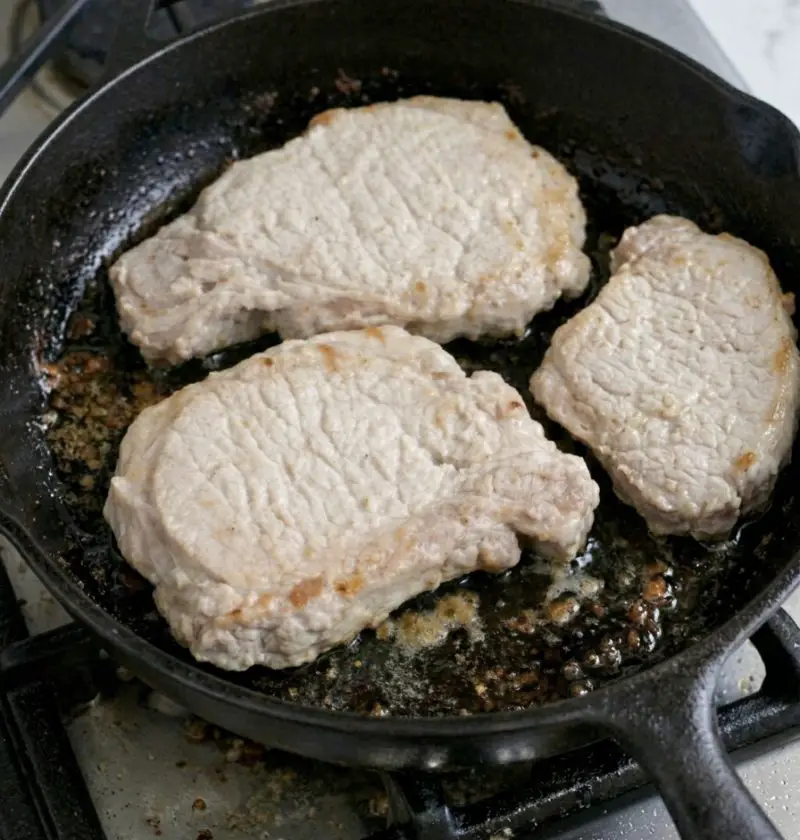
You put four or five pork chops into a skillet because it seems efficient. Makes sense, right?
Except suddenly the pan temperature drops. Moisture builds. Steam takes over.
Instead of browning, the pork sort of sweats.
And steamed pork chops rarely become memorable dinners.
Good searing needs airflow and direct heat. That caramelized crust only forms when moisture can evaporate quickly.
So give the chops space. Cook in batches if necessary.
Yes, it takes longer. But the flavor difference is massive.
And honestly, a properly browned pork chop smells incredible. That deep savory aroma filling the kitchen? That’s the Maillard reaction doing its thing.
Worth the extra batch every single time.
Resting The Meat Isn’t Optional
People skip this step constantly because they’re hungry.
Understandable. The pork smells amazing. Everyone’s waiting. The mashed potatoes are getting cold.
But slicing immediately after cooking sends the juices running straight onto the cutting board instead of staying inside the meat.
Resting gives those juices time to redistribute.
Even five minutes helps.
And no, the pork won’t suddenly become cold and disappointing during that short rest. In fact, it often finishes cooking gently from residual heat, which makes the final texture even better.
It’s one of those boring kitchen rules that turns out to matter a lot.
A Bad Thermometer Can Wreck Dinner
You don’t need expensive chef equipment for great pork chops.
But you do need an accurate thermometer.
Guessing doneness with pork is tricky because visual cues can be misleading. Some chops stay pink longer. Others turn pale quickly even when undercooked.
Cheap thermometers often lag behind or read inaccurately, which leads to overcompensation. People keep cooking “just to be safe.”
And there goes the juiciness.
A reliable instant-read thermometer changes everything because it removes panic from the process.
Once you consistently pull pork at 145°F and let it rest, you start realizing how good pork chops are actually supposed to taste.
It’s almost annoying, honestly. You suddenly notice every dry pork chop you’ve ever eaten.
The Cut Matters More Than People Think
Not all pork chops behave the same way.
That’s important.
Loin chops are lean and mild. Rib chops have more marbling and richer flavor. Shoulder chops are darker, fattier, and incredibly flavorful when cooked properly.
Yet many people buy whichever package is cheapest without considering how the cut affects cooking.
That’s a bit like buying random shoes and wondering why some hurt your feet.
Different cuts need different approaches.
For grilling, thick bone-in chops are hard to beat. For pan-searing, rib chops tend to stay juicy and flavorful. For slow cooking, shoulder cuts shine beautifully.
Understanding the cut gives you a head start before the stove even turns on.
So… What Actually Makes A Great Pork Chop?
It’s usually not one fancy trick.
It’s several small decisions working together:
- Choosing thicker chops
- Using moderate heat
- Letting the meat rest
- Trusting a thermometer
- Avoiding overcooking
- Giving the pork enough breathing room in the pan
That’s really it.
Perfect pork chops aren’t about restaurant secrets or complicated techniques. They’re mostly about undoing years of bad kitchen advice that taught people pork should be cooked until every ounce of moisture disappears.
Because when pork chops are cooked properly? They’re rich, juicy, deeply savory, and honestly kind of underrated.
Not dry. Not tough. Not disappointing.
Just really, really good.