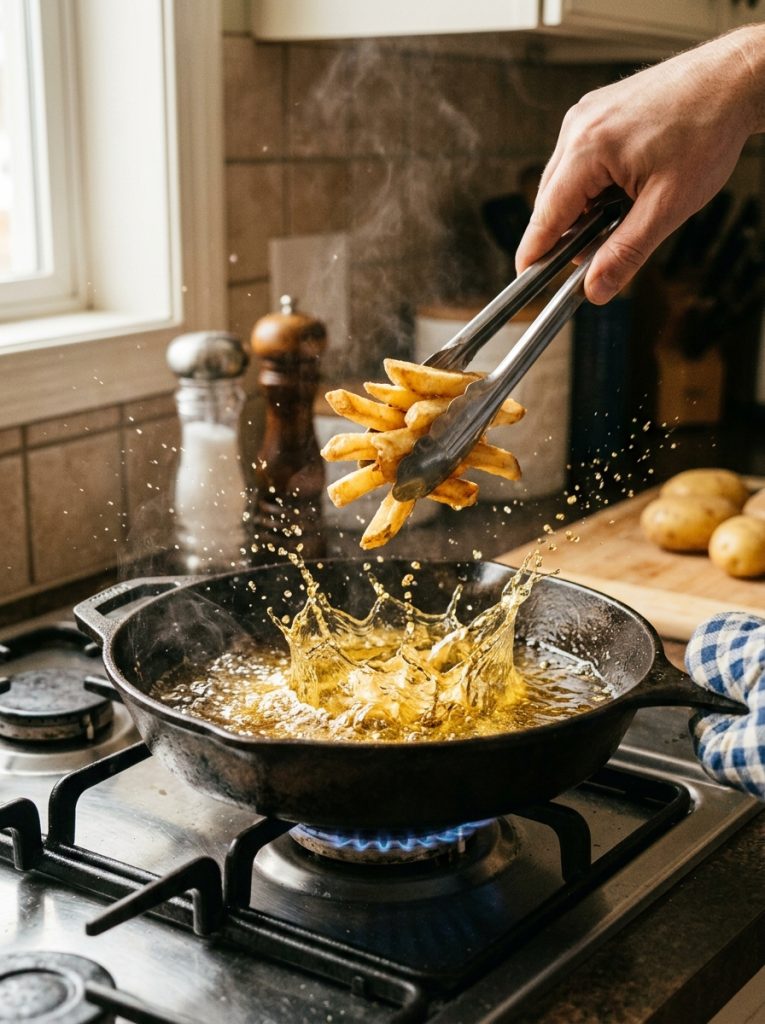
There’s a particular sound that makes home cooks flinch a little — that angry pop-pop-pop of hot oil hitting moisture. You know the one. One second you’re dreaming about perfectly golden fried chicken or crisp-edged potatoes, the next you’re dodging tiny lava-like droplets while your stovetop starts looking like a crime scene.
Frying is glorious. Messy, yes. A little dramatic? Also yes.
But here’s the thing: oil doesn’t splatter for no reason. It’s reacting. Usually to water. Sometimes to overcrowding. Sometimes to oil that’s simply too hot and behaving badly. And once you understand what’s causing the chaos, frying gets a lot calmer.
Honestly, some of the best frying “secrets” aren’t really secrets at all — they’re little habits restaurant cooks use almost without thinking. Small moves. Big difference.
So if you’ve ever wondered how people fry fish, chicken, or even eggplant without ending up scrubbing grease off the backsplash for half an hour… let me explain.
Why Hot Oil Turns Wild in the First Place
Most splattering comes down to moisture.
When water touches hot oil, it flashes into steam almost instantly. That rapid expansion launches droplets of oil into the air. Science, yes — but rude science.
And sometimes it isn’t obvious moisture. It can be:
- Condensation on cold chicken
- Ice crystals hiding on frozen shrimp
- Damp potatoes after rinsing
- Water trapped inside vegetables
- Even overcrowding, which creates excess steam
That steam has to go somewhere.
Usually at you.
The good news? Most of it is preventable.
1. Start Dry — Really Dry
This sounds obvious until you realize how often we skip it.
Potatoes rinsed and tossed straight into oil? Trouble.
Fresh fish from the package with surface moisture? Trouble.
Even washed zucchini can hold more water than you think.
Pat ingredients dry. Then pat them again.
Paper towels work. Clean kitchen towels work. For greens or cut vegetables, a salad spinner is oddly underrated.
And if you’re frying thawed meat, let it sit a few minutes first. Cold food often sweats. That moisture matters.
A lot.
Sometimes the simplest fix is the best one.
2. Let Proteins Lose Their Chill
Cold food dropped into hot oil tends to protest.
Chicken straight from the refrigerator can carry condensation. Frozen foods — even “mostly thawed” ones — can hide little icy pockets.
That’s where fireworks begin.
Let proteins sit out briefly before frying (food safety still matters, so don’t overdo it). Then blot well.
Restaurants do this constantly. It isn’t fussy. It’s practical.
And your forearms will thank you.
3. Use a Light Coating as a Shield
This one surprises people.
A light flour coating or breading doesn’t just make food crisp — it helps trap moisture inside and reduces violent reactions with the oil.
Think of it as a buffer.
Classic fried chicken does this beautifully:
Flour.
Egg.
Breadcrumbs.
That coating creates a little armor.
Even a dusting of flour on fish can calm a pan dramatically.
And, well… extra crunch never hurts.
4. Your Pan Might Be the Problem
Sometimes it isn’t your technique.
It’s your pan.
Shallow skillets can send oil everywhere. High-sided pans help contain bubbling and wandering droplets.
A deep sauté pan, Dutch oven, or heavy cast-iron skillet often behaves better than a low pan.
There’s a reason restaurant fry stations aren’t using flimsy little skillets.
Containment matters.
Also — give food space.
Crowded pans splash more.
Always.
5. Watch the Oil Temperature (This Changes Everything)
This is where frying often goes sideways.
Too cool? Food gets greasy.
Too hot? Oil gets aggressive.
And aggressive oil spits.
For most frying, 350°F to 375°F is the sweet spot.
A thermometer helps, truly. It feels slightly chef-y at first, but once you use one, you wonder why you guessed for so long.
No thermometer?
Drop in a breadcrumb.
If it burns instantly — too hot.
If it sinks lazily — too cool.
If it bubbles steadily and turns golden — you’re in business.
Little cues like that save dinner.
6. Stop Overcrowding the Pan
I know. We all do it.
You want all the chicken in at once.
But piling in too much food crashes the oil temperature and creates excess steam — which means more splatter.
And soggier food.
Nobody wins.
Cook in batches.
Yes, it takes a few extra minutes.
Yes, it’s worth it.
Crispier food. Cleaner stove.
7. Lower Food Into Oil Gently — Away From You
This one is half technique, half self-preservation.
Always lower food away from your body.
Not toward you.
Away.
Use tongs. A spider strainer. Slotted spoon.
Don’t drop food from a height like you’re tossing coins into a fountain.
That splash has somewhere to go.
Guess where.
Exactly.
A gentle slide into the oil changes everything.
8. Splatter Screens Actually Work
People forget about splatter screens and I’m not sure why.
They’re kind of brilliant.
A simple mesh splatter guard lets steam escape while catching oil droplets.
Cheap. Easy. Effective.
And yes — some TikTok pan-lid hacks do work too.
Crack a lid partly open so steam escapes while splashes stay contained.
Just don’t trap too much steam or you’ll lose crispness.
It’s a balance.
Frying often is.
9. Use the Right Oil
Not all oils behave the same.
Some break down faster.
Some smoke early.
Some splatter more aggressively.
Higher smoke-point oils tend to be steadier for frying:
- Peanut oil
- Canola oil
- Grapeseed oil
- Avocado oil
- Sunflower oil
They stay calmer under heat.
Olive oil for deep frying? Usually not ideal.
Save it for other things.
(Though yes, shallow frying in olive oil has its place. There’s always an exception.)
10. Keep Water Far, Far Away
This one sounds dramatic because it is.
Water and hot oil are enemies.
Never toss ice into hot oil.
Never rinse something and shake it “good enough.”
Never drop frozen foods in without checking for ice crystals.
And absolutely don’t let wet utensils hover over a fry pan.
One stray drip can start chaos.
Respect hot oil and it behaves a lot better.
Usually.
11. Protect the Stove Before You Start
This feels almost too practical to mention, but it matters.
Line around burners with foil.
Use silicone stove protectors.
Set a sheet pan upright near the backsplash if you want a grease shield.
A tiny bit of prep saves a huge cleanup.
And honestly?
Sometimes cooking feels easier simply because cleanup looks less intimidating.
That matters more than people admit.
12. If You Hate Splatter… Change the Method
Okay, controversial thought:
Sometimes you don’t need full frying.
Air fryers have gotten absurdly good.
Oven “fried” foods can be genuinely crisp.
And shallow frying uses much less oil while still giving great texture.
Purists may roll their eyes.
But weeknight cooks? They get it.
Sometimes less mess is the better trade.
Especially on a Tuesday.
A Few Tiny Tricks Cooks Swear By
Some smaller tricks are worth mentioning too:
Salt the food — not the oil.
Adding salt to hot oil can increase popping.
Use a wooden spoon test.
Dip the end in oil — steady bubbles mean it’s ready.
Dry battered foods briefly before frying.
A short rest helps coating cling and reduces splatter.
Don’t rush the flip.
Moving food too early often stirs up the oil.
Little things. But they add up.
They really do.
The Funny Truth About Frying
Frying looks dramatic because it kind of is dramatic.
That’s part of its charm.
It crackles. It sputters. It smells incredible.
But it shouldn’t feel dangerous.
And it definitely shouldn’t leave your stovetop looking like it survived a grease storm.
Most splattering comes down to moisture, temperature, and technique. That’s it.
Control those three?
You’re halfway to restaurant-style frying at home.
Maybe more.
And once you get the rhythm — dry food, right oil temp, roomy pan, gentle lowering — it starts feeling easy.
Even peaceful.
Well… peaceful for frying.
Which is its own category.
Final Thought: Crispy Food, Calm Kitchen
You don’t have to choose between golden fried food and a kitchen disaster.
You really don’t.
Dry your ingredients.
Watch the heat.
Use the right pan.
Let simple tools help.
And maybe keep a splatter screen nearby — they deserve more love than they get.
Because fried food should bring joy.
Not oil burns.
And if you’ve ever pulled perfectly crisp chicken from a quiet, well-behaved pan… you know.
That feels like victory.