Few dinners feel more comforting than meatloaf.
It’s one of those old-school meals that instantly makes a kitchen feel warmer somehow — onions softening in the pan, ketchup glaze caramelizing in the oven, that savory smell drifting into every room. Meatloaf has a way of feeling nostalgic even if you didn’t grow up eating it every week.
But then something weird happens.
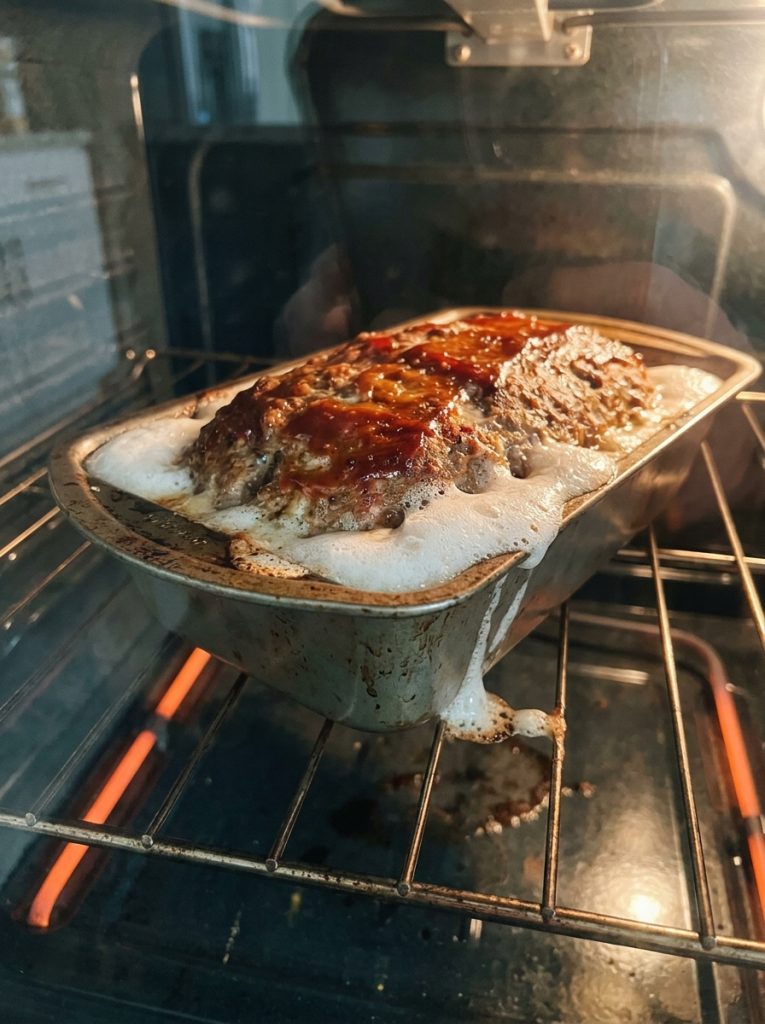
You check the oven halfway through baking and notice pale, foamy liquid bubbling around the edges of the loaf. Sometimes it pools on top. Sometimes it leaks dramatically into the pan like your dinner is melting.
And honestly? It looks… concerning.
A little gross, even.
A lot of people immediately assume the meat is spoiled or the recipe failed somehow. Others quietly scrape the foam away and pretend they never saw it. Fair enough.
But here’s the thing: that white foam is usually completely normal.
Not especially pretty. But normal.
And once you understand what’s actually happening inside the meatloaf while it cooks, the whole thing becomes a lot less mysterious.
So… What Is That White Stuff?
The white foam that appears on meatloaf is mostly a mix of protein, fat, and moisture escaping during cooking.
That’s it.
When ground meat heats up, proteins begin to tighten and coagulate. As this happens, some of those proteins get pushed out of the meat mixture along with rendered fat and liquid. Once the bubbling starts, the combination creates that pale, frothy foam people notice on the surface or around the edges.
Ground meat is especially prone to this because everything has already been broken apart and mixed together. The proteins are more exposed than they would be in a whole roast or steak.
Think about simmering chicken stock and seeing foam rise to the top of the pot. Same basic idea.
Not glamorous. But very common.
The Science Sounds Fancy — But It’s Actually Pretty Simple
Let me explain.
Proteins naturally change shape when exposed to heat. Scientists call this denaturation, but in practical kitchen terms, it just means the proteins tighten up and reorganize themselves as the meat cooks.
As they tighten, moisture gets squeezed out.
Meanwhile, fat melts. The melted fat combines with those proteins and juices, creating a frothy emulsion that rises to the surface.
That’s the white foam.
And the hotter the meat gets, the faster this process happens.
This is one reason meatloaf baked too aggressively at high heat tends to produce more bubbling, more foam, and honestly a rougher texture overall.
Slow and steady usually wins here.
It Looks Weird — But It’s Usually Safe
This is the part most people want reassurance about.
The white foam itself is generally harmless. It’s not automatically a sign that your meat has spoiled, your recipe is ruined, or dinner needs to head straight into the trash.
In most cases, it’s simply cooked protein and rendered fat doing what they naturally do under heat.
That said, your senses still matter.
If the foam smells sour, has an odd color, or the raw meat already seemed questionable before baking, trust your instincts. Fresh meat shouldn’t smell sharp or unpleasant. And foam that appears gray-green, yellowish, or unusually slimy deserves a second look.
But plain white or pale beige foam? Usually normal.
Not attractive. Just normal.
Fatty Meat Creates More Foam — Which Is Kind Of A Tradeoff
Here’s where things get slightly contradictory.
The meatloaf recipes that taste the best often use meat with a decent amount of fat. Ground beef around 80/20 is popular because the fat keeps the loaf moist and flavorful.
But more fat also means more rendered grease mixing with proteins during cooking.
Which means more foam.
Leaner meats like turkey or chicken generally create less bubbling because there’s less fat involved. But lean meatloaf also dries out more easily and can end up tasting dense or crumbly if you’re not careful.
So there’s a balance.
A moderately fatty blend usually gives the best overall result — juicy texture without turning the pan into a bubbling soup of grease and protein foam.
Honestly, meatloaf is one of those dishes where ultra-lean meat rarely improves things.
Eggs And Milk Matter More Than You’d Think
A lot of meatloaf recipes include eggs, breadcrumbs, milk, or crushed crackers. Those ingredients aren’t just filler — they help control texture.
But they also affect how much foam develops.
Eggs contain additional protein, which can contribute to that white residue during cooking. At the same time, eggs also help bind the loaf together, which can reduce how much liquid separates overall.
Kind of a mixed bag.
Milk and breadcrumbs usually help soften the texture and distribute moisture more evenly through the loaf. That often reduces aggressive bubbling because the proteins and fats stay better integrated instead of separating dramatically.
It’s one reason old-fashioned meatloaf recipes often hold together beautifully despite using fairly simple ingredients.
Grandmas knew things.
Oven Temperature Makes A Bigger Difference Than Most People Realize
High heat is usually the enemy of pretty meatloaf.
When the oven runs too hot, proteins tighten quickly and force more moisture outward. That creates more bubbling, more fat release, and more visible foam.
A moderate oven — around 350°F — tends to cook meatloaf more evenly and gently.
And honestly, meatloaf likes gentleness.
It’s not steak. It doesn’t benefit from aggressive heat blasting the exterior. Meatloaf is better when it cooks slowly enough for the inside to stay tender while the outside develops that caramelized glaze everybody fights over.
There’s also the pan issue.
A loaf pan traps liquid and foam around the meat. A sheet pan or rack allows more drainage and airflow. Neither is wrong, exactly — they just create different results.
Loaf pans usually give softer, juicier slices. Free-form loaves on sheet pans develop more crust and let excess grease escape.
Choose your personality.
Overmixing Quietly Makes Everything Worse
This one catches people off guard.
When you aggressively mash and mix meatloaf ingredients together, the proteins become more tightly packed and sticky. That can create a denser texture and encourage more protein separation during cooking.
Basically, the loaf gets tighter.
Tighter meat pushes out more liquid.
More liquid mixed with fat and proteins means more foam.
So mix gently. Just enough to combine everything evenly.
You’re making meatloaf, not kneading bread dough.
Want Less Foam? These Tricks Actually Help
You don’t need complicated chef techniques to reduce white foam. Small adjustments make a noticeable difference.
A few that genuinely work:
- Let the meat come closer to room temperature before baking
- Use moderate oven heat instead of blasting it hot
- Avoid overly fatty meat blends
- Mix ingredients gently
- Bake on a rack or perforated pan if excess grease is a problem
- Skim excess foam halfway through cooking if it bothers you visually
Some cooks even briefly pre-cook onions or partially brown the meat before assembling the loaf. That helps release some moisture and fat early, before the actual bake.
And honestly? Covering the loaf loosely with foil for part of the cooking time can help keep everything calmer and more evenly heated.
Sometimes meatloaf just wants a softer approach.
The Water Bath Trick Sounds Strange — But It Works
This feels a little retro, but hear me out.
Some cooks place the meatloaf pan inside a larger pan filled with hot water while baking. Similar to a cheesecake water bath.
It sounds odd for meatloaf, yet it creates gentler, humid heat that helps reduce harsh protein tightening and moisture loss.
The result is often a softer, silkier texture with less aggressive bubbling.
Is it necessary? No.
But if you’re chasing that ultra-tender diner-style meatloaf texture, it’s surprisingly effective.
If There’s A Lot Of Foam, Don’t Panic
Sometimes meatloaf just foams more than expected.
Especially with fattier beef blends or recipes containing lots of moisture-rich ingredients.
If the foam becomes excessive, you can carefully spoon some away during cooking. It won’t hurt the flavor at all. In fact, removing excess grease often improves the final texture.
And if the pan starts filling with liquid, draining a portion midway through baking can help prevent the loaf from essentially simmering in its own fat.
Not glamorous kitchen work. But useful.
Occasionally, The Foam Can Signal A Problem
Rarely, yes.
If the foam smells truly unpleasant — sour, rotten, or chemically strange — the meat may have spoiled before cooking. Likewise, unusual discoloration should never be ignored.
Fresh meat should smell mild. Maybe slightly metallic or earthy, but not offensive.
And any foam appearing greenish, bluish, or unusually slimy deserves caution.
Most of the time, though, the foam itself isn’t the issue. The condition of the raw meat before cooking is what matters.
The Secret To Better-Looking Meatloaf Slices
Resting matters here more than people realize.
Cutting meatloaf immediately after baking causes juices and loose proteins to spill everywhere, which can leave slices looking messy and wet.
Letting the loaf rest for 10–15 minutes changes everything.
The structure firms up. Juices redistribute. The surface settles.
And suddenly those slices look cleaner, richer, and way more appetizing.
A serrated knife helps too, surprisingly. Gentle sawing motions create cleaner cuts without smashing the loaf apart.
Tiny detail. Big difference.
So… Should You Worry About White Foam?
Usually? Not at all.
It may not be the prettiest thing your oven has ever produced, but white foam on meatloaf is generally just a normal reaction between protein, fat, heat, and moisture.
It’s kitchen chemistry more than kitchen disaster.
And honestly, some of the juiciest, most flavorful meatloaf recipes produce a little foam along the way. That’s often the tradeoff for richness and tenderness.
So next time you spot that pale bubbling around the edges of your meatloaf, don’t panic.
Your dinner probably isn’t ruined.
It’s just cooking.