I still remember that afternoon like it just happened.
The sauce was already simmering — slow bubbles, soft pops, that deep red color you only get when tomatoes have been cooking for a while. Garlic, olive oil, a handful of dried herbs… the whole kitchen smelled like something good was coming. You know that feeling.
My grandma stood there, calm as ever, stirring like she had done it a thousand times — because she had.
And then she did something that completely threw me off.
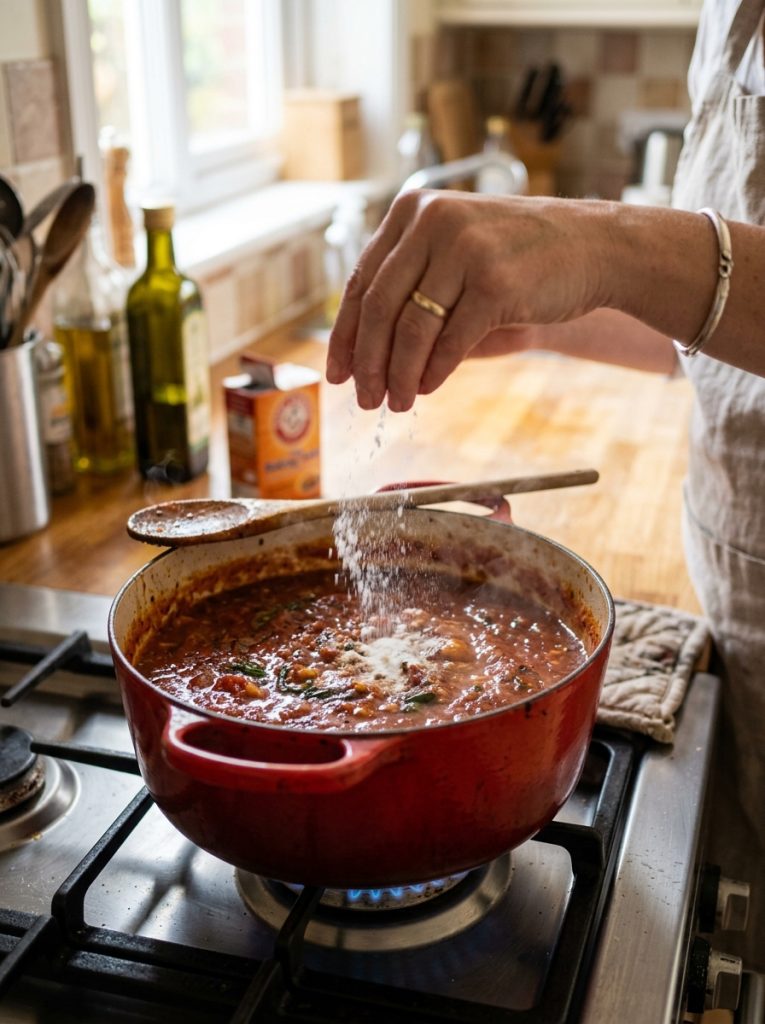
She reached into the cabinet, grabbed a small box of baking soda… and sprinkled a pinch into the pot.
I paused. Looked at her. Then back at the pot.
“Wait… why would you do that?”
She smiled a little — like she already knew I was about to learn something.
So… why mess with a good sauce?
Here’s the thing — tomato sauce isn’t always as “perfect” as we imagine.
Tomatoes are naturally acidic. That bright, tangy flavor we love? Yeah, that’s the acid talking. And most of the time, it works. It gives sauce that fresh, lively kick.
But sometimes… it’s too much.
- The sauce tastes sharp instead of balanced
- There’s a slight bitterness lingering in the background
- Or it just feels a little harsh on your stomach
Especially with canned tomatoes. They’re convenient (honestly, I use them all the time), but they can lean more acidic depending on how they’re processed.
That’s where the baking soda trick quietly steps in.
A tiny pinch that changes everything
We’re not talking about dumping spoonfuls into your sauce.
Just a pinch. Maybe 1/4 teaspoon for a full pot.
That’s it.
When you add baking soda, something subtle happens — the sauce softens. Not in texture, but in personality. The sharp edges fade a little. The natural sweetness of the tomatoes starts to come through more clearly.
It doesn’t taste like baking soda. It shouldn’t.
If it does, you’ve gone too far.
Honestly, the first time I tried it myself, I expected nothing. But the difference? Small, yes — but noticeable. And once you notice it, you kind of don’t go back.
Let me explain (without getting too “science class”)
Alright, quick version.
Tomatoes are acidic. Baking soda is alkaline.
When the two meet, they balance each other out — like turning down the volume on that sharp tang. You might even see a little fizz when you add it. That’s normal.
That reaction is basically neutralizing some of the acid, making the sauce smoother and easier on the palate.
It’s simple kitchen chemistry. Nothing fancy.
But it works.
What about sugar? Isn’t that the usual fix?
Good question — because yeah, a lot of people add sugar to tomato sauce.
And it does help.
But here’s the difference:
- Sugar masks acidity
- Baking soda reduces it
That’s not the same thing.
Sugar makes things sweeter, obviously. But sometimes you don’t want a sweeter sauce — you just want a more balanced one.
Baking soda handles that without changing the flavor profile too much.
That said… some people use both. And honestly? That’s not wrong either. Cooking isn’t strict — it’s flexible.
That bitterness you can’t quite explain…
You ever taste a sauce and think, “Something’s off,” but you can’t pinpoint what?
That slight bitterness — it happens more than we admit.
It can come from:
- Tomatoes that aren’t fully ripe
- Longer cooking times
- Certain canned varieties
A pinch of baking soda helps smooth that out too.
Not dramatically. Not in a “wow, totally different sauce” way.
More like… it rounds things off. Makes everything feel more complete.
And yeah… your stomach might thank you
This part surprised me a bit.
If you’re someone who gets heartburn from tomato-based dishes, you already know the struggle. Pasta night shouldn’t come with consequences, but sometimes it does.
Reducing the acidity — even slightly — can make the sauce easier to digest.
Is it a miracle fix? No.
But for some people, it makes a real difference. And honestly, that alone makes the trick worth trying.
Old kitchen wisdom vs internet hacks
Let’s be real for a second.
Not every cooking “tip” you see online is worth your time. Some are clever, some are questionable, and some are just… weird.
This one?
It’s old-school.
My grandma didn’t learn it from a video. She learned it from her mom. And probably her mom before that.
No trend. No viral moment. Just experience.
And those are usually the tips that stick — the quiet ones that actually work.
Baking soda does more than you think
Once you start paying attention, baking soda shows up in a lot of places in cooking.
Not just baking.
People use it to:
- Tenderize meat
- Help onions brown faster
- Soften beans while cooking
It’s one of those ingredients that sits in your kitchen doing nothing… until you realize it’s kind of a secret weapon.
Cooking like this feels different
There’s something about learning these small tricks that changes how you cook.
You stop just following recipes.
You start understanding them.
And then you adjust. You taste. You fix things in real time.
That’s where cooking becomes… not complicated, but more personal.
More yours.
So… should you try it?
Honestly? Yes.
Next time your tomato sauce tastes a little too sharp, don’t reach for sugar right away.
Try a tiny pinch of baking soda instead.
Stir it in. Let it settle. Taste again.
That moment — when you realize something simple just made your food better — that’s the good part.
That’s the part my grandma knew all along.