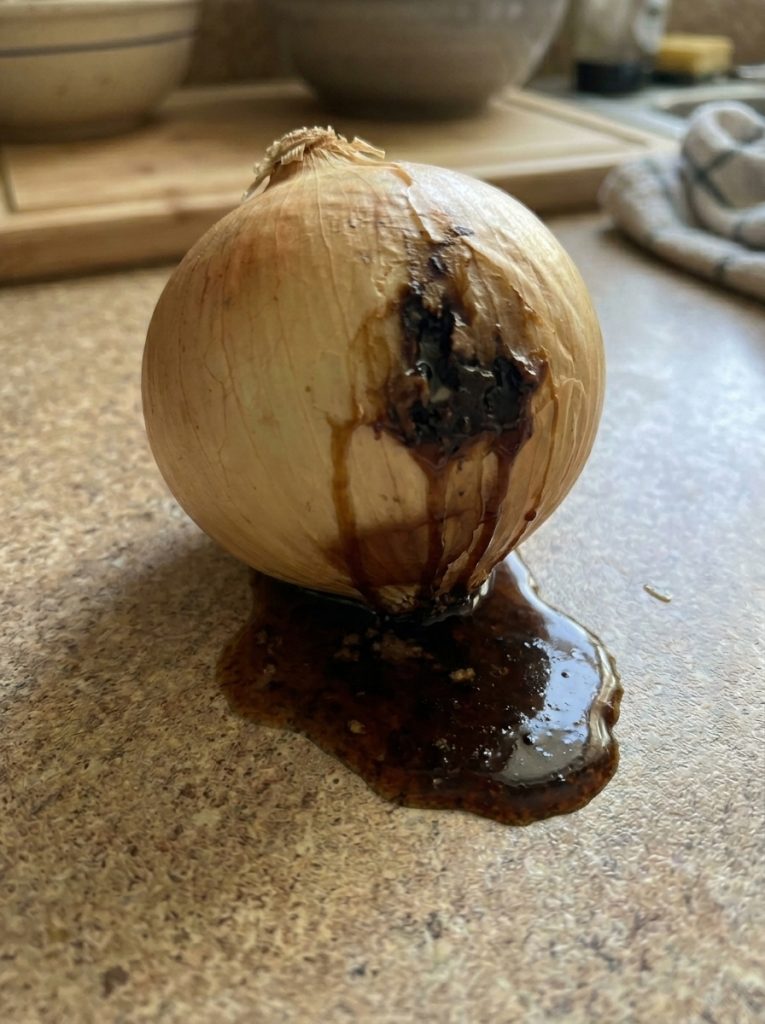
You reach into the pantry, grab an onion for dinner, and suddenly notice something unpleasant sitting underneath it — a sticky brown puddle. Not exactly the kitchen surprise anyone wants before making tacos, soup, or a weeknight pasta sauce.
At first glance, it feels alarming. Is the onion rotten? Is it dangerous? Can you still cut off the bad part and use the rest?
Honestly, onions are strange little things. They look sturdy and shelf-stable, almost indestructible at times, but once internal decay starts, they can go downhill fast. And the frustrating part? An onion may look perfectly normal on the outside while turning soft and brown inside.
The good news is that brown liquid leaking from an onion usually has a clear explanation. Most of the time, it comes down to moisture, bacteria, storage conditions, or physical damage. Once you understand what’s happening inside the onion, it becomes much easier to tell whether it’s still usable or headed straight for the trash.
Let me explain.
That Brown Liquid Isn’t Random — It’s a Sign the Onion Is Breaking Down
When an onion leaks brown liquid, it’s usually because the inside has started decomposing. The cells within the onion begin collapsing, releasing moisture mixed with natural sugars and compounds from the vegetable itself.
That liquid often looks tea-colored, brownish-yellow, or slightly cloudy. Sometimes it’s sticky. Other times it smells sour enough to make you instantly recoil. Your nose usually knows before your brain catches up.
In many cases, bacteria are involved. Once onions get bruised, nicked, or stored in overly damp conditions, microorganisms can enter through damaged spots and begin feeding on the onion’s internal tissues. As those tissues soften and decay, liquid leaks out.
And yes, sometimes it ends up all over the counter.
A healthy onion should feel dry, firm, and heavy for its size. Once it starts sweating brown liquid, that freshness window is closing quickly.
So Why Do Onions Rot From the Inside Out?
This part catches a lot of people off guard.
Unlike moldy bread or strawberries that visibly spoil on the outside first, onions often decay internally before showing dramatic exterior signs. That’s because bacteria thrive in moist environments trapped beneath the outer layers.
One common culprit is bacterial soft rot. The bacteria enter through tiny openings, bruises, or cuts and slowly digest the onion’s structure from the inside. Sounds gross because, well, it kind of is.
The onion gradually turns:
- soft
- watery
- mushy
- darker in color
Eventually, pressure builds inside the layers, and liquid begins leaking out.
You know what’s tricky? Sometimes only one section is affected while the rest still appears usable. Other times the entire onion is secretly collapsing beneath the skin.
That’s why texture matters so much.
The Texture Test Most People Forget
People often rely only on appearance, but texture tells you far more.
Pick up the onion.
Does it feel:
- unusually soft?
- squishy near the base?
- hollow in spots?
- slimy around the outer layers?
Those are stronger spoilage indicators than color alone.
Fresh onions should feel dense and crisp. Even sweeter varieties like Vidalia onions should still hold their shape firmly.
If the onion feels mushy like an overripe peach, it’s done.
And here’s the thing — once bacterial decay spreads deeply inside, cutting away a tiny bad section usually won’t save it.
The Smell Gives It Away Almost Every Time
Fresh onions smell sharp and pungent. They may make your eyes water, but the scent still smells “clean” in a weird onion way.
Spoiled onions smell completely different.
People describe rotten onions as:
- sour
- fermented
- musty
- sulfur-heavy
- almost garbage-like
It’s a thick, unpleasant odor that lingers longer than a normal onion smell.
If you cut into an onion and immediately want to pull your head away, trust that instinct. Your senses are designed for this stuff.
Honestly, kitchen safety often comes down to paying attention to obvious warning signs we sometimes try to rationalize away because we don’t want to waste food.
Can One Rotten Onion Ruin the Whole Bag?
Unfortunately, yes.
Onions stored close together can absolutely affect each other. Moisture and bacteria spread surprisingly fast in cramped storage spaces, especially in warm kitchens or humid pantries.
That’s why one leaking onion often turns into several spoiled onions within days.
Mesh bags help because they improve airflow. Closed plastic bags do the opposite. They trap humidity and create the perfect little bacterial vacation resort.
A lot of people accidentally speed up onion spoilage by storing them:
- in sealed plastic
- under the sink
- near dishwashers
- beside potatoes
- in warm cabinets
Potatoes are especially sneaky here. They release moisture and gases that encourage onions to spoil faster. Farmers and food storage experts have warned about this pairing for decades.
So even though onions and potatoes seem like pantry roommates, they’re actually terrible together.
When You Can Save Part of the Onion
Not every leaking onion needs immediate disposal.
If the onion still feels mostly firm and only a small outer section is affected, you may be able to salvage the healthy part. The key is being ruthless about trimming.
Cut away:
- all soft areas
- any brown or translucent layers
- anything slimy
- at least an inch beyond visible damage
The remaining onion should smell fresh and look crisp inside.
But if you notice widespread softness, internal browning, or foul odor throughout the center, don’t try to rescue it. It’s not worth gambling over a 79-cent onion.
Honestly, this is one of those moments where frugality backfires.
The Big Red Flags That Mean “Throw It Away”
Some signs should end the debate immediately.
Discard the onion if you notice:
- slimy texture
- visible mold
- dark liquid pooling underneath
- fermented or rotten smell
- extensive mushiness
- black spots inside
- excessive leaking
- hollow or collapsing interior layers
And if you’re thinking, “Maybe I can cook it anyway?” — probably not a good idea.
Cooking doesn’t magically reverse decomposition.
Cleaning the Counter Matters More Than You Think
Leaking onion liquid can carry bacteria across kitchen surfaces, especially porous countertops or cutting boards.
Thankfully, cleanup is simple.
First:
- Wipe away the liquid using paper towels.
- Wash the area thoroughly with warm soapy water.
- Rinse and dry completely.
Then disinfect the surface using either:
- a kitchen-safe disinfectant spray
- or a diluted bleach solution
A common homemade mix is:
- 1 tablespoon bleach
- 1 gallon water
Let it sit for several minutes before wiping dry.
And yes, it’s worth cleaning carefully. Onion residue can smell surprisingly strong for days if ignored.
The Storage Mistakes That Cause Onion Problems
Most onion spoilage comes back to moisture and airflow.
Onions like cool, dry, ventilated conditions. Think farmhouse pantry — not sealed container buried beside the stove.
Ideal onion storage includes:
- mesh bags
- baskets
- cool cupboards
- dry basements
- open-air bins
Avoid refrigeration for whole onions unless they’ve already been cut. Refrigerators often introduce too much moisture, which encourages decay.
Sweet onions spoil faster than yellow storage onions because they naturally contain more water. That’s why Vidalias sometimes seem to go bad overnight.
Different onion types really do behave differently.
Smart Shopping Habits Make a Huge Difference
A lot of spoilage starts at the grocery store before you even bring the onions home.
When buying onions, look for ones that are:
- firm
- dry
- heavy
- free from bruises
- free from soft spots
- not sprouting
Avoid onions with damp outer skins or strong odors. Those are early warning signs.
And maybe don’t buy a gigantic bulk bag unless you genuinely use onions constantly. It sounds economical until three of them liquefy in the pantry.
We’ve all been there.
Should You Worry About Food Poisoning?
Most spoiled onions won’t cause severe illness, but they absolutely can upset your stomach.
Rotting vegetables may contain harmful bacteria capable of causing:
- nausea
- vomiting
- stomach cramps
- diarrhea
The risk increases if the onion is visibly decomposing or smells fermented.
People with weakened immune systems, older adults, and young children should be especially cautious with questionable produce.
A fresh onion isn’t expensive enough to justify taking risks.
Final Thoughts
Brown liquid leaking from an onion is usually a sign that internal decay has started — often caused by moisture, bruising, or bacterial growth. Sometimes the damage is minor and salvageable. Other times the onion is clearly past saving.
The trick is learning to trust the clues:
- texture
- smell
- appearance
- amount of leakage
Fresh onions should feel dry, crisp, and firm. Once they become mushy, slimy, or foul-smelling, it’s time to let them go.
And honestly? A clean pantry, proper airflow, and regular checks make a bigger difference than most people realize. A few small storage habits can keep onions fresh for weeks longer — and prevent that unpleasant brown puddle from appearing on your counter again.