There are certain kitchen experiments that feel completely unnecessary right up until the moment they somehow work. This was one of those.
Hot dogs already live in the “easy dinner” category. You throw them in boiling water, toss them on a grill, maybe air-fry them if you’re feeling fancy. They’re dependable. Familiar. Not exactly the kind of food that begs for innovation.
But then I kept hearing people mention beer-boiled sausages — beer brats, specifically — and it got me thinking: if beer can make bratwurst taste richer and smokier, could it do anything for plain old hot dogs?
So naturally, I grabbed the cheapest lager I could find at the store, went home, and boiled hot dogs in it for 15 minutes like a person with questionable priorities and too much curiosity.
And you know what? The results were weirdly good.
Not life-changing. Let’s calm down. But definitely better than I expected.
The Whole Thing Started With Pure Curiosity
This wasn’t some carefully planned food science project. I wasn’t measuring pH levels or pairing craft beer notes with artisanal franks. Absolutely not.
I had:
- One pack of regular pork hot dogs
- One cheap can of lager
- A free evening
- The dangerous confidence that comes from watching too many cooking videos online
That’s it.
The idea sounded half ridiculous and half brilliant — which, honestly, is usually where the best comfort-food discoveries live.
Cheap lager felt like the right move too. If the experiment failed, I’d only be out about a dollar. Plus, I wanted to know if even bargain-bin beer could bring something interesting to the table.
Turns out, it can.
Setting Up Was Almost Suspiciously Easy
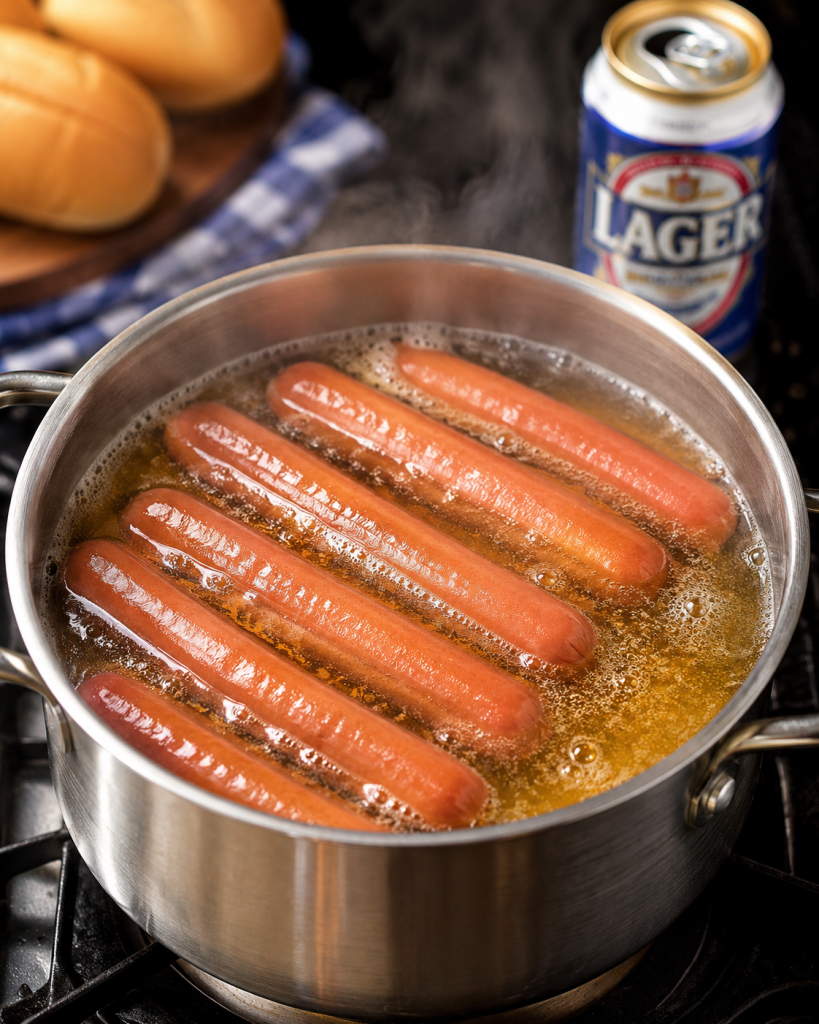
I poured a 12-ounce can of lager into a medium pot and set it over medium heat. No water. Just beer.
At first, it looked like a mistake. The smell alone made the kitchen feel like a sports bar at 2 p.m. on a Sunday. Not bad — just…unexpectedly intense.
Once the beer started to simmer gently, I dropped in the hot dogs and made sure they were mostly submerged. Then I let them go for 15 minutes.
That’s the entire process.
No fancy seasoning. No onions. No butter bath. Just hot dogs floating around in discount lager like they were at a tiny pool party.
The First Few Minutes Were Surprisingly Calm
Honestly, I expected chaos.
I imagined beer foam exploding over the sides of the pot like a science fair volcano. But the simmer stayed relatively controlled. A few bubbles. Some steam. Nothing dramatic.
Around the five-minute mark, though, the smell started changing.
The sharp beer scent mellowed into something warmer and more savory. Kind of malty. Slightly bready. It smelled less like canned beer and more like the inside of a casual pub that serves giant pretzels and burgers in metal baskets.
The hot dogs themselves started to plump up too. Their skins tightened slightly, and they floated near the surface like little beer balloons.
Not the prettiest visual, admittedly. But not bad either.
Fifteen Minutes Later, They Actually Looked…Better?
This surprised me most.
By the end of the simmer, the hot dogs looked fuller and slightly darker than normal boiled dogs. They had this glossy finish that made them seem grilled even though they never touched a pan.
Meanwhile, the beer had reduced into a thin golden broth that smelled oddly comforting.
Not gourmet. Let’s not get carried away here. But definitely more appetizing than plain hot-dog water, which usually smells like sadness and cafeteria memories.
And this is where I started thinking, “Okay, this might actually work.”
So Did the Beer Change the Flavor?
Yes. Subtly, but yes.
The first bite still tasted like a hot dog. Don’t expect miracles. You’re not suddenly eating some handcrafted sausage from a brewery restaurant.
But there was an extra layer underneath the usual salty flavor.
A faint maltiness lingered after each bite, along with a richer savory note that regular boiling just doesn’t create. The beer didn’t overpower anything — it simply nudged the flavor in a more interesting direction.
Honestly, it reminded me a little of what happens when you toast bread in butter instead of plain oil. Same basic food, but warmer and fuller somehow.
And weirdly enough, cheap lager worked perfectly because the flavor stayed mild. A super hoppy IPA probably would’ve made the whole thing bitter.
The Texture Was the Real Surprise
Here’s the thing nobody talks about enough: hot dog texture matters.
A bad boiled hot dog can turn rubbery fast. Or worse, soggy. That soft, waterlogged texture is honestly why some people think boiled hot dogs are inferior to grilled ones.
But these?
Juicy. Really juicy.
Not mushy. Not split open. Not weirdly dense.
The beer seemed to help the hot dogs hold onto moisture without making them swollen or soft. Each bite had a little snap to it — that classic hot dog resistance people secretly love.
I wasn’t expecting the texture difference to stand out more than the flavor, but it absolutely did.
The Kitchen Smelled Like a Tiny Brewery
Depending on your feelings about beer, this is either a perk or a downside.
The aroma filled the kitchen pretty quickly. Warm malt, savory steam, slightly yeasty notes — it all drifted around the room while the pot simmered away.
Personally, I liked it. It felt cozy in a very game-day-food sort of way.
But if you hate the smell of beer, you probably won’t enjoy standing over the stove during this process.
Also worth mentioning: the steam leaves a faint sticky residue nearby. Nothing terrible, but enough that I had to wipe down the stovetop afterward.
Tiny price to pay, honestly.
Is It Safe To Boil Hot Dogs in Beer?
Yep — generally speaking, it’s perfectly safe.
Most of the alcohol cooks off during simmering, especially over 15 minutes. What remains is mostly flavor from the malt and hops.
That said, you still want to keep an eye on the pot. Beer can foam if the heat gets too aggressive, and nobody wants boiling lager spilling across a stovetop.
Other than that, the process is basically no different from boiling in water.
Same hot dogs. Same cooking time. Slightly more interesting outcome.
Cheap Lager Actually Makes Sense Here
This might sound backwards, but I think expensive beer would almost be wasted on hot dogs.
A simple lager works because it adds:
- Mild sweetness
- Toasty grain flavor
- A little bitterness
- Extra aroma without overwhelming the meat
Fancy craft beers tend to have stronger hop profiles or heavier flavors that could dominate everything.
So yes, the $1 can was probably the right choice all along.
That feels oddly satisfying.
Would I Do It Again?
Absolutely — though probably not every week.
This feels like the kind of trick you pull out during:
- Backyard cookouts
- Football Sundays
- Late-night comfort food cravings
- Casual parties where people suddenly ask, “Wait…you boiled these in beer?”
It adds just enough personality to make basic hot dogs feel upgraded without turning the process into a whole production.
And honestly, that’s part of the appeal.
Not every cooking experiment needs to become a permanent lifestyle change. Sometimes it’s enough for something to simply be fun, cheap, and unexpectedly tasty.
These beer-boiled hot dogs checked all three boxes.
Final Verdict: Weird Hack or Legit Upgrade?
After 15 minutes of simmering hot dogs in cheap lager, I came away genuinely impressed.
The flavor was richer. The texture improved. The aroma made the kitchen feel warmer and more inviting. Cleanup was slightly messier, sure, but nothing dramatic.
Most importantly, the whole experiment reminded me of something easy to forget in cooking: tiny changes can completely shift how familiar food feels.
A can of cheap beer probably shouldn’t make hot dogs taste better.
And yet…it kind of does.