Weeds have this annoying habit of showing up like uninvited guests.
You clear them out one weekend, feel pretty good about it… and then a few days later, there they are again. Same spots. Same attitude.
And yes, there are plenty of store-bought sprays that can wipe them out fast. But if you’ve ever used one, you know the trade-offs. The smell alone is enough to make you step back. Then there are the warnings about keeping kids and pets away from treated areas, which kind of ruins the peace of mind you’re aiming for in the first place.
So here’s something simpler.
A homemade weed killer made from three basic ingredients. Nothing fancy. Nothing you need to go out of your way to buy.
Why Make Your Own Weed Killer?
I didn’t always think much about it. Weeds were weeds—you spray, they disappear, end of story.
But after a while, you start noticing things. The lingering smell. The hesitation before letting kids or pets walk over treated areas. The feeling that maybe there has to be a simpler way.
Plus, there’s something oddly satisfying about fixing a problem with things you already have at home. It feels smarter, maybe. Or just easier.
Either way, this homemade mix can help tackle weeds without turning your yard into a caution zone.
What You’ll Need for Homemade Weed Killer
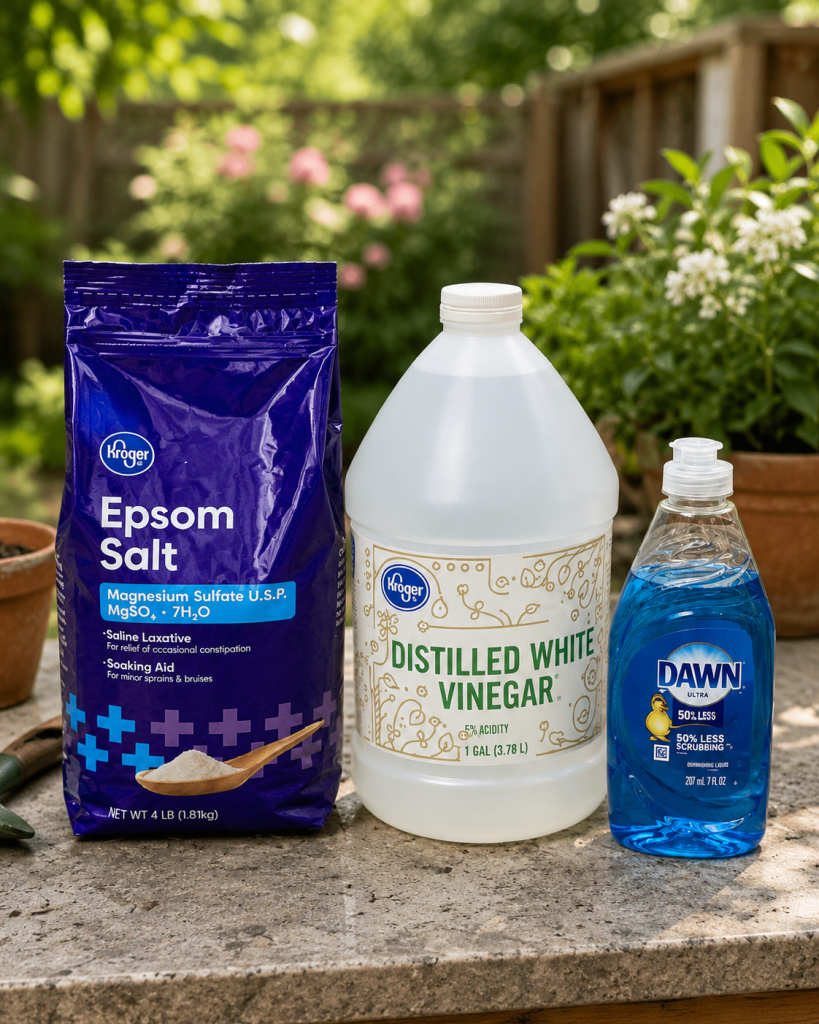
You might already have everything sitting in your kitchen:
- White vinegar, about 1 gallon: This does most of the heavy lifting. Vinegar helps dry out the weed’s leaves.
- Salt, about 1 cup: Regular table salt works fine. It helps weaken the plant and makes the mixture more effective.
- Dish soap, about 1 tablespoon: This helps the mixture stick to the leaves instead of sliding right off.
That’s it. No powders, no mystery ingredients, and no complicated mixing process.
How to Mix Homemade Weed Killer
You can mix everything right in a large spray bottle if it’s big enough. Or use a separate container first—whatever is easier.
Start by pouring the salt into the vinegar. Give it a good shake or stir, then let it sit for a bit. About an hour is usually enough. You just want the salt to dissolve properly.
After that, add the dish soap.
Stir gently. Don’t shake too aggressively, or you’ll end up with a bottle full of bubbles.
And that’s it. Your homemade weed killer is ready to use.
How to Use Homemade Weed Killer Safely
Here’s the part people sometimes skip over: this mixture does not know the difference between a weed and a plant you actually like.
It can damage or kill both.
So use it only in areas where you want unwanted growth gone, such as:
- Cracks in the driveway
- Between patio stones
- Along fence lines
- Gravel paths
- Sidewalk edges
Spray the weed leaves directly. Get a good coating on the leaves, but don’t soak the ground.
Aim carefully and avoid nearby flowers, grass, vegetables, or garden plants.
Does Homemade Weed Killer Really Work?
Yes, it can work. But not always in a dramatic, overnight miracle kind of way.
What happens is more gradual. The leaves start to wilt, then dry out, then turn brown. Usually within a day, you’ll see clear signs that it’s working.
Small weeds are often handled after one round.
Larger or tougher weeds may need a second application. Deep-rooted weeds can be especially stubborn, so don’t be surprised if you need to go back and treat them again.
The Best Time to Spray Weeds
If you can, use this mixture on a sunny day.
It sounds simple, but it makes a big difference. The heat helps speed up the drying process, which is basically what this whole method relies on.
Sunlight is your friend here.
Cloudy or damp weather slows everything down. Rain can wash the mixture away before it has time to work.
For best results, spray when the weather is dry and sunny, and when no rain is expected soon.
A Quick Warning About Salt
There’s one thing worth mentioning, and people don’t always talk about it.
Salt can build up in the soil if you use this mixture too often in the same place.
Over time, that can make it harder for anything to grow there again.
Sometimes that’s exactly what you want—like in driveway cracks or gravel paths. But near garden beds, lawns, trees, or shrubs? Not ideal.
Use this mix carefully and keep it away from soil where you may want plants to grow later.
How to Prevent Weeds Before They Grow
Killing weeds is one thing. Keeping them from showing up in the first place is even better.
One option people use is corn gluten meal. It doesn’t kill weeds that already exist, but it may help reduce new weeds from sprouting.
Think of it like cutting the problem off early.
You sprinkle it over areas where weeds usually show up, water it lightly, and over time, you may notice fewer weeds coming through.
It works best as a prevention method, not a quick fix for weeds that are already growing.
Frequently Asked Questions About Homemade Weed Killer
Will vinegar, salt, and dish soap kill weeds?
Yes, this mixture can help kill many common weeds by drying out the leaves. Smaller weeds usually respond best.
Can I use this homemade weed killer on my lawn?
No. Avoid using it on lawns. It can damage grass along with the weeds.
Is this safe for garden beds?
It’s best to avoid using this mixture near garden beds. The salt can affect the soil and make it harder for plants to grow.
How long does it take to work?
You may notice wilting within a few hours, especially on a hot, sunny day. Many weeds start turning brown within about a day.
Will weeds grow back?
Some might, especially deep-rooted weeds. You may need to reapply the mixture or pull stubborn weeds by the roots.
Final Thoughts
So, is homemade weed killer worth it?
Honestly… yes.
It’s not perfect, and it’s not meant to be. But it’s easy, cheap, and useful for everyday weed problems in driveways, patios, gravel paths, and sidewalk cracks.
And maybe more importantly, you don’t have to overcomplicate it.
No fancy equipment. No mystery ingredients. Just a simple mix that gets the job done.
Sometimes, that’s exactly what you need.