We’ve all had that moment.
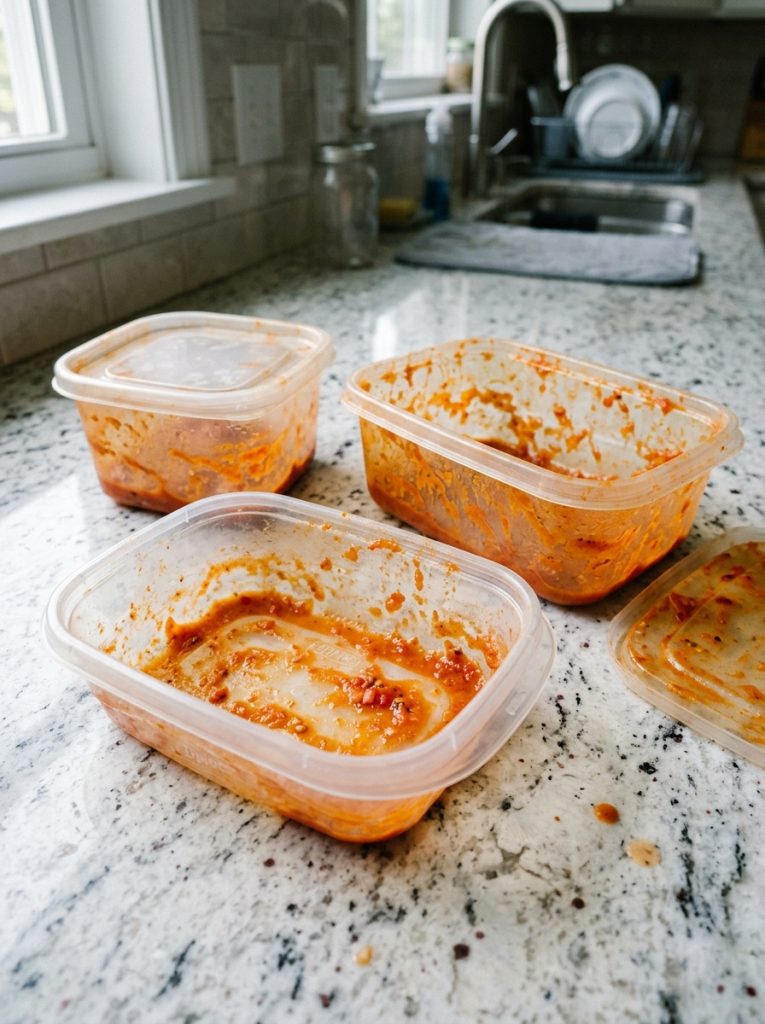
You open the cupboard, reach for a “clean” plastic container… and there it is. That stubborn orange tint staring back at you like a reminder of last week’s spaghetti night. Or chili. Or that ambitious tomato curry you swore you’d make again (but haven’t).
You wash it. You scrub it. Maybe you even let it soak overnight.
And still… it lingers.
Honestly, it’s frustrating. It makes perfectly good containers look old, worn out, almost dirty—even when they’re not.
But here’s the thing: there is a ridiculously simple way to fix it. No harsh chemicals. No scrubbing until your hands give up. And yes—it actually works.
Why Do Plastic Containers Get That Orange Tint Anyway?
Let me explain, but I’ll keep it simple.
That orange stain? It mostly comes from tomatoes—specifically something called lycopene. It’s a natural pigment, and it’s stubborn in the most annoying way.
Here’s the kicker: it loves oil.
And plastic? It tends to hold onto tiny traces of oil, especially if it’s been used a lot or has a few scratches. So when you heat up something like pasta sauce in the microwave, you’re basically helping that pigment sink deeper into the surface.
It’s not just sitting on the container—it’s clinging to it.
Which explains why regular washing doesn’t do much.
The “Barely Try” Trick My Mother-In-Law Swears By
I’ll admit—I was skeptical when I first heard this.
My mother-in-law casually mentioned it one afternoon while I was complaining (again) about stained containers. She just smiled and said, “Put it in the sun.”
That’s it.
Well… not just that. There’s a tiny bit more to it, but honestly, the whole method feels almost too easy.
No scrubbing. No fancy products. Just a couple of kitchen staples and a little patience.
And somehow—it works better than anything else I’ve tried.
What You’ll Need (You Already Have This)
Nothing complicated here:
- 1 tablespoon baking soda
- Juice of half a lemon
- A little water
- Your stained container
- And, ideally… sunlight
That’s it. No store run. No specialty cleaner.
Let’s Get It Ready (Takes Maybe 2 Minutes)
Start by giving the container a quick rinse with warm water. You don’t need to overthink this—just remove any leftover food bits.
Then:
- Mix the baking soda with a little water to make a paste (thick, not runny)
- Spread it over the stained areas
- Squeeze the lemon juice right on top
You’ll notice a little fizzing—that’s normal. Kind of satisfying, actually.
Make sure the stained spots are well covered, and you’re good to go.
Now… Do Nothing (Seriously)
Here’s the part I like most.
Take your container and set it somewhere sunny. A windowsill works. A balcony. Even outside on a table if you have the space.
And then… just leave it.
That’s the whole “trick.”
The sunlight acts like a natural bleaching agent, while the baking soda and lemon gently break down the stain. It’s a quiet kind of teamwork—you don’t see much happening, but something definitely is.
So How Long Should It Sit?
Give it at least 4 hours.
If the stain is light, that might be enough. If it’s one of those deep, “this container is doomed” stains… leave it longer. Six hours. Even all afternoon.
I’ve forgotten mine outside for a full day before, and honestly, that worked even better.
It’s one of those rare situations where doing less actually gives you more.
The Moment of Truth (Before vs After)
After it’s had time in the sun, bring it back in and rinse it with warm water.
You might need a quick wipe with a soft sponge—nothing aggressive.
And then… you’ll see it.
That cloudy orange film? Faded or completely gone.
It’s oddly satisfying. Like finding money in an old jacket pocket.
What If the Stain Is Still There?
It happens sometimes.
If the container has been stained for a long time—or heated over and over—you might need a second round.
Just repeat the process.
If you want to give it a little boost, you can add a splash of white vinegar to the mix. Not necessary, but it helps with tougher stains.
Still, even without it, the method usually gets there in one or two tries.
Quick Reality Check: When to Let Go
Now, here’s the part we don’t always want to hear.
Sometimes a container is just… done.
If it’s deeply scratched, cloudy, or has a lingering smell that won’t go away, it might be better to replace it. Those tiny grooves can trap bacteria, and no cleaning trick can fully fix that.
It’s not about being wasteful—it’s about being safe.
How to Keep This From Happening Again
A few small habits make a big difference:
- Rinse containers right after using them (before stains settle in)
- Avoid microwaving tomato-based foods in plastic
- Use glass containers for things like sauces or curries
- Or even line plastic containers with parchment for messy foods
None of this is complicated—but it saves you from repeating the same cleaning cycle over and over.
A Little Side Note (Because It’s Kind of Useful)
You know what’s funny?
This trick doesn’t just work on containers.
I’ve used it on cutting boards, especially after chopping tomatoes. Even on some stained kitchen tools. Once you start noticing where those orange stains show up, you realize they’re everywhere.
Same method. Same results.
Final Thoughts (Because This One’s Worth Remembering)
There’s something satisfying about solving a problem the easy way.
No scrubbing. No expensive cleaners. No frustration.
Just a simple mix, a bit of sunlight, and time doing its thing.
And honestly? Once you try it, you’ll probably never look at those orange-stained containers the same way again.