This slow cooker lemon butter salmon is one of those dinners that basically makes itself. You lay the fish on parchment, pour a simple lemon butter sauce over the top, tuck on some lemon slices, and let the slow cooker do everything. No babysitting, no splatter, no smoky kitchen — just flaky, tender salmon with that gentle steamy heat that the oven honestly can’t replicate. It’s become a regular weeknight dinner around here, and I don’t see that changing anytime soon.
Why you’ll love it
Almost impossible to overcook — the slow cooker’s low, gentle heat gives you a wide window where the fish stays perfectly moist. No hovering required.
No splatter, no fishy smell — the parchment tent keeps everything contained and your kitchen smelling like lemon and butter, not a fish fry. Try our Slow Cooker Lemon Butter Cod: A Gentle Nod to Midwest Fish Suppers next.
Feels fancier than it is — the lemon slices, the buttery sauce, the way it flakes — guests will think you tried much harder than you did.
Totally hands-off — set it and go do whatever else needs doing. The salmon handles itself.
A word about the ingredients
The salmon matters here more than in some recipes. I try to get a nice center-cut fillet — one of those thick, even pieces — rather than the tail end, which can be thinner and cook unevenly. Skin-on or skinless both work fine; I usually buy whatever looks best at the store. If you can get wild-caught sockeye, it’s lovely. But don’t let perfect be the enemy of a good weeknight dinner.
The butter — I use unsalted so I can control the salt. Real butter. I’ve tried olive oil only and it’s fine but it’s not the same. The combination of butter and a little olive oil, actually, is my favorite — it adds some richness without feeling too heavy. If you like this, you'll love our Southern Fish Fry: Just Like Mama Used to Make (And Maybe Even Better).
Lemon. This is not the moment for bottled lemon juice. I know I sound like a snob saying that. I’m not a snob about most things, I promise. But the slices and the fresh juice both matter here. Use a real lemon. Use a sharp knife. It takes about thirty additional seconds and it makes a difference you can taste.
Garlic — I usually do garlic powder on a weeknight because it distributes more evenly over the fish, but fresh minced garlic is wonderful if you have it. If you’re a garlic person, just double it. No one’s going to complain.
Ingredients
1½ to 2 pounds salmon fillet, cut into 4 pieces (skin-on or skinless, your call)
1 teaspoon kosher salt — maybe a bit more, I tend to season generously
½ teaspoon black pepper
½ teaspoon garlic powder, or 2 cloves fresh garlic, minced
4 tablespoons unsalted butter, melted
1 large lemon, sliced thin — plus 2 tablespoons fresh lemon juice (about half a lemon, though I usually squeeze closer to a whole one if I’m being real) For another easy option, see our Slow Cooker Herb-Crusted Chicken Fillets with Creamy Mashed Potatoes.
1 tablespoon olive oil, optional but I always add it
2 tablespoons fresh parsley, chopped, or a small handful — or dried parsley works in a pinch
Parchment paper
A little cooking spray or extra butter for greasing the parchment
More recipes you might like



How to make it
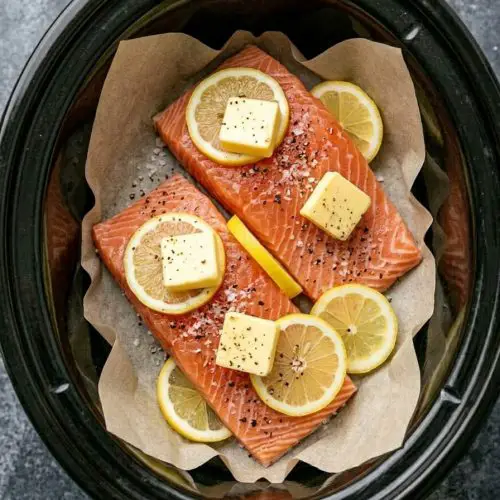
Tear off a sheet of parchment big enough to line the bottom of your slow cooker and come up the sides a bit. Spray it or rub it with a little butter — this matters, don’t skip it, or you’ll spend ten minutes trying to gently peel salmon off parchment and you won’t enjoy it.
Pat your salmon dry. I cannot stress this enough. Wet fish doesn’t season properly, it sort of slides off, and — just dry it. Season both sides with salt, pepper, and garlic.
In a small bowl, whisk together the melted butter, lemon juice, and olive oil. Stir in the parsley. This sauce is so simple it almost feels like you forgot to do something. You didn’t.
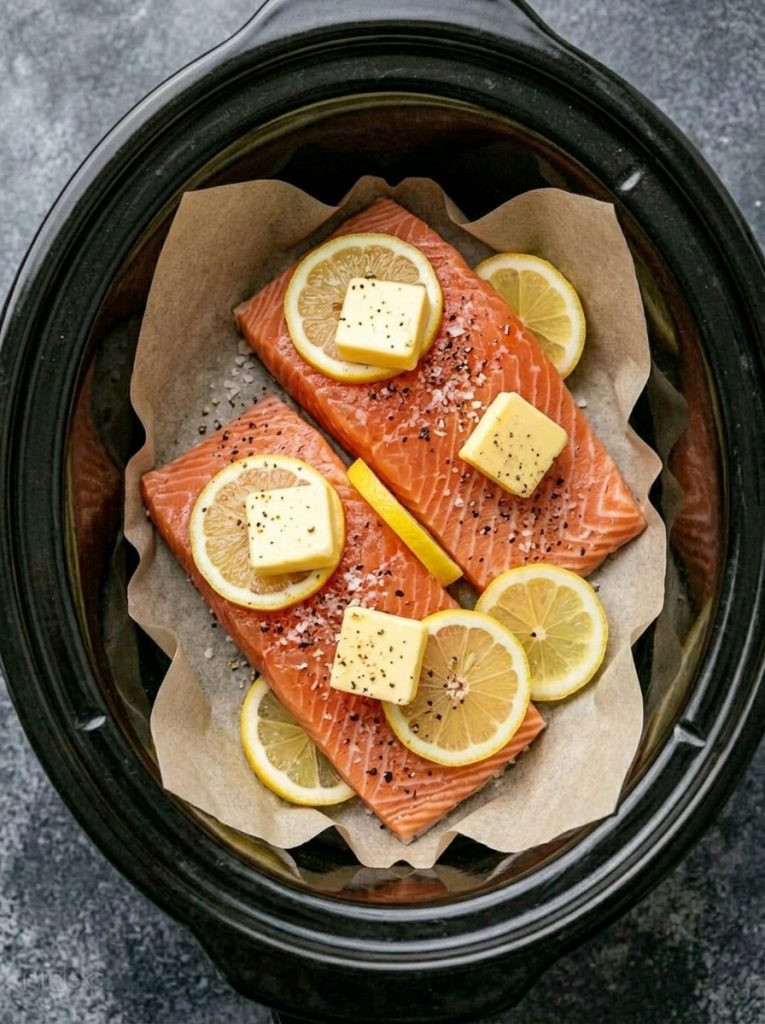
Lay the salmon skin-side down on the parchment in a single layer. Pour the lemon butter over everything — try to get it on all the pieces evenly, though honestly some pieces will get a little more than others and that’s fine, everyone gets a turn. Lay your lemon slices across the top. I overlap them a little so the fish is mostly covered.
Now fold the excess parchment loosely over the top of the salmon — you’re making a tent, not a sealed packet. It just needs to drape. Put the lid on. Cook on LOW.
Here’s the thing about timing: every slow cooker is different. Some run hot, some run cool. Start checking at about 1 hour 15 minutes. The salmon is done when it flakes easily and the center is opaque — or when a thermometer reads 125–130°F if you like it moist (which I do), or up to 140°F if your family prefers it fully cooked through.
Let it rest for a few minutes before serving. Spoon the buttery juices from the parchment over the top before you plate it. Don’t skip that step — it’s the best part. You might also like our Grilled Salmon Burgers with Avocado Salsa.
Variations
A drizzle of honey in the butter mixture — maybe a teaspoon or two — makes it a little softer and sweeter, which is nice if you’re feeding picky eaters. Dill instead of parsley is a perfectly good swap and honestly more traditional for salmon.
I’ve made a version with Parmesan grated over the top in the last few minutes — I just lift the parchment tent, sprinkle it on, and put the lid back — and it gets slightly melted and golden and disappears fast.
If you want to make it more of a complete meal, you can tuck some thin-sliced baby potatoes or carrot coins under the parchment (not under the thickest part of the fish, off to the sides so they get heat). Season them first. They’ll steam up in the lemon butter and they’re wonderful. I sometimes do this when I don’t want to deal with a separate pot of anything.
Leftovers
Salmon keeps in the fridge for two or three days. It’s actually great cold on top of a salad the next day — better than you’d expect. Reheat gently if you’re going to — a few minutes in a covered skillet with a splash of water or broth. The microwave will do in a pinch but it gets a little rubbery if you’re not careful.
I’ll be honest: I usually eat the leftovers for lunch standing at the counter. I don’t always make it to the plate. Try our Slow Cooker Herb-Crusted Chicken with Lemon Butter Sauce next.
One more thing
Serve this over rice if you want every drop of that lemon butter to go somewhere good. Egg noodles are also wonderful. Crusty bread for mopping. Simple green beans or asparagus on the side if you want something green on the plate. If you like this, you'll love our Southern-Style Crispy Chicken Cutlets.
Slow Cooker Lemon Butter Salmon
Want This Recipe Later?
Ingredients
- 1 1/2-2 lbs salmon fillet cut into 4 pieces
- 1 tsp kosher salt or to taste
- 1/2 tsp black pepper
- 1/2 tsp garlic powder or 2 cloves fresh garlic, minced
- 4 tbsp unsalted butter melted
- 1 lemon thinly sliced
- 2 tbsp lemon juice fresh
- 1 tbsp olive oil optional
- 2 tbsp parsley chopped
Instructions
- Line the slow cooker with parchment paper and lightly grease it with cooking spray or butter.
- Pat salmon dry and season both sides with salt, pepper, and garlic.
- In a small bowl, whisk melted butter, lemon juice, olive oil, and parsley.
- Place salmon pieces skin-side down on parchment. Pour lemon butter mixture evenly over top and arrange lemon slices over the fish.
- Loosely fold parchment over the salmon to create a tent. Cover and cook on LOW for 75–90 minutes.
- Check for doneness when salmon flakes easily and reaches desired internal temperature (125–140°F).
- Let rest briefly, then spoon buttery juices over salmon before serving.
Notes
Nutrition
Made this recipe? Tap a star to rate it.
Nutrition values are estimates based on the listed ingredients and serving count. Actual values vary with brands, cuts and portion sizes.