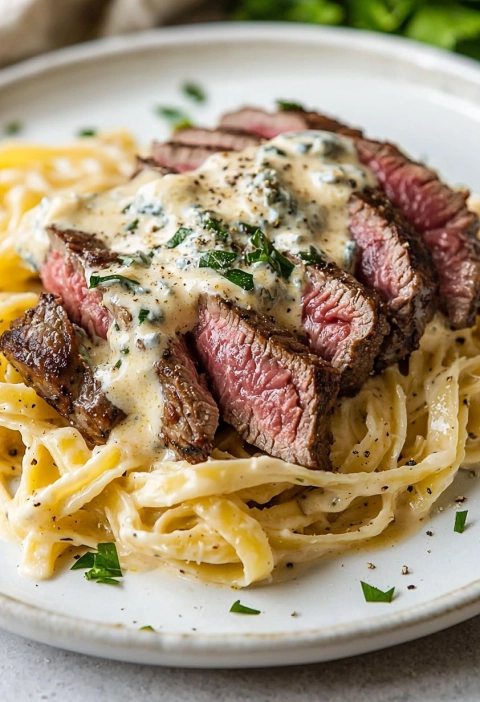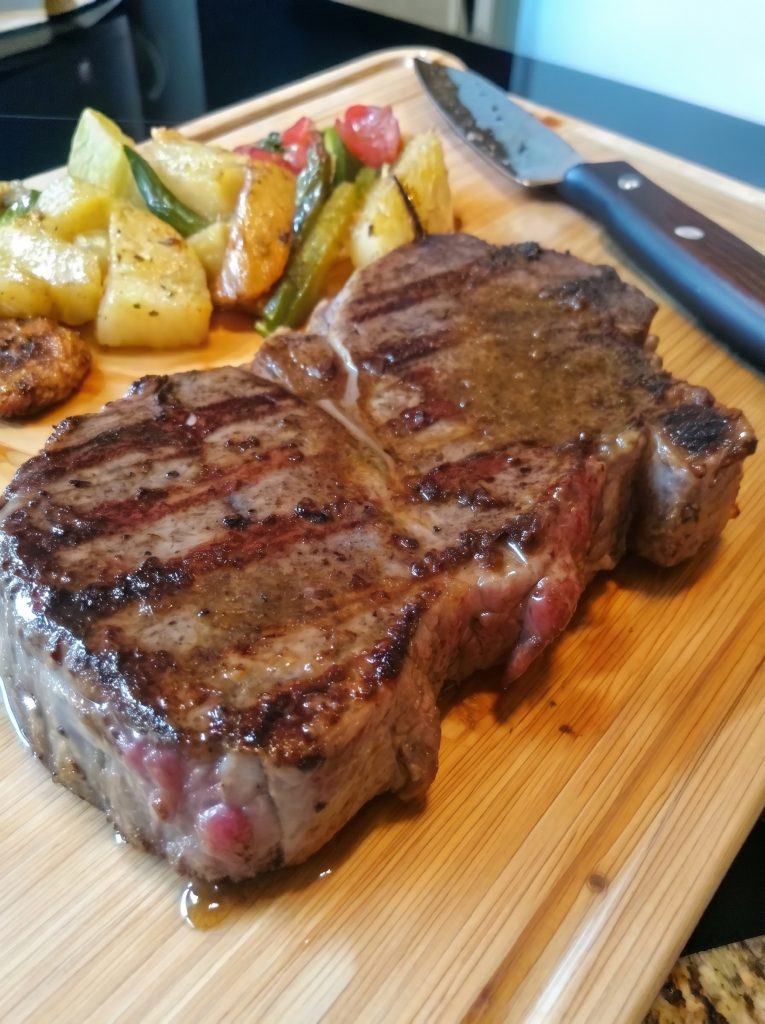
This seared ribeye with red wine pan gravy is the kind of dinner that feels like a restaurant meal — and it comes together in under 30 minutes. The gravy is made right in the same pan, using all those browned bits the steak leaves behind, so every drop of flavor ends up on your plate.
Why You’ll Love It
Ready in 30 minutes — fast enough for a weeknight, impressive enough for company
One skillet, minimal cleanup — the gravy builds right in the steak pan
That pan gravy is everything — silky, rich, and deeply savory with wine, broth, and a finish of butter
Simple ingredients, serious flavor — nothing fancy, nothing hard to find
Perfectly customizable doneness — a few extra minutes per side and you’re at medium, no guesswork needed
Ingredient Notes
The ribeye is the whole thing here, so don’t cheap out if you can help it. I buy mine from an actual butcher when I’m being good, and from the nicer grocery store when I’m not. Look for good marbling — those little white fat veins running through the meat — because that’s where the flavor lives. About an inch and a half thick is what I aim for. Thinner than that and you lose the ability to get a good sear while keeping the inside where you want it.
For the wine: I’ve used whatever red was open on the counter, which is sometimes embarrassing to admit but also just true. It doesn’t need to be expensive. Cabernet or Merlot works well; I’d stay away from anything too sweet. You’re cooking it down anyway, so “drinkable” is really the only bar.
The Worcestershire and soy sauce in the gravy sounds odd but don’t skip them. They add this deep, savory undertone that you can’t quite identify but would definitely notice if it was missing. I figured this out by accident once when I was out of Worcestershire and the gravy just tasted… thin. Flat. Like it was trying.
Fresh rosemary from the garden is lovely if you have it. Dried works too. Thyme is also great and honestly interchangeable here — I’ve done both and never really settled on a preference.
Ingredients
For the Steak:
2 ribeye steaks, about 1½ inches thick
2 tablespoons olive oil
Salt and black pepper, generously — more than you think
2 cloves garlic, minced
1 sprig fresh rosemary or thyme
For the Red Wine Pan Gravy:
½ cup red wine (Cabernet, Merlot, whatever’s open)
1 cup beef broth
1 tablespoon all-purpose flour
1 tablespoon unsalted butter
1 teaspoon Worcestershire sauce
1 teaspoon soy sauce
Salt and pepper to taste

Instructions
First: pat the steaks dry. This matters more than people think. If there’s moisture on the surface, the meat steams instead of sears, and you lose that dark, gorgeous crust. Paper towels, both sides, really press down. Then salt and pepper — and I mean really season them. Steaks can take a lot of salt. I always think I’ve used enough and then wish I’d used more.
Get your skillet — cast iron if you have one, though a heavy stainless pan works — over medium-high heat with the olive oil. Let it actually get hot. This is where people rush things. You want to see the oil just starting to shimmer and move. When you put the steak in, it should sear loudly. If it doesn’t sizzle aggressively, the pan isn’t ready.
Four to five minutes per side for medium-rare. I use a timer because I always think I’m tracking it in my head and I’m not. In the last minute, throw in the garlic and the rosemary. They’ll toast in the fat and perfume everything. Watch the garlic — it can burn fast and burnt garlic in the background of a beautiful steak is just a sad way to end things.
Pull the steaks out and put them on a plate, tent some foil over them. This resting step is non-negotiable. The juices redistribute. You need at least five minutes here, maybe while you’re making the gravy.
Now: the same pan, still hot, medium heat. Add the flour and stir it into the fat that’s left in the pan. Let it cook for about a minute — you’re making a little roux here, and you want it to cook slightly so you don’t get that raw flour taste in the gravy. Gradually pour in the wine, scraping up all the brown bits as you go. Those bits are everything. That’s where all the flavor from the steak lived.
Add the broth, Worcestershire, and soy sauce. Let it come to a simmer and cook it down for five to seven minutes until it thickens to something that actually coats the back of a spoon. Then pull it off the heat and stir in the butter. The butter goes in at the end, off heat, and it makes the whole thing glossy and smooth. Season with salt and pepper, taste it, adjust.
Pour it over the rested steaks. That’s it.
Variations
A Malbec instead of Cabernet works beautifully here and adds a slightly fruitier depth to the gravy. Fresh thyme is a great swap for rosemary — both work, just different. Adding minced shallots to the roux stage is genuinely delicious, though the exact amount is a judgment call — one or two should do it.
If ribeye’s out of budget, a well-marbled New York strip works. I wouldn’t do this with a sirloin, personally — too lean and it won’t have the same richness. The gravy can carry a lot, but it can’t carry everything.
Storage
Steak is always better fresh and I think we all know that. But if you’ve got leftovers, they keep in the fridge for two or three days. Reheat low and slow — I usually put the sliced steak in a covered pan with a little splash of broth over low heat, just enough to warm it through without cooking it further. Microwave works in a pinch but it can get tough fast.
The gravy reheats beautifully on its own. Actually, the second day the gravy might be better — more concentrated, more settled. I’ve been known to keep the gravy and make something else entirely with it the next night. Mashed potatoes, egg noodles, whatever’s around.