This oven baked creamy tomato basil chicken is one of those recipes that looks and tastes like you spent the afternoon on it — but really the oven does almost all the work. Chicken breasts bake right in a silky pink sauce made from crushed tomatoes, heavy cream, Parmesan, and garlic, coming out tender enough to cut with a spoon. It’s hearty, saucy, and the kind of thing you’ll want crusty bread nearby for.
Why You’ll Love This
I’m not going to sit here and tell you this is a quick weeknight dinner you can have on the table in thirty minutes, because technically it takes about an hour from start to finish. But the thing is—about forty-five of those minutes, you’re not doing anything. The oven is doing it. You mix some things in a bowl, pour it over some chicken, cover it with foil, and then you have time to help with homework or fold the laundry or just stand at the counter with a glass of wine and stare out the window. That’s most of my cooking time accounted for right there. Try our Chicken Spaghetti next.
The sauce is what people always comment on. It’s got body without being heavy—the cream and the crushed tomatoes sort of meet in the middle and make something that’s neither quite pasta sauce nor quite cream sauce. The Parmesan melts in and gives it depth. My kids, when they were still home, would mop the dish with bread and I’d let them because I was going to do the same thing the second they went upstairs.
It also reheats beautifully, which in my house is not a small thing. I am a person who almost always makes more than we need.
A Few Notes on Ingredients
The crushed tomatoes matter more than you’d think. I used to grab whatever was cheapest and honestly the sauce was fine, but a few years ago I started using San Marzano and the difference is—real. Less acidic, fuller flavor. That said, I don’t always have them, and regular crushed tomatoes absolutely work; you just might want to add that teaspoon of sugar I mention in the recipe to take the edge off.
Heavy cream is heavy cream. I’ve tried it with half-and-half and it works but the sauce is thinner, more watery around the edges of the dish. If you’re watching fat or calories, go for it, but just know it’s a different texture. Not worse. Just different. If you like this, you'll love our Oven Baked 4-Ingredients Sheet Pan Chicken Fajitas.
Parmesan—please grate it yourself if you can manage it. The stuff in the green can has its place in the world (I grew up on it and I turned out fine) but it doesn’t melt the same way and the sauce can get a little grainy. Fresh grated is worth the three minutes.
Garlic: I use three cloves and sometimes I wonder if I should use four. You probably know your own preferences better than I do.
The red pepper flakes I almost always use the full half teaspoon and then wish I’d used more. My husband thinks that’s too much. We’ve been having this disagreement for years and I don’t see it resolving.
Ingredients
– 4 boneless, skinless chicken breasts — about 2 pounds total, though mine are never exactly the same size and that’s fine
– 1 teaspoon kosher salt, divided
– ½ teaspoon black pepper, divided
– 1 can (14.5 ounces) crushed tomatoes
– 1 cup heavy cream
– ½ cup finely grated Parmesan — a little more doesn’t hurt
– 2 teaspoons dried basil
– 3 cloves garlic, minced
– ½ teaspoon red pepper flakes — I usually add more at the table
– 2 tablespoons olive oil or melted butter (I use olive oil; my mother would have used butter) For another easy option, see our Oven-Baked 4-Ingredient Chicken Madison.
– 1 teaspoon sugar, optional but I usually add it
– Extra Parmesan and dried basil for the top, if you like

How to Make It
Start with your oven at 375°F. Get out the glass casserole dish—9×13—and just leave it on the counter so it’s ready.
More recipes you might like


Pat the chicken dry with paper towels. This is one of those steps I used to skip because honestly it seemed like busywork, but it does matter. A wet chicken breast in a wet sauce takes longer to cook and the surface texture stays strange. So. Pat it dry.
Season both sides with about half the salt and half the pepper, then lay the pieces in the dish with a little space between them. Don’t crowd them. The sauce needs room to get around them.
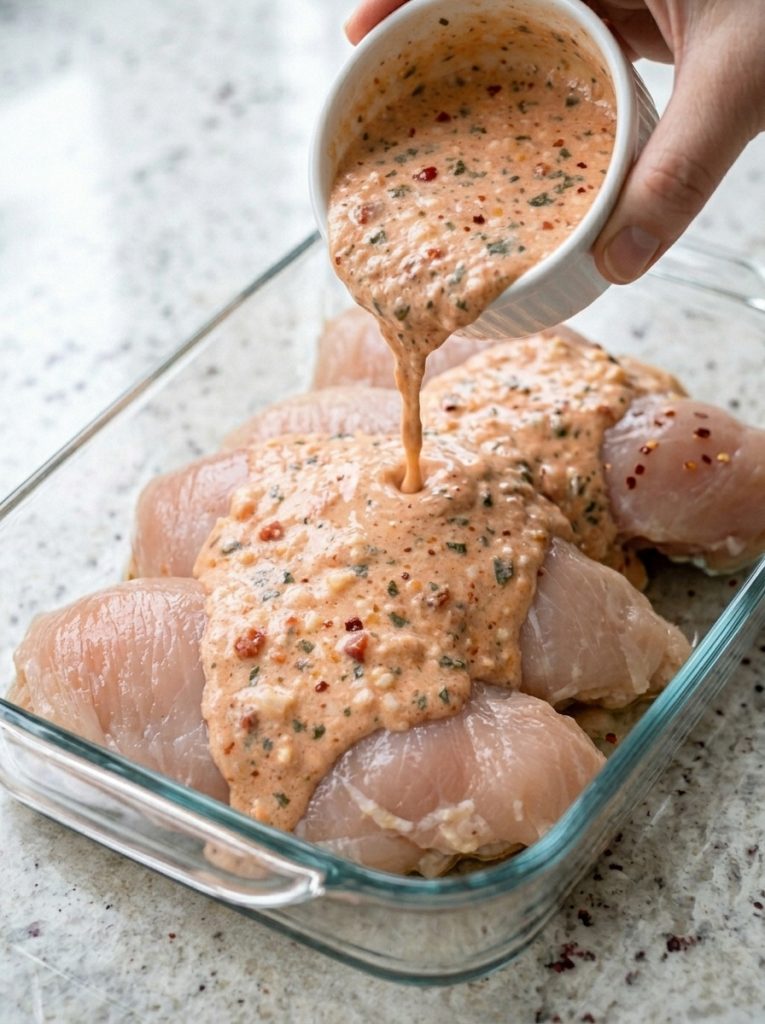
In a bowl—I use a medium one, whatever that means, the one that’s bigger than a cereal bowl but smaller than what I’d use for salad—combine the crushed tomatoes, heavy cream, Parmesan, dried basil, minced garlic, red pepper flakes, the oil or butter, the rest of your salt and pepper, and the sugar if you’re using it. Stir it until it looks like one cohesive thing. You’ll see the cream and tomato come together into that rose-pink color and it’ll smell good even before it hits the oven.
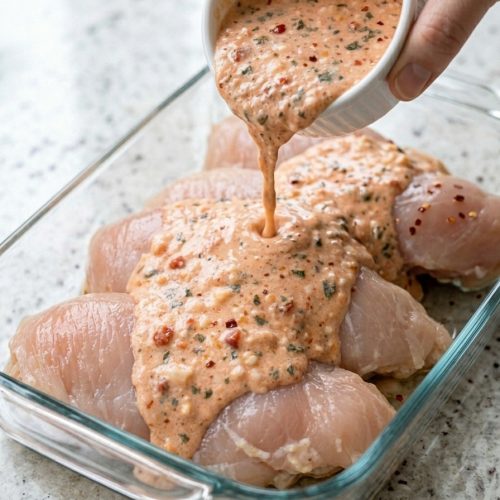
Pour it over the chicken slowly, making sure every piece gets covered. Use a spoon to nudge sauce into the corners if it pools in the middle. You want the whole dish coated—this isn’t a recipe where the sauce stays on top. It bakes around and under everything.
Cover tightly with foil and bake 25 minutes. Set a timer. I always think I’ll remember and then I’m three rooms away doing something else and half an hour has passed.
After 25 minutes, take the foil off—carefully, there’s steam and it will absolutely get you if you’re not paying attention—and put the dish back in uncovered. Another 15 to 20 minutes. You’re looking for bubbling around the edges and an internal temperature of 165°F if you have a thermometer. I do have one. I don’t always use it. But I should and you should.
Let it rest in the dish for 5 to 10 minutes before you serve it. I know. Everyone says let things rest and nobody wants to wait. But the sauce tightens up just slightly during those minutes and the chicken settles and it really is better. Occupy yourself. Set the table. Find the serving spoon that somehow always ends up in the wrong drawer.
What To Do Differently
If you want this to feel more like a casserole than a braise—more of a dinner-party dish than a Tuesday thing—scatter shredded mozzarella across the top when you pull the foil off and let it brown and bubble in those last 15 minutes. It becomes something else entirely. A little messier to serve, in a good way. You might also like our CHICKEN RICOTTA MEATBALLS WITH SPINACH ALFREDO SAUCE.
My daughter-in-law makes this with chicken thighs instead of breasts and honestly hers might be better than mine—they stay moister, there’s more flavor in the meat, and you just cook them a little longer. I’ve started doing it that way too when I can find thighs at the store. Which is not always.
If you want to stretch the meal—and there are nights when you need to—you can add pasta right to the dish. Par-cook your penne or rotini, just barely, then tuck it around the chicken before you pour the sauce over. Add a little extra cream because the pasta absorbs a lot. What comes out is something between a casserole and baked pasta and nobody at your table will have any complaints.
I’ve also stirred in fresh basil at the very end, when I have it from the pot on the back step, and it brightens the whole thing. But dried basil is what I usually keep on hand and dried basil is perfectly fine.
Leftovers
It keeps in the fridge for about three days, covered. Reheat it in the oven at 325°F in a covered dish if you have the time, or just warm it gently on the stove with a splash of cream if the sauce has thickened too much overnight. It will have thickened. It always does.
I’ve eaten it cold, standing at the open refrigerator, at eleven o’clock on a weeknight. I’m not ashamed.
There’s not much more to say about it. It’s the kind of recipe I can make without looking at anything now, the steps are so familiar. And I like those recipes—the ones that live in your hands. Serve it over egg noodles or mashed potatoes or just rice, with some bread on the side and maybe a salad if you’re feeling virtuous. Scatter a little extra Parmesan over each plate. Put the casserole dish right on the table and let people help themselves. Try our 4-Ingredient Chicken Crescent Bake next.
Oh—I should have mentioned earlier, you can swap the dried basil for Italian seasoning if that’s what’s in the cabinet. I do it all the time. It works just fine. If you like this, you'll love our Baked Greek Lemon Chicken.
Oven Baked Creamy Tomato Basil Chicken
Want This Recipe Later?
Ingredients
- 4 boneless skinless chicken breasts about 2 lb total
- 1 tsp kosher salt divided
- 1/2 tsp black pepper divided
- 1 can crushed tomatoes 14.5 oz
- 1 cup heavy cream
- 1/2 cup finely grated Parmesan cheese plus more for topping if desired
- 2 tsp dried basil plus more for topping if desired
- 3 cloves garlic minced
- 1/2 tsp red pepper flakes adjust to taste
- 2 tbsp olive oil or melted butter
- 1 tsp sugar optional
Instructions
- Preheat the oven to 375°F and set out a 9x13-inch glass casserole dish.
- Pat the chicken breasts dry with paper towels.
- Season both sides of the chicken with half of the kosher salt and half of the black pepper.
- Arrange the chicken breasts in the baking dish with a little space between each piece.
- In a medium bowl, stir together the crushed tomatoes, heavy cream, Parmesan, dried basil, garlic, red pepper flakes, olive oil or melted butter, remaining salt, remaining pepper, and sugar if using.
- Pour the creamy tomato basil sauce evenly over the chicken.
- Use a spoon to spread the sauce around and under the chicken so the dish is evenly coated.
- Cover the baking dish tightly with foil.
- Bake covered for 25 minutes.
- Carefully remove the foil, watching for steam.
- Return the dish to the oven and bake uncovered for 15–20 minutes, until the sauce is bubbling and the chicken reaches 165°F internally.
- Sprinkle with extra Parmesan and dried basil if desired.
- Let the chicken rest in the sauce for 5–10 minutes before serving.
Notes
Nutrition
Nutrition values are estimates based on the listed ingredients and serving count. Actual values vary with brands, cuts and portion sizes.