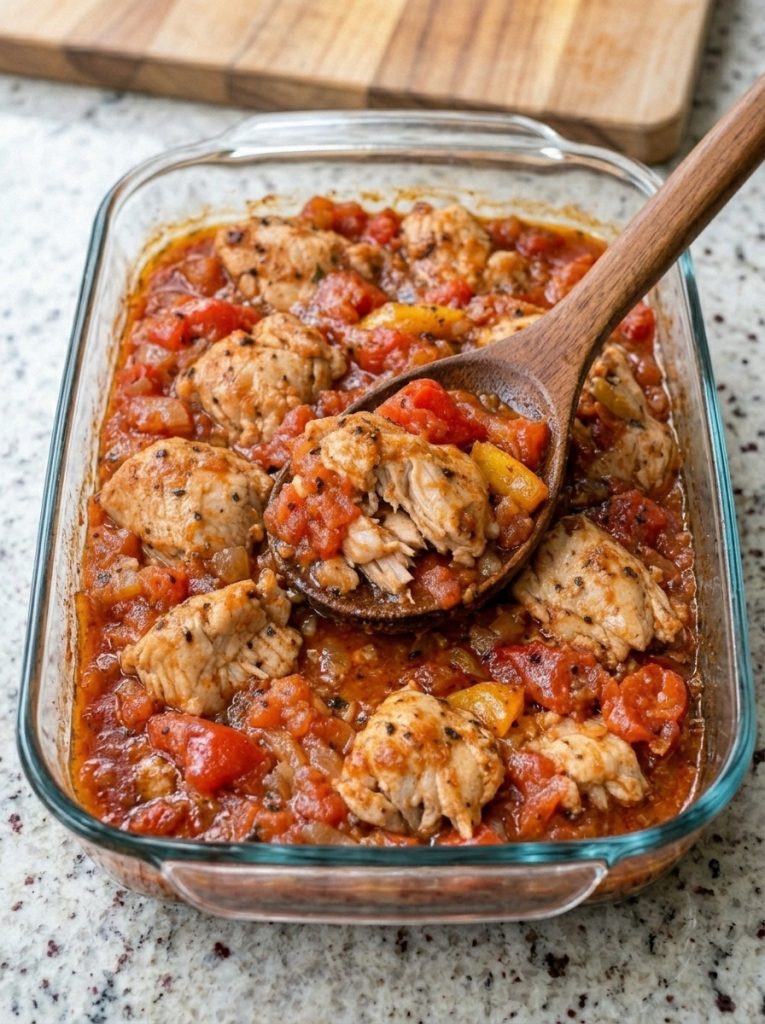
This oven-baked chicken cacciatore is the kind of recipe that feels like it should be more complicated than it is. Four ingredients, one baking dish, and the oven does almost everything. Yes, “real” cacciatore has wine and capers and probably a stronger opinion about itself — but this version is what I actually make on a weeknight, and it works every single time.
Why You’ll Love It
- Just 4 ingredients crushed tomatoes, a seasoning packet, bell pepper, and chicken. That’s it.
- Zero stovetop work you brown nothing, deglaze nothing. Arrange, pour, cover, bake.
- The whole house smells amazing about forty minutes in, it smells like a Sunday dinner that’s been going all day.
- Feeds a crowd over pasta, rice, or egg noodles it stretches easily to six servings, especially with some bread on the side.
- Weeknight easy, company worthy it looks and tastes like you put in way more effort than you did.
A Note on the Ingredients
The chicken: I like bone-in thighs and drumsticks for this because they stay moist even if you leave them in the oven a few extra minutes. I’ve done it with boneless thighs when that’s what I had, and it works — they just cook faster, so watch them. I wouldn’t do chicken breasts here. They tend to dry out before the sauce has time to do anything interesting. Try our Oven-Baked 3-Ingredient Church Supper Chicken next.
The peppers: green bell pepper is what I use, and what gives it that classic, slightly bitter note that I think of as the backbone of the dish. If your people aren’t green pepper fans, red or yellow work great — they’re a bit sweeter and less polarizing. Or leave them out entirely. It’ll still be a good, saucy chicken situation.
The tomatoes: I use a 28-ounce can of crushed tomatoes, usually whatever’s on sale. I’ve used whole peeled tomatoes that I’ve crushed with my hands and that’s fine too, maybe a little chunkier. Tomato puree works. What doesn’t work — and I learned this the hard way one night — is diced tomatoes straight from the can. They don’t break down the same way and the sauce stays too watery. If you like this, you'll love our I Still Dream About That Mall Chinese Chicken.
The Italian dressing mix: this is your flavor workhorse. One packet of the dry mix does everything — the garlic, the herbs, the salt, a little tang. I use Good Seasons, usually, though the store brand is fine. Don’t skip this and try to season with plain Italian seasoning instead. It’s not the same. The packet has something going on, I don’t know what exactly, and I stopped trying to figure it out.
Ingredients
– 2 to 2½ pounds bone-in chicken pieces (thighs and drumsticks work best, skin-on or off, doesn’t matter much)
– 1 large green bell pepper, seeded and sliced into thin strips — not too thin, you want them to hold up in the oven
– 1 can (28 ounces) crushed tomatoes
– 1 packet dry Italian salad dressing mix (the small envelope, .7 to 1 ounce — they vary by brand)
– A little olive oil or butter for the pan, if you like (optional but easier cleanup)
– Salt and pepper to taste, though go easy — the packet is already salty For another easy option, see our Slow Cooker White Wine Chicken Stew.

How to Make It
Preheat your oven to 375°F. While it’s heating up, lightly grease your baking dish if you want to — I use an oval Pyrex that’s been in my cabinet for probably twenty years, and I rub it with a little olive oil mostly out of habit. It does make cleanup easier.
Pat the chicken pieces dry. This step sounds fussy but it takes thirty seconds and it matters — damp chicken gets sort of steamed-looking in the oven instead of settling into that nice, moist-and-golden texture you want. Season them lightly with salt and pepper if you’re using it.
More recipes you might like



Arrange the chicken in a single layer, meaty side up. If they’re snug, that’s okay. Just don’t stack them.
Scatter the pepper strips over and around the chicken. Tuck some strips down into the gaps between pieces so they’ll soften in the sauce instead of staying firm on top. This sounds like overthinking it, but it’s just one extra minute and it makes a difference.
In a bowl, stir together the crushed tomatoes and the dressing mix. Just stir until it’s combined — it doesn’t need to be anything fancy. I always taste a small spoonful here because sometimes I want a little more black pepper, and it’s easier to fix now than later. Pour the whole thing over the chicken and peppers. Use the back of your spoon to nudge it around so everything’s mostly covered.
Cover the dish tightly with foil. I tend to crimp the edges down because I’m always paranoid about the foil ballooning up and peeling back, which has happened. Into the middle rack of the oven it goes, for 45 minutes.
After 45 minutes, take it out — carefully, there’s a lot of steam under there — and remove the foil. Spoon some of the sauce from the bottom of the dish back over the tops of the chicken pieces. Put it back in, uncovered, for another 20 to 30 minutes. You’re looking for the chicken to be very tender, the sauce to be bubbling gently around the edges, and the internal temperature to hit 165°F in the thickest part. I check a couple of pieces, usually, just to be sure.
When it’s done, let it sit on the counter for about five or ten minutes before you serve it. This isn’t optional — the sauce needs to settle, and you’ll burn your mouth if you dig in immediately. Trust me on this one.
Serve it with a big wooden spoon, straight from the baking dish. Scoop the chicken and peppers and all that rustic red sauce over whatever you’re putting underneath it. Pasta, rice, egg noodles — they’re all good. Make sure you get some sauce into the bowl or plate with each portion because that’s actually the best part. You might also like our Strawberry Scones (the kind that make your whole kitchen smell like summer).
Variations
A handful of sliced mushrooms thrown in with the peppers is a great addition — fresh or canned both work; if you use canned, drain them well. Some people stir in a few sliced black olives in the last ten minutes of baking, which gives it a briny, very classically Italian note. I don’t do this because nobody in my house will eat olives except me, but it’s worth mentioning.
If you use boneless, skinless thighs, start checking them around the 35-minute mark after you’ve removed the foil, because they cook faster and you don’t want them getting rubbery. And if your family is the type to want melted cheese on everything — and there’s no judgment here — a small handful of shredded mozzarella scattered over the top right when it comes out of the oven melts beautifully in the residual heat while the dish rests.
Leftovers
This keeps well. Refrigerate what’s left within a couple of hours, and it’ll be good for three to four days. The sauce actually gets a little better the next day, which I’ve never been able to fully explain — something about the flavors having more time to come together, maybe.
To reheat it, I usually put individual portions in a small saucepan over medium-low heat with a splash of water, just to loosen the sauce. The microwave works too. Either way, make sure it’s steaming hot all the way through before you serve it again.
I’ve frozen it before, and it reheats reasonably well, though the peppers get softer than they started. Not bad, just different. If you’re planning to freeze it, I’d undercook the peppers just slightly on the front end. Try our Savory Honey Garlic Fried Chicken next.
The first time I made this for company — not just family, but actual company — I was nervous. It felt too simple. I kept second-guessing myself, wondering if I should have made something more impressive. But everyone liked it, and someone asked for the recipe, and I realized that the simple thing can be the right thing, especially on a weeknight when you’ve already used up all your complicated earlier in the day. If you like this, you'll love our Frito Taco Salad.
That’s enough.
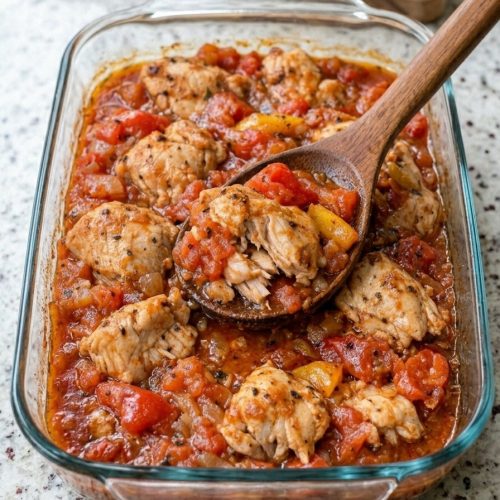
Oven-Baked 4-Ingredient Chicken Cacciatore Casserole
Want This Recipe Later?
Ingredients
- 2 1/2 lb bone-in chicken pieces thighs and drumsticks preferred, skin-on or off
- 1 large green bell pepper seeded and sliced into strips
- 1 can crushed tomatoes 28 oz
- 1 packet dry Italian salad dressing mix 0.7 to 1 oz
- 1 tbsp olive oil or butter optional, for greasing the pan
- salt and black pepper optional, to taste
Instructions
- Preheat the oven to 375°F and lightly grease a baking dish with olive oil or butter if desired.
- Pat the chicken pieces dry with paper towels.
- Season the chicken lightly with salt and black pepper if using.
- Arrange the chicken in a single layer in the baking dish, meaty side up.
- Scatter the sliced green bell pepper over and around the chicken, tucking some pieces between the chicken.
- In a bowl, stir together the crushed tomatoes and dry Italian salad dressing mix until combined.
- Pour the tomato mixture evenly over the chicken and peppers.
- Use the back of a spoon to spread the sauce so everything is mostly covered.
- Cover the dish tightly with foil.
- Bake covered for 45 minutes.
- Carefully remove the foil, watching for steam.
- Spoon some sauce from the dish over the tops of the chicken pieces.
- Return the dish to the oven uncovered and bake for 20–30 minutes, until the sauce is bubbling and the chicken reaches 165°F internally.
- Let the casserole rest for 5–10 minutes before serving.
- Serve over pasta, rice, or egg noodles with plenty of sauce.
Notes
Nutrition
Nutrition values are estimates based on the listed ingredients and serving count. Actual values vary with brands, cuts and portion sizes.