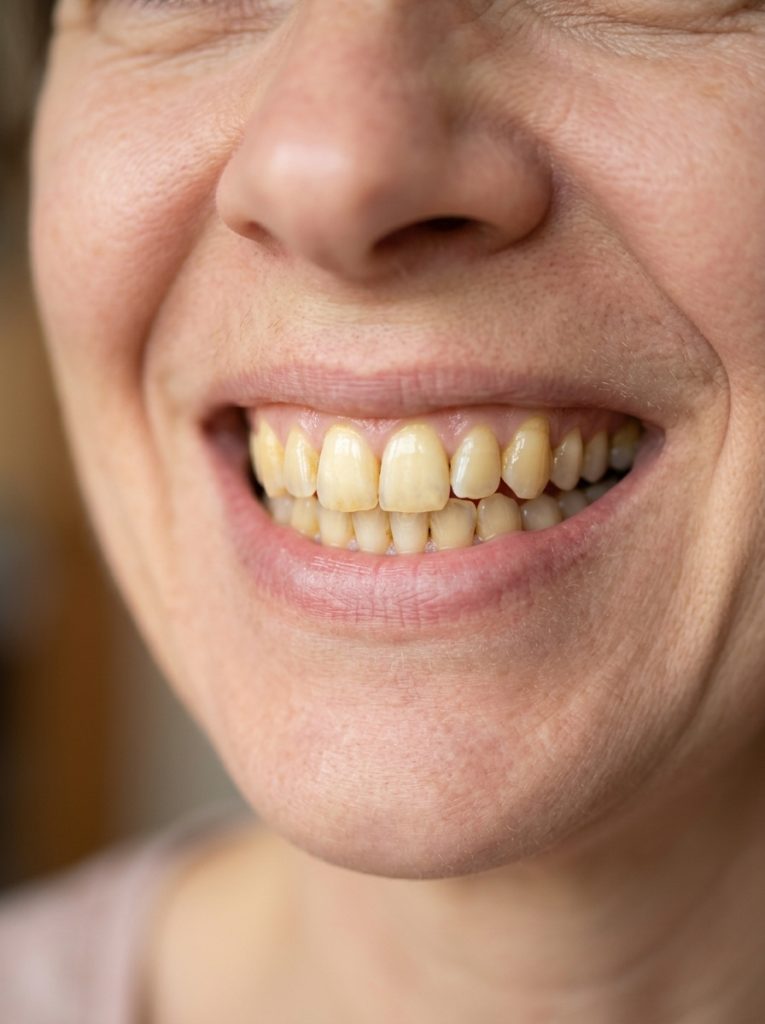
There’s something oddly comforting about old-school home remedies. Maybe it’s the way they get passed around like family secrets—scribbled on recipe cards, mentioned over coffee, or casually dropped while someone’s peeling potatoes at the kitchen table. My nana had dozens of them. Some were questionable, honestly. But every now and then, one turned out to be surprisingly effective.
Her quick teeth-whitening trick? That was one of them.
I remember watching her get ready for church on Sunday mornings. Lipstick on, hair pinned perfectly, and somehow her smile always looked bright. Not “Hollywood veneers” bright. Just healthy. Clean. The kind of smile that makes you think, Wow, she really takes care of herself.
Years later, when whitening strips started filling drugstore shelves and influencers began flashing ultra-white smiles on TikTok and Instagram, I asked her what she used.
She laughed and said, “Honey, I use what’s already in the kitchen.”
And weirdly enough… she wasn’t wrong.
So, What’s the Trick?
The hack itself is almost laughably simple:
- 1 teaspoon baking soda
- A few drops of fresh lemon juice
That’s it.
Mix the two into a paste, brush it gently onto your teeth, leave it on for about two minutes—no longer—then rinse thoroughly and brush again with regular toothpaste.
Simple. Cheap. Fast.
And yes, your teeth can look noticeably brighter afterward. Especially if you’ve been drinking coffee nonstop, sipping iced tea every afternoon, or treating red wine like a personality trait. We’ve all been there.
But here’s the thing nobody tells you in those flashy “DIY beauty hacks” videos: natural doesn’t automatically mean harmless. Let me explain.
Why Teeth Lose Their Brightness in the First Place
Most teeth aren’t naturally paper-white. That’s a myth social media keeps feeding us.
Over time, enamel picks up stains from everyday habits:
- Coffee
- Tea
- Soda
- Curry
- Red wine
- Smoking
- Even certain medications
And honestly? Aging plays a role too. Enamel slowly thins as the years go by, which lets the yellowish dentin underneath show through more clearly.
That doesn’t mean your teeth are unhealthy. It just means they’re human.
Still, people want brighter smiles because they’re tied to confidence. Job interviews, weddings, first dates, family photos—you notice your smile in ways you didn’t before. A brighter smile can feel like getting fresh white sneakers after months of muddy weather. Small change, big psychological lift.
The Science Part (Without Sounding Like a Chemistry Textbook)
Baking soda works because it’s mildly abrasive. Think of it like a gentle polish rather than a bleach.
It scrubs away surface stains sitting on the enamel without being as harsh as some gritty charcoal products floating around online. In fact, many commercial toothpastes already use baking soda for exactly this reason.
Lemon juice is where things get interesting.
Its citric acid helps loosen and break apart stains. That’s why it can brighten dull-looking surfaces around the house too. But acids don’t discriminate—they can also soften enamel if overused.
That’s the contradiction with this hack. It works partly because it’s aggressive enough to remove stains… but that same strength can become a problem if people get carried away.
And people do get carried away.
The Biggest Mistake? Thinking More Equals Better
Honestly, this is where DIY beauty routines tend to go sideways.
Someone tries a remedy once, sees decent results, then decides:
“Well… if once a week works, daily must work even better.”
Nope.
Using lemon juice on your teeth too often can weaken enamel over time. Once enamel is gone, it doesn’t grow back. That’s the part dentists worry about—and fairly so.
My nana always stressed moderation. She treated this trick like using a special silver polish before guests arrived, not something you scrub with every morning.
A good rule?
Use it sparingly. About once a week at most.
And keep the contact time short. Two minutes means two minutes. Not ten while scrolling your phone.
Commercial Whitening vs. DIY Remedies
Now, to be fair, store-bought whitening products aren’t perfect either.
Many whitening strips and gels rely on hydrogen peroxide or carbamide peroxide. They can whiten teeth more dramatically, but they also tend to trigger sensitivity for some people. You know that sharp zing when you sip cold water afterward? Yeah. That.
Professional dental whitening usually works fastest, but it’s expensive. Depending on where you live, treatments can easily run a few hundred dollars.
So people look for alternatives. Naturally.
That’s why old remedies like this keep resurfacing every few years online. They sit in that sweet spot between affordable and effective enough.
Not miraculous. Just practical.
A Few Things People Rarely Mention
Here’s a small tangent—but it matters.
A lot of whitening problems actually start with dehydration and dry mouth. Sounds unrelated, right? But saliva helps protect teeth and wash away staining compounds throughout the day.
If your mouth stays dry because of coffee, medications, mouth breathing, or not drinking enough water, stains cling more easily.
So yes, whitening matters. But so does basic maintenance:
- Drinking more water
- Brushing consistently
- Flossing (the thing everybody pretends they do daily)
- Cutting back on staining drinks
- Seeing a dentist occasionally, even if you dread it
Funny enough, the boring habits usually matter more than the trendy hacks.
What Dentists Think About It
Most dentists won’t completely dismiss baking soda. In fact, many approve of it in moderation.
The concern is usually the acid from lemon juice.
Dr. Emily Tran, a cosmetic dentist interviewed on DIY whitening trends, explained that occasional use is generally fine for people with healthy enamel—but repeated acid exposure can slowly weaken teeth over time.
And honestly, that’s reasonable advice.
DIY whitening should complement good dental care, not replace it. If someone already has enamel erosion, cavities, gum recession, or sensitivity issues, this probably isn’t the smartest experiment.
So… Is My Nana’s Trick Worth Trying?
Surprisingly, yes—with common sense attached.
If you want a quick brightness boost before an event or just feel like your smile looks a little dull from too much coffee lately, this hack can help remove surface stains cheaply and quickly.
It’s not magic.
It’s not permanent.
And it’s definitely not something to overdo.
But there’s something charming about simple remedies that still hold up decades later. Especially when they come from someone who learned them long before whitening pens and influencer sponsorships existed.
My nana would probably laugh seeing people spend $80 on whitening kits while a box of baking soda sat quietly in the pantry the whole time.
Then again… she’d also remind you not to leave lemon juice on your teeth too long.
She was wise like that.