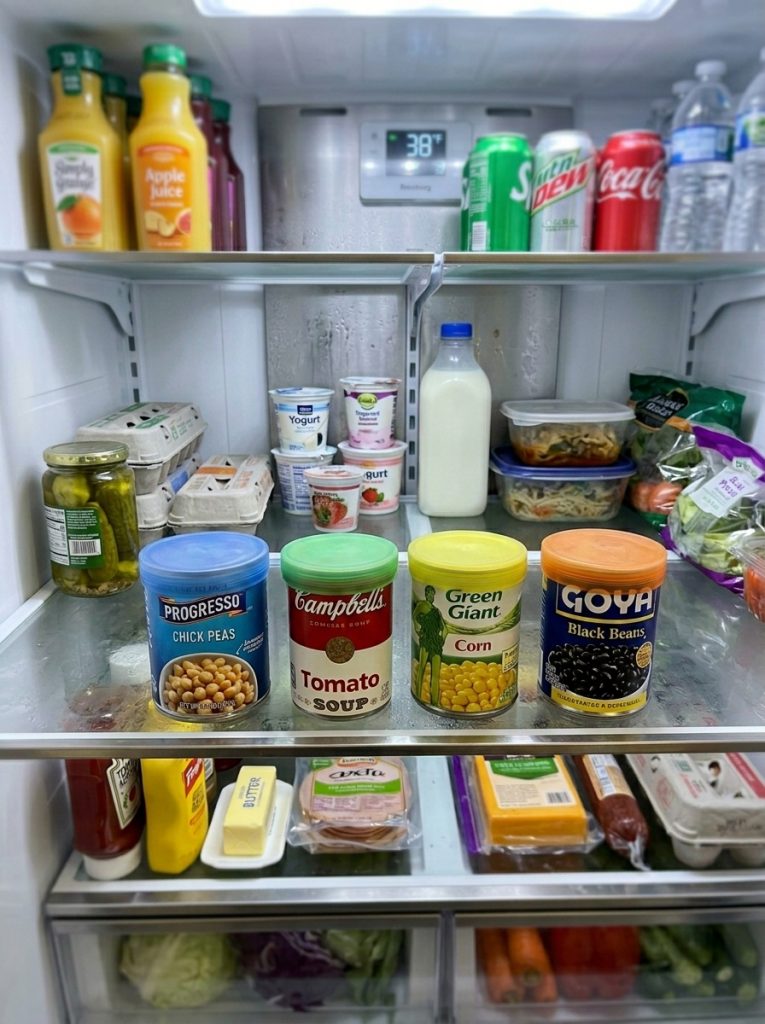
You’ve probably seen it before—maybe in your grandma’s fridge, maybe even in your own. A half-used can of beans or tomatoes, lid loosely resting on top, tucked into the back corner like it belongs there.
And honestly? It feels harmless.
I mean, it’s in the fridge. It’s cold. What could really go wrong?
Here’s the thing… that little habit most of us grew up around isn’t as safe as it seems. It’s not dangerous in a dramatic, immediate way—but over time, it can lead to problems people don’t always connect back to food storage.
Let me explain.
That Old Kitchen Habit We Never Questioned
Back in the day, food waste was a bigger concern than food safety science. If something was still edible, you kept it. Simple as that.
And canned food? It already felt “protected.” It came sealed, preserved, shelf-stable—almost immune to spoilage.
So when the can was opened, people just… kept using it.
No container. No second thought.
But food safety has come a long way since then. And what we know now changes things a bit.
What Really Happens Once You Open a Can
The moment you pop that lid, everything shifts.
Inside the can, food was sitting in a controlled, sterile environment. No oxygen. No outside bacteria. Pretty stable.
Then—air hits it.
Oxygen starts reacting with the food. That’s oxidation. It might not sound dramatic, but it quietly affects taste, texture, even color.
At the same time, bacteria from the air (and from your kitchen, your spoon, your hands) now have access. Refrigeration slows them down, sure—but it doesn’t stop them.
So now you’ve got food that’s slowly changing… and quietly becoming more vulnerable.
The Risks (They’re Subtle, But Real)
Let’s not overdo it—this isn’t a horror story.
But there are real risks worth paying attention to:
- Bacterial growth (even in the fridge)
- Mold development, especially after a few days
- Foodborne illness, from bacteria like
Listeria,
Salmonella, and
E. coli - Flavor and texture breakdown (that weird metallic taste? yeah…)
And here’s the tricky part—most of this doesn’t show obvious signs right away.
Which is why people think it’s fine.
Wait… Can Metal Actually Get Into the Food?
Short answer: sometimes, yes.
Most cans today are lined to prevent direct contact between the food and the metal. But once the can is opened, that lining is exposed to air—and over time, it can start to break down.
This matters more with acidic foods.
Think tomatoes, pineapple, anything with vinegar. Those foods are a little more “reactive,” and they can pull tiny amounts of metal into the food.
Is it instantly harmful? No.
But is it something you want happening repeatedly? Also no.
Why Acidic Foods Are the Bigger Problem
Not all canned foods behave the same.
Acidic foods are the ones that really push things in the wrong direction:
- Tomatoes
- Citrus fruits
- Pineapple
- Vinegar-based sauces
They speed up that metal reaction and tend to change flavor faster too.
Non-acidic foods—like beans or corn—are more stable. But even those aren’t immune to bacteria once opened.
So really, no matter what’s in the can… it’s better to move it.
So How Long Is “Still Okay”? Be Honest
Most experts land in the same range: 2 to 4 days in the fridge.
And that’s assuming:
- It’s stored properly
- Your fridge is cold enough (around 4°C / 40°F or lower)
After that? It gets questionable.
Honestly, this is where people stretch things. Five days turns into six. Then a week.
We’ve all done it.
But food doesn’t suddenly “go bad” overnight—it gradually becomes riskier. And by day five or six, you’re playing a guessing game.
The “Smell Test” Isn’t As Reliable As You Think
You know that moment—you open the fridge, sniff something, and go:
“Yeah… I think it’s still fine.”
Here’s the uncomfortable truth: some dangerous bacteria don’t smell.
They don’t change color. They don’t make the food look weird.
So while your senses are helpful, they’re not a guarantee.
It’s a bit like judging milk by smell alone—sometimes you’re right, sometimes you’re not.
Those TikTok Hacks? Yeah… Not Really Helping
If you’ve spent any time online, you’ve probably seen things like:
- Leaving a spoon in the can
- Covering it with plastic wrap
- Folding foil over the top
Clever? Sure.
Effective? Not really.
These tricks don’t stop oxidation. They don’t prevent bacterial growth. And they definitely don’t address the metal issue.
They just make the can look “closed.”
The Simple Fix (That Actually Works)
Here’s what food safety experts consistently recommend:
Transfer the food. That’s it.
Use:
- Glass containers (best option)
- Food-safe plastic containers with tight lids
It takes maybe 10 seconds. And it solves almost every issue:
- Less air exposure
- No metal contact
- Better sealing
- Easier storage
If you want to go one step further, add a quick label with the date.
Not fancy. Just practical.
Talking to Family About It (Without Starting a Debate)
Now this part… can be delicate.
If your parents or grandparents have been doing this for decades, they’re not suddenly going to change because of one article.
And honestly? They’ve probably been fine most of the time.
So instead of correcting them, try something softer:
- “I started using containers—it actually keeps things fresher longer.”
- “I read that it helps avoid that metallic taste.”
Keep it casual. No lectures.
People are more open when it feels like a tip—not a correction.
A Small Habit That Actually Matters
It’s funny how something so small—just leaving food in a can—can sit unnoticed for years.
No big warning signs. No immediate consequences.
But over time, those little habits add up.
Switching to proper storage isn’t complicated. It doesn’t require special tools or effort. It’s just one of those quiet upgrades that makes your kitchen a bit safer, a bit cleaner… and honestly, a bit more intentional.
And once you start doing it, you won’t even think twice about it anymore.
Just like any good habit.