Let me tell you about the morning I almost threw out a perfectly good egg.
Nothing dramatic—just breakfast. I was standing in my kitchen, half-awake, making scrambled eggs. You know the routine: crack, whisk, cook, done. Except this time, something caught my eye.
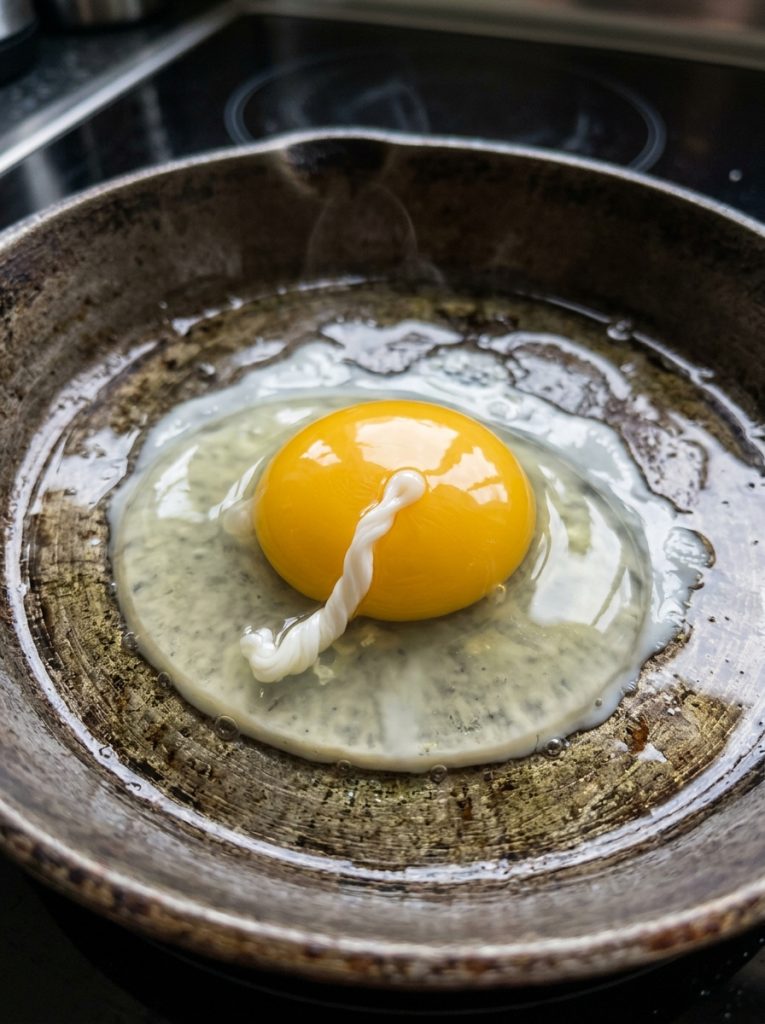
There it was. A white, stringy, slightly twisted strand floating in the egg white. It clung to the yolk like a tiny rope.
And my brain? Immediately suspicious.
What is that? Is it… alive?
I stared at it longer than I’d like to admit. Poked it with a fork. Considered tossing the whole thing and pretending I never saw it.
But curiosity got the better of me. So I did what most of us do—I looked it up.
And honestly? The answer surprised me.
What Is the White String in an Egg?
That strange little strand has a name: the chalaza, pronounced kuh-LAY-zuh. Sounds fancy, right? Like something you’d hear in a biology lecture and immediately forget.
But here’s the simple version.
The chalaza is a natural protein structure inside the egg. Its job is to keep the yolk centered—like a built-in suspension system.
Think of it like tiny anchor ropes. They hold the yolk steady so it doesn’t bump into the shell and break. Kind of like a seatbelt, but for your breakfast.
It’s made of the same protein as egg white. It’s completely normal. Completely edible.
And here’s the twist—something I definitely didn’t expect:
The more visible the chalaza is, the fresher the egg usually is.
Yeah. That “weird” thing I almost threw out? It was actually a sign of quality.
Why Do Some Eggs Have a More Visible White String?
That was my next question too.
Turns out, most of us just don’t notice it. And there are a few simple reasons why.
- We crack eggs straight into the pan. Once heat hits, the egg white turns opaque fast, hiding everything.
- We scramble them. Mix it all up, and the chalaza disappears into the blend.
- We use older eggs. As eggs age, the chalaza breaks down and becomes less visible.
- We’re not really looking. Let’s be honest—who inspects their eggs before cooking?
I only noticed mine because I cracked it into a clear bowl and paused for a second. That’s it. A tiny shift in routine—and suddenly I’m questioning breakfast.
Is the Chalaza Safe to Eat?
Let’s clear this up quickly.
Yes, the chalaza is safe to eat.
The chalaza is:
- Safe
- Edible
- Made of protein
It doesn’t affect taste. It doesn’t mess with texture. It doesn’t carry anything harmful.
Some people remove it when they want ultra-smooth textures, like in custards or meringues. But that’s more about appearance than safety.
Otherwise? Leave it in. No problem at all.
Other Weird Egg Things That Are Totally Normal
Once I went down this rabbit hole, I realized the chalaza isn’t the only thing that can look… questionable.
Here are a few others that might catch you off guard:
Blood Spots
Blood spots are tiny red or brown specks inside the egg. They look alarming, but they’re usually harmless. They happen when a small blood vessel breaks during egg formation.
Cloudy Egg Whites
Cloudy egg whites can actually be a sign of freshness. Fresh eggs have more carbon dioxide trapped inside, which can make the white look cloudy.
Double Yolks
A double yolk simply means two yolks ended up in one egg. This happens when a hen releases two yolks close together. It’s totally safe—and some people even consider it lucky.
Greenish Ring Around Boiled Yolks
That gray-green ring around a boiled yolk usually comes from overcooking. It’s not dangerous, just not especially pretty.
Kind of funny how many “bad-looking” egg things are actually normal.
Is the White String in an Egg a Worm or Parasite?
Let me guess—that thought crossed your mind too.
Because it definitely crossed mine.
The idea of a worm or parasite in your egg? Yeah, it’s unsettling.
But here’s the reality.
The chalaza is not a worm. It is not a parasite. It is just part of the egg.
Commercial eggs go through inspection and cleaning processes. Parasites in eggs are extremely rare in regulated food systems.
And even in the unlikely case something was there, proper cooking would help reduce food safety risks.
So no—the chalaza is not a worm. Not even close.
It’s just protein doing its job.
A Quick Side Note for Anyone Who Overthinks Food
I’ll admit something.
I tend to overthink food.
See something unfamiliar? My brain jumps straight to worst-case scenarios. I spiral a little. I Google too much. I hesitate to eat something perfectly fine.
Maybe you’ve done that too?
This whole egg situation was a reminder. Most of the time, food isn’t trying to trick you. Strange doesn’t mean dangerous.
Sometimes it just means you noticed something new.
Frequently Asked Questions About the White String in Eggs
What is the white string in an egg?
The white string in an egg is called the chalaza. It’s a natural structure that helps keep the yolk centered.
Does the chalaza mean the egg is fertilized?
No. The chalaza does not mean the egg is fertilized. Fertilized or not, eggs can have a chalaza.
Can I remove the chalaza?
Yes, you can remove it if you want to. But you don’t need to remove it. It is safe to eat.
Why is the chalaza thicker in some eggs?
Fresh eggs usually have a more visible chalaza. As eggs age, the chalaza becomes less noticeable.
Is the chalaza unhealthy?
No. The chalaza is not unhealthy. It’s just protein and is safe to eat.
Final Thoughts
Looking back, it’s kind of ridiculous.
I almost threw away a perfectly good egg. Almost skipped breakfast over something harmless. All because of a tiny white strand I didn’t understand.
But I learned something.
And honestly, that’s part of the fun of cooking. You run into little surprises. Some weird, some confusing—but usually harmless.
So next time you crack an egg and see that string?
Don’t panic.
Don’t overthink it.
Just remember: it’s a chalaza. It’s natural. It usually means your egg is fresh.
And your breakfast?
Yeah, it’s still going to be just fine.