Save This Recipe
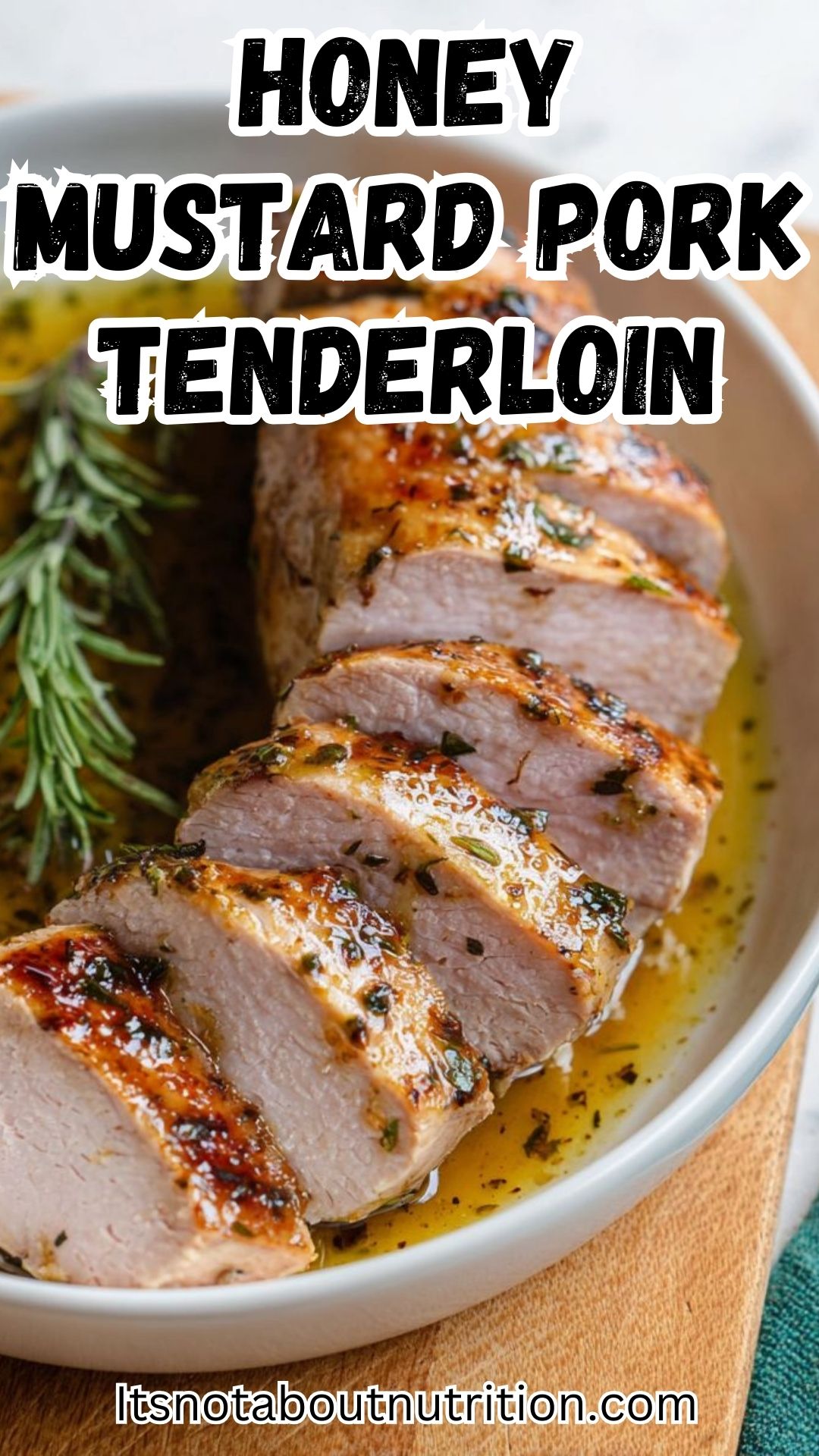
Pork has a lot of flavor companions, but this zippy little combination of honey, mustard, and orange is one I keep coming back to. It’s sweet, it’s savory, it’s got that garlicky depth that makes the whole kitchen smell like you actually know what you’re doing — and the coating caramelizes in the oven into something honestly a little magical. Once you taste it, you won’t want to go back.
Why You’ll Love This Recipe
- The sauce does all the work. You whisk it together in five minutes and it transforms a plain piece of pork into something that tastes like you tried much harder than you did.
- It’s genuinely weeknight-friendly. Ten minutes of prep, forty minutes in the oven, and dinner is done.
- The flavor is complex but not fussy. Sweet, savory, a little tangy, a little herby — it hits everything without being complicated.
- It’s the kind of thing that impresses people. I’ve served this to guests more times than I can count and it always gets the “oh wow, what’s in this?” reaction.
- Leftovers are excellent. Cold slices on a sandwich the next day? Incredible. Maybe better than the original dinner, honestly.
- It works in every season. Light vegetables in summer, creamy gratin in winter — this tenderloin adapts to whatever you put next to it.
Pork tenderloin is one of those cuts I think people overlook because it sounds a little intimidating, or maybe because they’ve had a dry, overcooked version somewhere and written the whole thing off. I get it. Overcooked pork tenderloin is a tragedy. It turns into something almost chalky and then you’re just sad about dinner. But here’s the thing — it’s actually one of the more forgiving cuts once you understand the two rules: use a thermometer, and let it rest. That’s it. Those two things and you’re going to be fine.
I didn’t use a meat thermometer for the first several years I was cooking, which — looking back — explains a lot. My mother never used one. Her generation just cut into something and looked at it, and somehow they knew. I don’t have that instinct. I tried to develop it and I cannot. The thermometer is not a crutch, it is a tool, and I will not apologize for using it.
Pull the pork at 145°F. That’s the number. It’ll look slightly pink in the center and that’s correct and safe and how it’s supposed to look. I know some people still flinch at that. I flinched at it too, the first few times. You get used to it, and more importantly, you get pork that’s actually juicy instead of a dry gray cylinder of disappointment.
A Few Notes on the Ingredients
The Dijon mustard is not negotiable. I’ve tried this with yellow mustard in a moment of desperation and the whole flavor profile shifts into something that tastes like a ballpark hot dog, which is fine in its context but not what we’re going for here. Dijon has that sharp, almost wine-y depth that yellow mustard just doesn’t have.
For the honey, use whatever you have. I usually have a big jar of clover honey in the cabinet that I’ve had for probably too long. It’s fine. I don’t think the varietal matters much once it’s combined with everything else.
The soy sauce — I always go low-sodium here. Regular soy sauce makes the whole thing a little saltier than I want, and since we’re already adding salt and pepper to the meat itself, you want some room to control that.
Orange juice. Just a couple tablespoons, so I usually squeeze half an orange rather than opening a carton for two tablespoons. Though I’ve done both. The carton version works, I just feel slightly wasteful.
Ingredients
- 1 pork tenderloin, trimmed of any silver skin
- ¼ cup low-sodium soy sauce
- 3 tablespoons honey
- 3 tablespoons olive oil
- 2 tablespoons orange juice
- 2 tablespoons Dijon mustard
- 2 cloves garlic, minced
- 1 teaspoon dried thyme
- Kosher salt and freshly ground black pepper, to taste

How to Make It
Preheat your oven to 350°F. Grease a baking sheet with nonstick spray or just line it with foil — I almost always use foil because cleanup is easier and I’m being honest with you about my priorities. Place the tenderloin on the prepared pan and season it generously with salt and pepper. Don’t be timid with the seasoning. The meat needs it underneath the sauce, not just on top.
In a small bowl, whisk together the soy sauce, honey, olive oil, Dijon mustard, garlic, thyme, and a bit more black pepper. Whisk it for a minute or so until it comes together into a smooth, glossy sauce. It’ll smell sharp and garlicky and deeply good. Pour a generous amount over the tenderloin — you don’t have to use all of it right away, and you probably won’t. Some of it will pool on the pan and that’s fine. That’s what you’re going to spoon back over the meat every fifteen to twenty minutes while it bakes.
Bake for about 40 to 45 minutes, basting with the pan sauce once or twice during that time. This is the step people skip and they shouldn’t. That basting is what builds the lacquered, caramelized exterior that makes the whole thing look and taste like you know what you’re doing.
When a thermometer inserted into the thickest part reads 145°F, take it out. Not 150, not 160 — 145. Then cover it loosely with foil and walk away for ten to fifteen minutes. I know it’s hard. I know it smells incredible and everyone is hovering. Walk away anyway. The resting time lets the juices redistribute back into the meat instead of running out all over the cutting board the second you slice into it. It matters. I learned this the hard way more than once.
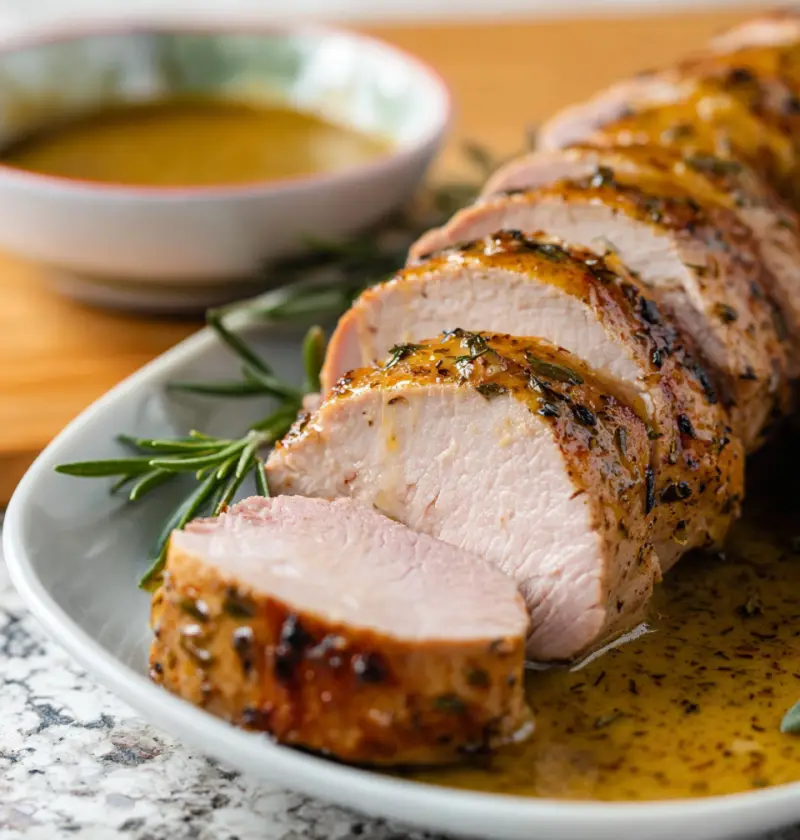
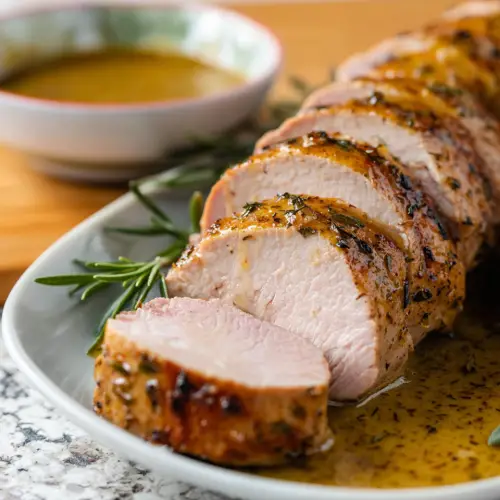
Slice it into medallions — I usually go about three-quarters of an inch thick — and spoon any remaining sauce from the pan over the top.
Variations and Serving Ideas
If you want a little heat, a teaspoon of sriracha or a pinch of red pepper flakes in the sauce is genuinely excellent. My older daughter does this every time she makes it, says it “fixes” the recipe, which is a little rude but she’s not wrong that it’s good.
In spring, I serve this over or alongside something light — sautéed asparagus, a simple green salad, roasted broccolini. In fall and winter it goes beautifully next to a creamy potato gratin or roasted root vegetables. Also, if you ever have leftover slices, cold in a sandwich with a little extra Dijon and some arugula is one of the better lunches I’ve had on a random Wednesday.
Storage
Leftovers keep in the fridge for three days, wrapped tightly or in an airtight container. Reheat gently — low heat in a pan with a small splash of water or Chicken broth, or just eat it cold because cold pork tenderloin is genuinely underrated.
I almost didn’t post this one because it felt almost too simple. Like, is this really a recipe or is it just a sauce you throw on some pork? But then I made it again last week for a dinner I was already tired before starting, and it came out beautifully, and my husband said “you should make this more often” — which he says every time, by the way, and yet here we are — and I thought, yeah, okay. This one’s worth sharing.
Honey Mustard Pork Tenderloin
Ingredients
- 1 pork tenderloin trimmed of silver skin
- 1/4 cup low-sodium soy sauce
- 3 tbsp honey
- 3 tbsp olive oil
- 2 tbsp orange juice
- 2 tbsp Dijon mustard
- 2 cloves garlic minced
- 1 tsp dried thyme
- kosher salt to taste
- black pepper freshly ground, to taste
Instructions
- Preheat the oven to 350°F (175°C) and grease a baking sheet or line it with foil.
- Place the pork tenderloin on the prepared baking sheet and season with salt and pepper.
- In a small bowl, whisk together the soy sauce, honey, olive oil, orange juice, Dijon mustard, garlic, thyme, and additional pepper.
- Pour some of the sauce over the pork tenderloin, reserving the rest for basting.
- Bake for 40–45 minutes, basting the pork with pan sauce every 15–20 minutes.
- Cook until the internal temperature reaches 145°F (63°C) in the thickest part.
- Let the pork rest for 10–15 minutes before slicing and serving.