You know that feeling—you’ve just mopped the floor, it looks clean for a second, and then… something feels off. Maybe there’s a faint smell. Maybe the shine isn’t really a shine.
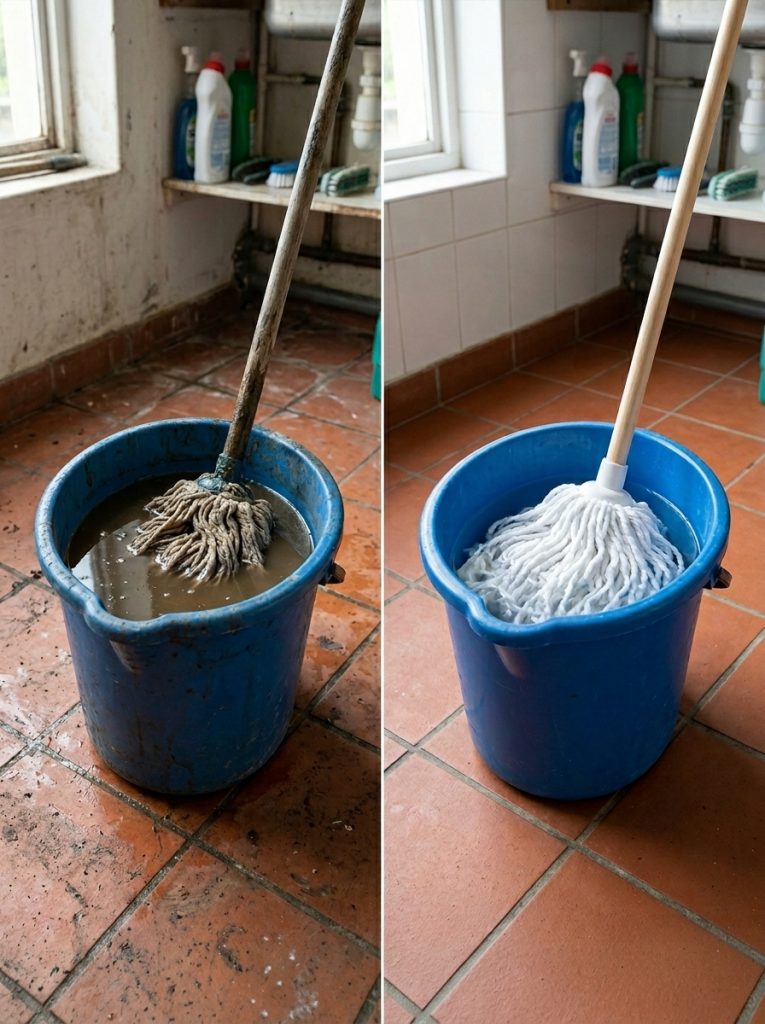
Here’s the thing: a mop doesn’t clean if it’s already dirty. It just spreads everything around—dust, grease, bacteria, all of it.
It sounds obvious, but most people forget this part. We clean the floor… and ignore the tool doing the cleaning.
And honestly? That cancels out the whole effort.
Wait—should you wash it or just throw it away?
A lot of people assume once a mop looks bad, it’s done. Toss it, buy another one. Easy.
But that’s not always right.
A mop should only be thrown away when:
- The fibers are falling apart
- It smells even after washing
- It no longer absorbs water properly
Otherwise? It’s still usable—you just need to clean it properly.
Think of it like kitchen towels. You wouldn’t throw them out after one use, right? Same idea.
The simple trick: clean your mop every single time
This is where most people slip up.
You don’t clean the mop once a week.
You clean it after every use.
Yes, every time.
Because whatever you picked up from the floor—grease, dust, bacteria—it’s all sitting there in the fibers. Leave it overnight, and it just settles in… and starts to smell.
And once that smell starts, it’s harder to fix.
Baking soda — the quiet hero in your kitchen
Let me explain something simple.
You don’t need expensive cleaners for this. You really don’t.
One of the easiest ways to clean a mop is with baking soda.
Here’s how:
- Fill a bucket with warm water
- Add half a glass of baking soda
- Soak the mop for 1–2 hours
- Rinse until the water runs clear
That’s it.
It breaks down dirt, neutralizes odors, and leaves the mop feeling fresh again.
You can even toss the mop in the washing machine with baking soda—just run it at a high temperature (around 70°C). Works surprisingly well.
Vinegar & lemon — old-school, but it works
Now, if your mop smells… a bit too real, you’ll want something stronger.
This is where vinegar comes in.
Simple method:
- 1 liter warm water
- 1 cup vinegar
- Soak for 30 minutes
It cuts through odor and bacteria fast.
Want to level it up? Add a little baking soda. You’ll get extra degreasing power.
And then there’s lemon—honestly, underrated.
Using fresh lemon juice:
- Add juice of 2 lemons to warm water
- Soak for about an hour
- Rinse well
It doesn’t just clean—it leaves a fresh, clean scent that actually feels clean.
When things get really bad…
Sometimes a mop isn’t just dirty—it’s deeply dirty. You know the type.
In that case, a stronger solution may be needed, like ammonia mixed with water.
But here’s the important part:
- Use only a small amount
- Rinse thoroughly afterward
- Let it dry completely before storing
If you skip that last step, you’ll trap moisture—and that’s where bad smells start all over again.
A small upgrade most people overlook
If you want something extra (without making things complicated), try adding a few drops of tea tree oil.
It naturally fights bacteria and odors.
A simple mix:
- Warm water
- Lemon juice
- A few drops of tea tree oil
Let the mop soak for 30 minutes, rinse—and you’re done.
It’s one of those little things that makes a big difference.
The mistake that ruins everything
Here’s the part people ignore:
Storing the mop while it’s still wet.
It seems harmless, but it’s not.
A damp mop = trapped bacteria = bad smell = useless cleaning next time.
Always let it dry completely. Hang it if you can.
It’s a small habit, but it changes everything.
So what actually works?
If you keep it simple:
- Clean your mop after every use
- Use natural cleaners (baking soda, vinegar, lemon)
- Let it dry completely
- Replace only when it’s truly worn out
That’s it.
No complicated routine. No expensive products.
Final thought — it’s not about the floor
Funny enough, cleaning the floor isn’t really about the floor.
It’s about the system you use.
A clean mop gives you a clean floor.
A dirty mop? You’re just moving things around.
And once you get that part right, everything else becomes easier—quicker, cleaner, and honestly… less frustrating.
Because let’s face it, if you’re going to clean, it should actually feel clean.