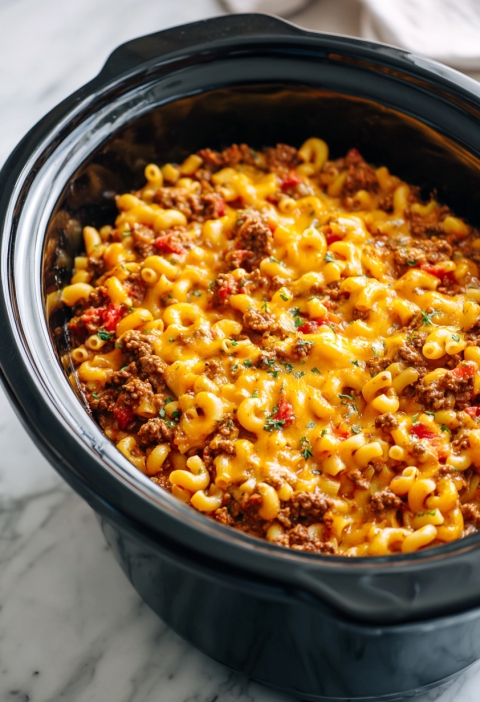
This creamy one-pot beef and shells is the kind of weeknight dinner you’ll keep coming back to. Everything cooks together in a Dutch oven — ground beef, dry pasta, and a rich tomato-cream sauce — and it’s on the table in about 30 minutes. Cozy, filling, and way easier than it tastes.
Why You’ll Love It
Truly one pot — no boiling pasta separately, no second pan for sauce, no extra dishes
Tastes richer than it is — cream, sharp cheddar, and tomato paste do a lot of heavy lifting here
Ready in 30 minutes — weeknight-friendly from start to finish Try our Chili Con Carne – Big, Bold, and the Kind You Make Again and Again next.
Great leftovers — reheats beautifully with just a splash of broth or milk
Picky-eater approved — mild enough to keep everyone happy, easy to spice up at the table
Ingredient Notes
The ground beef — I use 85/15 most of the time, sometimes 90/10 if that’s what’s on sale, and honestly the dish doesn’t seem to care that much either way as long as you drain off the grease properly.
Tomato paste, not tomato sauce — I made that mistake once, grabbed the wrong can in a hurry, and the whole thing turned soupy and sad. Learn from me.
The cheddar should be sharp, in my opinion. Mild cheddar sort of disappears into the sauce and you lose that little tang that makes the dish interesting instead of just “creamy pasta with beef in it.” I buy the block and shred it myself because the pre-shredded stuff has some anti-caking powder on it that keeps it from melting quite as smooth — and I’ve made this both ways, so I stand by it.
Ingredients
(serves about 6)
1 tablespoon olive oil
1 medium yellow onion, diced small — I don’t measure, just chop the whole thing If you like this, you'll love our Crab and Shrimp Seafood Bisque — Creamy, Cozy, and Just a Little Fancy.
2 cloves garlic, minced (or 3, if you’re like me and can’t help yourself)
1 1/2 pounds ground beef
1 teaspoon kosher salt, plus more later, always more later
1/2 teaspoon black pepper
12 ounces medium pasta shells, uncooked
2 cups beef broth
1 1/2 cups heavy cream
3 tablespoons tomato paste
2 teaspoons Italian seasoning
1 1/2 cups shredded sharp cheddar, divided — though I’ll be honest, it’s usually closer to 2 cups because I eyeball this one
1/4 teaspoon red pepper flakes, optional
Parmesan and parsley for the top, if you’re feeling fancy that night

Instructions
Get your Dutch oven going over medium heat with the olive oil, then toss in the onion. Let it soften up for about four minutes — you’re not looking for color really, just that translucent, sweetened-down look. Stir in the garlic and give it just thirty seconds, because garlic burns approximately the second you look away, and burnt garlic will ruin the whole pot, ask me how I know. For another easy option, see our Creamy Pour-Over Baked Potatoes.
Add your ground beef right in with the salt and pepper. Break it up as it cooks — I use a wooden spoon, always have. Cook it about six or seven minutes until there’s no pink left. If there’s a lot of grease sitting in the bottom, spoon most of it out, but leave a little — that’s flavor, don’t be too precious about it.
More recipes you might like


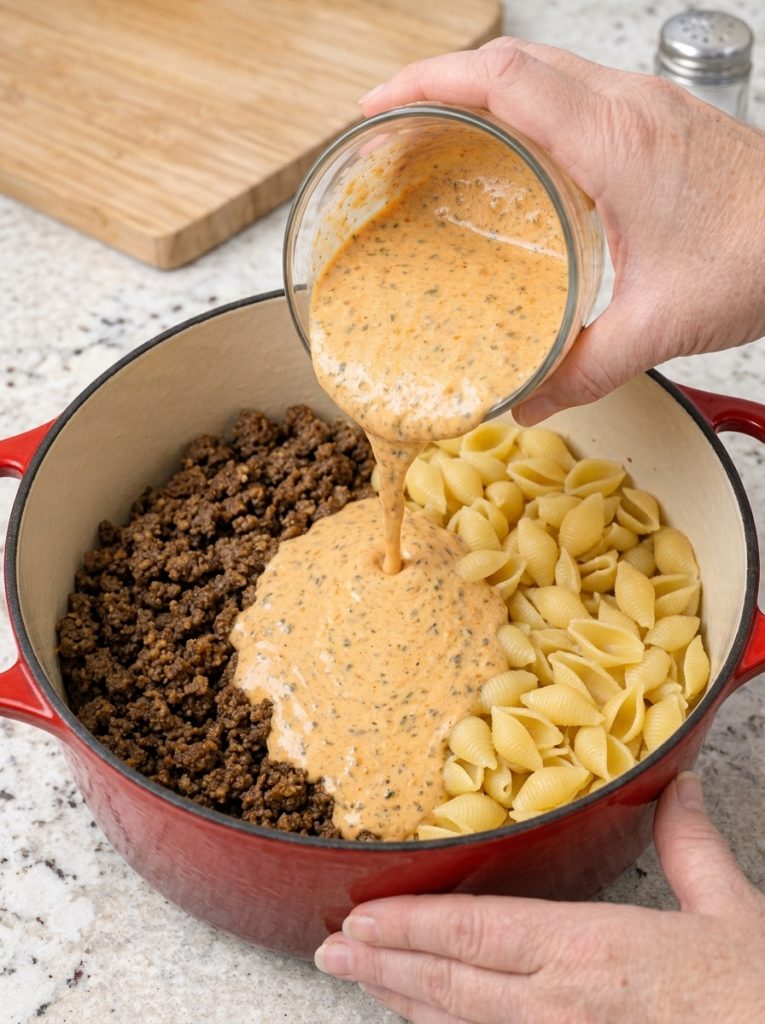
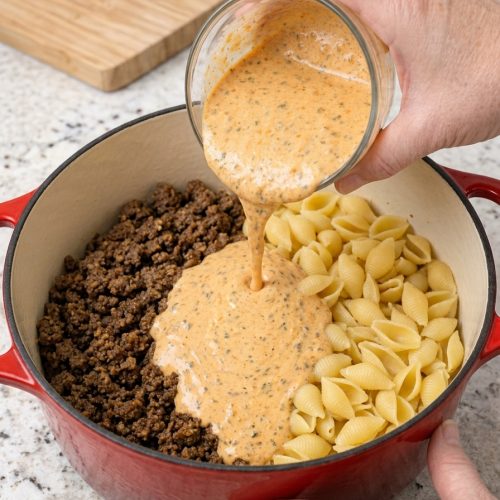
Here’s the part that trips people up: turn the heat off for a second and just pour the dry pasta shells right over the beef. Don’t stir it in. I know it feels wrong, like you’re doing it backward, but you want those shells sitting mostly on top so the sauce can soak down through them as it cooks.
In a bowl or a big measuring cup, whisk together the broth, cream, tomato paste, and Italian seasoning until it’s smooth — really work that tomato paste in, it likes to hide in little clumps at the bottom. Whisk in a cup of the cheddar. If you’re using the red pepper flakes, now’s the time.
Turn your heat back on to medium and pour that creamy mixture over everything in the pot, trying to cover as much of the pasta as you can. Press down gently on any dry-looking shells poking up — don’t go stirring it around like a maniac, just a gentle nudge.
Bring it to a simmer, then drop the heat down low, cover it, and let it go for fifteen to eighteen minutes. Stir once or twice in there so nothing sticks to the bottom — I learned that one the hard way.
Once the shells are tender, take the lid off and look at it. Too thick? Splash in some broth. Too loose? Let it sit uncovered a few more minutes, stirring here and there. Turn the heat off, stir in the rest of the cheddar, and just let it sit with the lid cracked for a few minutes before serving. That resting time matters more than people think — the sauce sort of settles into the pasta instead of just sitting on top of it. You might also like our Slow Cooker Caramelized Onions Pasta: My Weeknight Hug in a Bowl.
Variations
Swapping half the heavy cream for half-and-half works fine if you want to lighten it up — a little less rich but honestly still good. Adding a diced bell pepper to the pot isn’t bad, but it changes the texture in a way I’ve never quite loved, so that one didn’t stick around for me. Frozen peas stirred in at the end work great, no complaints there — good way to sneak in some vegetables without any extra effort.
If you want to swap the cheddar for something smokier, go for it — smoked gouda makes it a whole different dish, really good, but not quite the same recipe anymore, if that makes sense.
Storage & Reheating
It keeps in the fridge four or five days, though it never actually lasts that long here. When you reheat it, add a splash of milk or broth — the sauce tightens up a lot overnight and without a little liquid it reheats kind of gluey. I microwave it in bursts, stirring between, or do it low and slow on the stove if I’ve got the patience, which by dinnertime some nights I genuinely do not. Try our Chicken and Rice Soup next.
A Few Last Thoughts
I still don’t know if I’d call this a “recipe” so much as a habit at this point — the measurements shift a little every time depending on what’s in the fridge, and I’ve never once made it exactly the same way twice, though the bones of it stay put. Serve it with a green salad if you’re feeling virtuous, or just a piece of bread to mop up the sauce, which is honestly what happens most nights at my table. If you like this, you'll love our Southern Chicken Pot Pie Soup – A Hug in a Bowl.
Creamy One-Pot Beef and Shells
Want This Recipe Later?
Ingredients
- 1 tbsp olive oil
- 1 medium yellow onion diced small
- 2 cloves garlic minced, or 3 cloves if desired
- 1 1/2 lb ground beef
- 1 tsp kosher salt plus more to taste
- 1/2 tsp black pepper
- 12 oz medium pasta shells uncooked
- 2 cups beef broth plus more as needed
- 1 1/2 cups heavy cream
- 3 tbsp tomato paste
- 2 tsp Italian seasoning
- 1 1/2 cups shredded sharp cheddar cheese divided
- 1/4 tsp red pepper flakes optional
- Parmesan cheese and parsley optional, for topping
Instructions
- Heat the olive oil in a Dutch oven over medium heat.
- Add the diced onion and cook for about 4 minutes, until softened and translucent.
- Stir in the minced garlic and cook for 30 seconds.
- Add the ground beef, kosher salt, and black pepper.
- Cook for 6–7 minutes, breaking up the beef, until no pink remains.
- Spoon off excess grease if needed, leaving a little for flavor.
- Turn off the heat and pour the dry pasta shells over the beef without stirring them in.
- In a bowl or large measuring cup, whisk together the beef broth, heavy cream, tomato paste, and Italian seasoning until smooth.
- Whisk in 1 cup of the shredded cheddar cheese and the red pepper flakes if using.
- Turn the heat back to medium and pour the creamy mixture evenly over the pasta and beef.
- Gently press down any dry shells so they are mostly covered by liquid.
- Bring the mixture to a simmer.
- Reduce the heat to low, cover, and cook for 15–18 minutes, stirring once or twice, until the shells are tender.
- If the sauce is too thick, add a splash of broth; if too loose, simmer uncovered for a few minutes.
- Turn off the heat and stir in the remaining 1/2 cup cheddar cheese.
- Let the pasta rest with the lid slightly cracked for 5 minutes before serving.
- Top with Parmesan and parsley if desired.
Notes
Nutrition
Nutrition values are estimates based on the listed ingredients and serving count. Actual values vary with brands, cuts and portion sizes.