Let’s be honest—most front yards play it safe. A patch of grass, maybe a hedge that’s been trimmed within an inch of its life, and if you’re lucky, a flower bed trying its best. It’s neat, sure. But memorable? Not really.
Now imagine walking past a yard where something feels… different. Not loud, not chaotic—just quietly striking. A sculptural cluster of stone-like ferns rising from the ground, catching the light in a way that makes you pause for half a second longer than usual.
That’s exactly what this DIY project does. And here’s the twist—it’s made from plastic ferns and concrete.
Sounds odd at first. Stick with me.
So, Why Concrete-Dipped Ferns?
You know what? It’s the contrast that makes this work.
Soft, delicate fern shapes—something you’d expect to wilt or blow away—suddenly frozen into solid, stone-like forms. It’s a bit like pressing pause on nature. The result feels both organic and architectural, which is a rare combo in garden design.
And then there’s the practical side:
- Budget-friendly (seriously, those plastic ferns are cheap)
- Weather-resistant (rain? heat? doesn’t matter)
- Low maintenance (no watering, no pruning, no stress)
It’s the kind of project that looks expensive but really isn’t.
The Process (It’s Messy, But in a Good Way)
Alright, here’s where things get hands-on.
You start by setting up a workspace—nothing fancy, just a tarp to save your patio or driveway from becoming permanently “industrial chic.”
Mix your concrete until it’s thick but still pourable. Think pancake batter, not soup. That texture matters more than you’d expect.
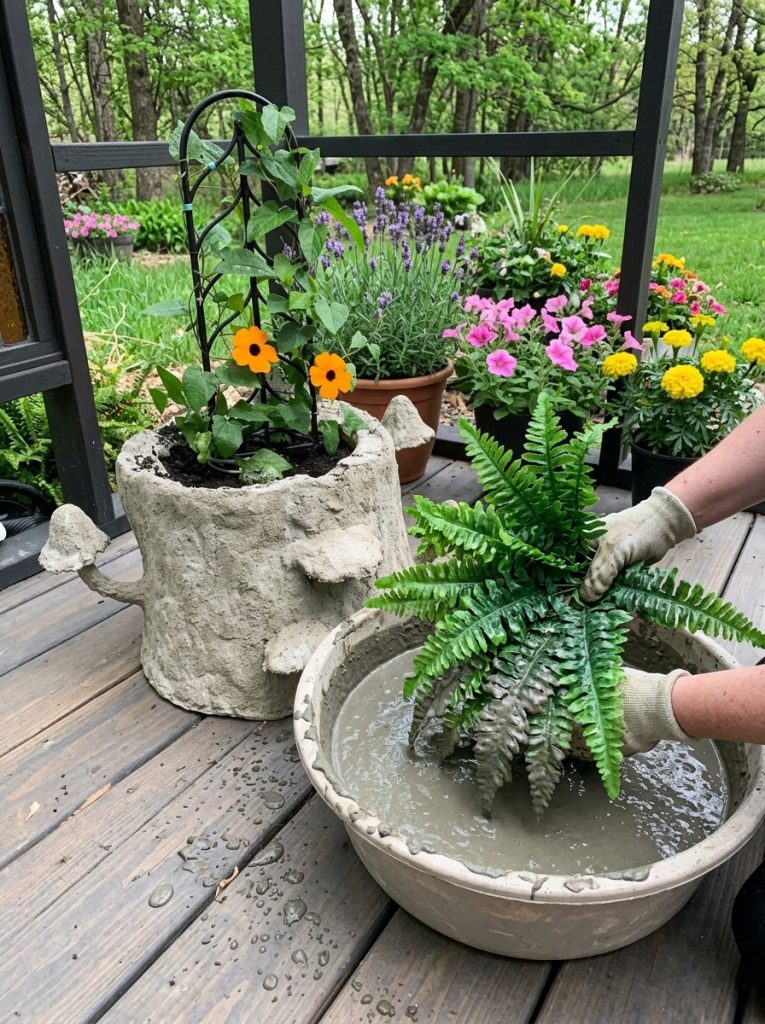
Then comes the oddly satisfying part: dunking the ferns.
Each one goes in, gets fully coated, and comes out dripping with possibility (and, well, concrete). You let the excess fall back into the container, then gently set the fern aside.
Repeat. A lot.
There’s a rhythm to it—dip, lift, drip, place. After a few, you’ll stop overthinking and just move with it.
Arranging the Magic
Once your ferns are coated, you don’t just leave them lying around. This is where your inner designer sneaks in.
Arrange them in a cluster or a loose circle right in your yard. Push them slightly into the soil so they stand firm. Some can lean. Some can stand tall. Honestly, a little imperfection helps—it keeps things from looking too staged.
Give them 24 to 48 hours to cure. And yes, the waiting part is the hardest.
But when they harden? That’s when the transformation clicks.
Styling Your Yard Around It (This Part Matters More Than You Think)
Here’s the thing—this feature looks best when it feels intentional.
Place it right in the center of your front yard if you want it to act as a focal point. Surround it with greenery—real plants, artificial ones, or a mix of both. The contrast between living and “frozen” foliage adds depth.
Stick to earthy tones nearby—terracotta pots, muted planters, gravel beds. Bright colors can work, but they tend to steal attention from the texture you just created.
And if you’re feeling a little ambitious? Add lighting.
A few low, warm LED lights placed around the base can completely change how the piece feels at night. Shadows stretch, textures pop—it becomes something else entirely after sunset.
Want to Take It Further? Try This
Once you’ve made one, it’s hard not to start experimenting.
You could:
- Use tinted concrete for subtle color variation
- Mix in small stones or sand for texture
- Vary the fern sizes for a more layered look
- Tuck in hidden LED lights for a soft glow
Some people even create pathways or borders using the same technique. It’s one of those ideas that quietly expands once you start playing with it.
Final Thoughts: Small Project, Big Presence
It’s funny—this isn’t a complicated build. No advanced tools, no special training. Just a bit of time, some concrete, and a willingness to try something slightly unusual.
And yet, the result feels… elevated.
Not flashy. Not overdone. Just different enough to make people look twice.
Honestly, that’s what good design often comes down to. A small twist on something familiar. A simple idea, executed with a bit of intention.
So yeah—plastic ferns and concrete. It sounds strange.
Until you see it in your yard.