
Save This Recipe
We'll email this post to you, so you can come back to it later!
Some mornings, your body wakes up before you do. Not in a good way, either.
Your back feels tight. Your knees creak a little when you stand up. Maybe your shoulders ache for no clear reason, like you spent the night hauling furniture instead of sleeping. You shuffle toward the kitchen wondering why simply existing suddenly feels physically demanding before 8 a.m.
And the strange part? A lot of otherwise healthy people deal with this.
Morning stiffness isn’t always a sign that something is seriously wrong. More often, it’s your body reacting to hours of stillness, awkward sleep positions, stress, dehydration, or plain old tension that built up quietly over time. Bodies are weird like that. They whisper before they shout.
Most people think the answer is to “push through it.” Get moving fast. Wake the body up aggressively. But honestly, that approach can backfire. Muscles and joints don’t always appreciate being rushed awake any more than the rest of us do.
A slower start usually works better. Not lazy—just intentional.
The Worst Thing You Can Do? Spring Out of Bed Like an Action Hero
We’ve all done it.
Alarm rings. Panic hits. One dramatic movement later, you’re upright and immediately regretting every life choice that led to this moment.
Your body doesn’t love sudden movement first thing in the morning because, overnight, everything slows down a bit. Muscles cool off. Joints stiffen slightly. Blood circulation eases into a lower gear while you sleep. So when you jump up too quickly, your body responds with that lovely rusty-door-hinge feeling.
Instead, pause for a minute.
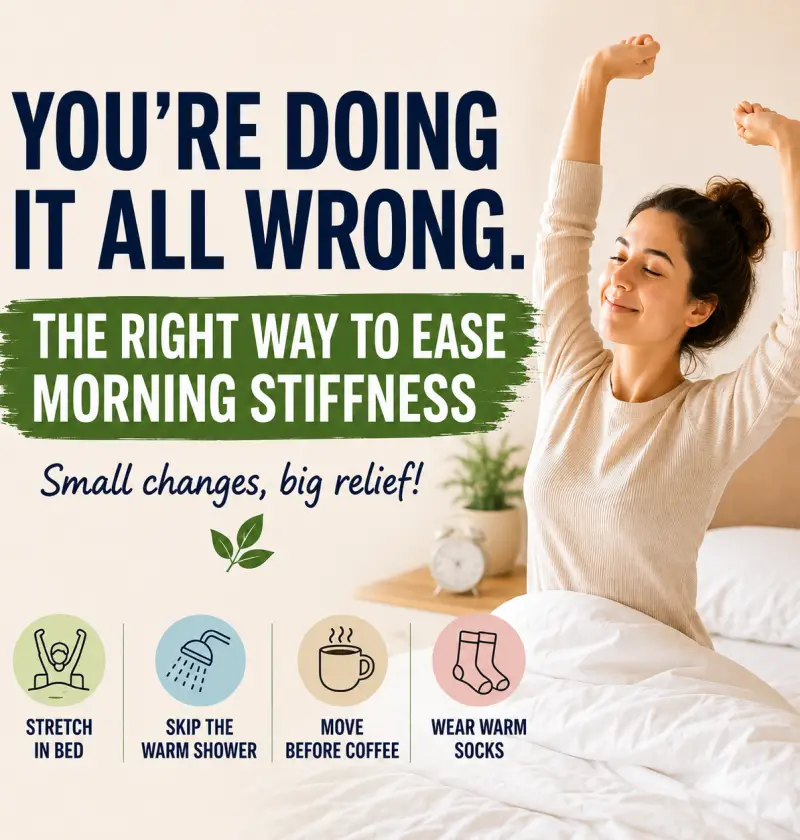
Stretch your legs under the blanket. Rotate your ankles. Reach your arms overhead. Roll your neck slowly side to side. Tiny movements matter more than people think.
It’s kind of like warming up a car in winter—not because the engine is broken, but because cold systems don’t run smoothly right away.
And yes, that comparison makes us all sound about ninety years old, but it still works.
Stretching in Bed Feels Silly Until You Realize It Helps
There’s something oddly embarrassing about stretching in bed. Maybe because it feels too easy to count as healthy behavior.
But warmth changes everything.
Your muscles respond better when they’re warm, which means your bed is actually one of the best places to start loosening up. Before your feet even touch the floor, try a few gentle stretches:
- Pull one knee toward your chest
- Flex and point your feet
- Twist gently side to side
- Reach long through your arms
- Slowly rotate your wrists and shoulders
Nothing dramatic. This isn’t a fitness bootcamp at sunrise.
The key is moving slowly enough that your body doesn’t tense against the movement. A lot of people stretch too aggressively because they think discomfort equals progress. Usually, it just equals irritation.
Oddly enough, consistency matters more than intensity here. Five quiet minutes every morning tends to help more than one heroic stretching session every two weeks.
Hot Water Helps More Than People Give It Credit For
There’s a reason warm showers feel almost emotional on stiff mornings.
Heat relaxes muscles. It increases circulation. It softens tension that built up overnight. Sometimes standing under hot water for ten minutes can make your body feel noticeably more cooperative.
Not cured. Just… less annoyed.
And if you gently massage tight spots while you shower—your shoulders, lower back, calves—it can help loosen things further. Nothing fancy. No expensive massage gun required.
Some people swear by eucalyptus shower steamers or peppermint oils because the smell wakes them up mentally while the heat relaxes them physically. Maybe part of that is psychological. Honestly, who cares? If it helps you feel human again before work, it counts.
Your Coffee Can Wait Five Minutes
People get weirdly defensive about morning coffee. Fair enough. Nobody wants a lecture before caffeine.
But moving your body a little before reaching for coffee can genuinely help stiffness.
Not a workout. Let’s not get carried away.
Just movement.
Walk around the house while breakfast cooks. Do a few light yoga poses. Put dishes away. Stretch while staring blankly out the kitchen window questioning adulthood. All of that counts.
Movement increases blood flow and warms up joints naturally, which often reduces that stiff, sluggish feeling faster than caffeine alone.
Funny enough, some people find they actually feel more awake afterward—even before the coffee kicks in.
Though let’s be honest, most of us are still making the coffee.
Cold Floors Are Sneakier Than They Look
You ever step onto a freezing tile floor and immediately feel your entire body tense?
That’s not in your head.
Cold temperatures can make muscles tighten and joints feel stiffer, especially first thing in the morning. For people already dealing with soreness or inflammation, cold floors can turn a mildly stiff morning into a miserable one surprisingly fast.
So yes, socks matter.
Not glamorous advice. Not TikTok-worthy. Still useful.
Supportive slippers help too, especially if you have hardwood or tile floors. Tiny details like that can reduce strain on your knees and lower back without you even noticing.
Sometimes comfort is preventative maintenance in disguise.
Dehydration Makes Morning Stiffness Worse
A lot of people wake up mildly dehydrated every day and never connect it to how stiff or sluggish they feel.
Your body loses fluids overnight through breathing and sweat, and muscles don’t function as smoothly without enough hydration. Joints don’t love it either.
That’s why drinking water soon after waking up can help more than expected.
Simple habit. Easy to overlook.
And no, you don’t need one of those giant motivational water bottles covered in hourly inspirational quotes. A regular glass of water is perfectly respectable.
Hydration throughout the day matters too, obviously. Fruits like watermelon, oranges, and cucumbers help more than people realize because they contribute water along with nutrients.
Small things add up quietly.
Food Can Either Calm Inflammation or Feed It
People often separate aches and stiffness from diet, but the connection is pretty real.
Some foods tend to support lower inflammation levels over time:
- Fatty fish like salmon
- Walnuts
- Olive oil
- Leafy greens
- Berries
- Ginger
- Turmeric
Now, this isn’t one of those articles pretending blueberries are magical medicine. They’re blueberries. Let’s stay grounded.
But long-term eating patterns absolutely affect how the body feels. Heavy processed foods, too much sugar, or late-night greasy meals can sometimes leave people feeling more swollen and sluggish the next morning.
Not always. Bodies aren’t math equations.
Still, patterns start to appear when you pay attention.
Social Media Loves “Miracle” Fixes — Most Are Overhyped
If you spend five minutes online, you’ll find someone claiming they cured all morning stiffness with an ice bath, magnesium spray, grounding mat, sea moss gel, or some device that looks suspiciously like a kitchen appliance.
Some trendy ideas genuinely help certain people.
Foam rolling, for example, can reduce tightness. Gentle mobility exercises work well for many people too. Heat therapy has been around forever because it actually helps.
But most real improvement comes from repetitive boring habits people don’t want to hear about because they aren’t exciting.
Sleep better. Stretch consistently. Move daily. Stay hydrated.
That’s usually the answer nobody wants because it sounds too simple.
Sometimes the Real Problem Starts at Night
Morning stiffness often begins long before morning.
Bad sleep posture, low-quality mattresses, old pillows, stress, jaw clenching, interrupted sleep—these things quietly build tension overnight. Your body spends hours stuck in one position, then reminds you about it the second you wake up.
That’s why improving sleep quality can make such a difference.
A supportive mattress matters. So does pillow height. Sleeping in strange twisted positions while clutching your phone at midnight? Less ideal.
Stress matters too, maybe more than people realize. Some people physically tense their shoulders or clench muscles all night without knowing it.
The body keeps score, even during sleep.
Honestly, Small Habits Work Better Than Extreme Routines
People love dramatic wellness routines online because they look impressive.
Cold plunges at sunrise. Intense stretching sessions. Complicated supplements with names that sound vaguely scientific.
But most people don’t stick with complicated routines. Life gets busy. Motivation fades. Reality shows up.
Simple habits survive longer.
Stretch a little. Move slowly in the morning. Drink water earlier. Sleep better when possible. Keep warm. Eat reasonably well most of the time.
That’s not flashy advice, but it’s realistic. And realistic habits are usually the ones that actually help your body feel better month after month.
Not overnight. Probably not dramatically either.
Just gradually, quietly better.