
Save This Recipe
Estate sales are funny like that.
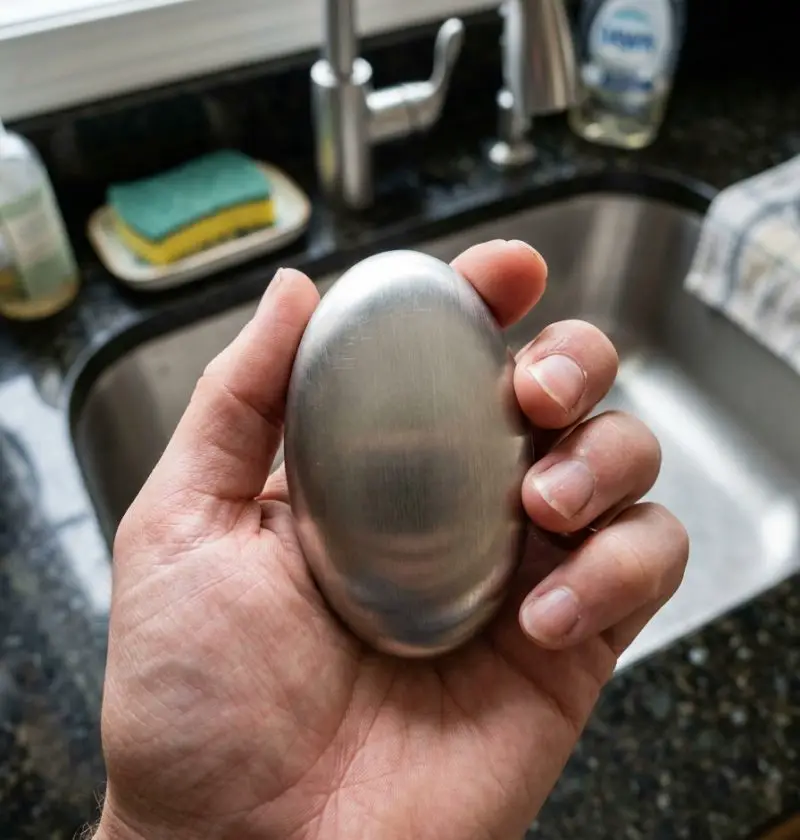
You go in looking for maybe a cast iron skillet or an old cookie tin, and somehow you leave wondering why someone kept a weird silver “soap bar” next to the sink for 40 years.
No label. No scent. No moving parts. Just this smooth chunk of metal sitting there like it belongs—and apparently, it did.
The first time I saw one, honestly, I thought it was a paperweight. Or maybe one of those random kitchen gadgets people bought from TV commercials in the early 2000s and forgot about two weeks later. But nope. Turns out the thing actually has a purpose.
And a surprisingly useful one, too.
So What Is This Thing, Exactly?
That odd little metal bar is usually a stainless steel odor remover.
Sounds made up. I know.
It’s basically designed to help remove strong food smells from your hands after cooking. Think garlic, onions, fish, seafood—those stubborn smells that seem to survive three rounds of hand washing somehow.
And the strange part?
There’s no soap in it at all.
No chemicals. No fragrance. Nothing that wears down over time. It’s just stainless steel shaped like a bar of soap so it feels familiar in your hand.
Simple idea, weird concept… but people swear by them.
Why People Thought These Things Were Revolutionary
Back when these became popular, kitchen gadgets were having a moment.
Every catalog had some “you’ll never believe this works” item tucked between the avocado slicers and banana hangers. Some were ridiculous. Some actually stuck around.
This one survived because it’s reusable forever. More or less.
You don’t refill it. It doesn’t melt. You don’t even really clean it beyond rinsing it off. It just sits by the sink waiting for someone to chop onions and regret it later.
Honestly, that kind of practicality feels very old-school in the best way.
The Weird Science Behind It
Okay, here’s where it gets interesting.
A lot of strong kitchen smells—especially garlic and onions—come from sulfur compounds. That’s what clings to your fingers long after dinner prep is over.
When you rub stainless steel under running water, those sulfur molecules are believed to bind to the surface of the metal. So instead of staying on your skin, they transfer away.
At least, that’s the theory most often cited.
Now, scientists still debate how dramatic the effect actually is. Some people say it works incredibly well. Others think part of it is psychological. Kind of like how mint toothpaste feels cleaner even before it technically is.
But you know what? Most cooks who use these regularly will tell you the same thing:
“It sounds ridiculous, but somehow it works.”
And honestly, that’s enough for a lot of people.
The Smells It’s Best At Handling
These little bars are usually used after handling:
- Garlic
- Onions
- Fish
- Shrimp
- Shallots
- Leeks
Basically, anything that leaves your hands smelling like you’ve been prepping seafood in a dockside restaurant all afternoon.
Fish smell, especially, tends to linger in a way that feels almost personal. Soap helps, sure, but sometimes it just turns into “fish smell plus lavender.” Not ideal.
That’s where the steel bar comes in.
How You’re Supposed To Use It
This is the entire process:
Run cold water.
Rub the steel bar between your hands for around 20–30 seconds.
That’s it.
No scrubbing aggressively. No special technique.
Just treat it like regular soap—minus the bubbles.
Some people focus on fingertips and under nails since odors tend to cling there the longest. And oddly enough, cold water usually works better than hot water for this.
Why? Hard to say exactly. Kitchen wisdom has its mysteries.
Why They Keep Showing Up in Older Homes
These bars were especially popular decades ago because they fit a certain mindset people had about kitchens back then.
Reusable tools mattered. Durable things mattered.
If something could last 20 years without batteries, plastic parts, or replacement cartridges? People loved it.
So these odor bars ended up tucked beside sinks, stored in little soap dishes, or tossed into utensil drawers where they stayed for years. Sometimes decades.
That’s why estate sales are full of them now.
You’ll see one sitting between vintage Pyrex bowls and old potato mashers, and unless you recognize it, you’d never guess what it does.
It’s Easy To Mistake for Something Else
To be fair, they don’t exactly advertise their purpose.
Most odor remover bars are:
- smooth
- silver
- rounded
- completely unmarked
No logo. No instructions. Nothing.
So people mistake them for:
- paperweights
- decorative metal blocks
- tool parts
- massage stones
- random junk drawer objects
I’ve even seen someone online think it was a fancy cheese-aging tool. Which… honestly, I kind of understand.
Here’s the Funny Part: You Might Already Own a DIY Version
A lot of people don’t realize this, but you can often get a similar effect using regular stainless steel items already in your kitchen.
For example:
- a spoon
- a butter knife
- the side of a stainless sink
- even a ladle sometimes
Same idea. Same metal.
The dedicated bars are just more comfortable to hold and easier to keep near the sink.
Still, it’s kind of amusing knowing some people paid for a special gadget while others accidentally discovered the trick rubbing their hands on the kitchen faucet.
Are They Expensive?
Not at all.
Most stainless steel odor bars cost somewhere around $5–15 depending on the brand. Some come in fancy packaging, others look hilariously plain.
And because they don’t wear out, one bar can basically last forever unless someone mistakes it for scrap metal and tosses it.
Which probably happens more than manufacturers would like to admit.
So… Do They Actually Work?
Honestly?
For a lot of people, yes.
Maybe not like magic. Maybe not perfectly every single time. But enough that chefs, fishermen, and home cooks have kept using them for years.
And even if part of the effect is psychological, there’s something oddly satisfying about using this strange little metal “soap” bar after chopping garlic and realizing your hands don’t smell nearly as strong afterward.
It’s one of those old kitchen tricks that sounds fake until you try it yourself.
Then suddenly you understand why somebody kept one by the sink for 30 years.