Anybody who’s tried growing tomatoes knows this already: they’re weirdly dramatic plants.
One week they look unstoppable—thick stems, bright green leaves, tiny yellow flowers everywhere. Then suddenly? Curled leaves. Cracked fruit. Some mystery spot spreading across the plant like it pays rent there.
And still… people keep growing them. Every year.
Because a homegrown tomato in the middle of summer tastes completely different from the grocery store kind. Sweeter. Richer. Messier in the best way. Once you’ve had one warm from the garden with a little salt on it, you get it.
The good news is tomato plants usually don’t need fancy products or expensive systems. A lot of the best tricks are surprisingly simple. Some sound a little old-school, honestly. But they work.
Here are the tomato-growing hacks gardeners swear by—and a few that quietly make a bigger difference than people expect.
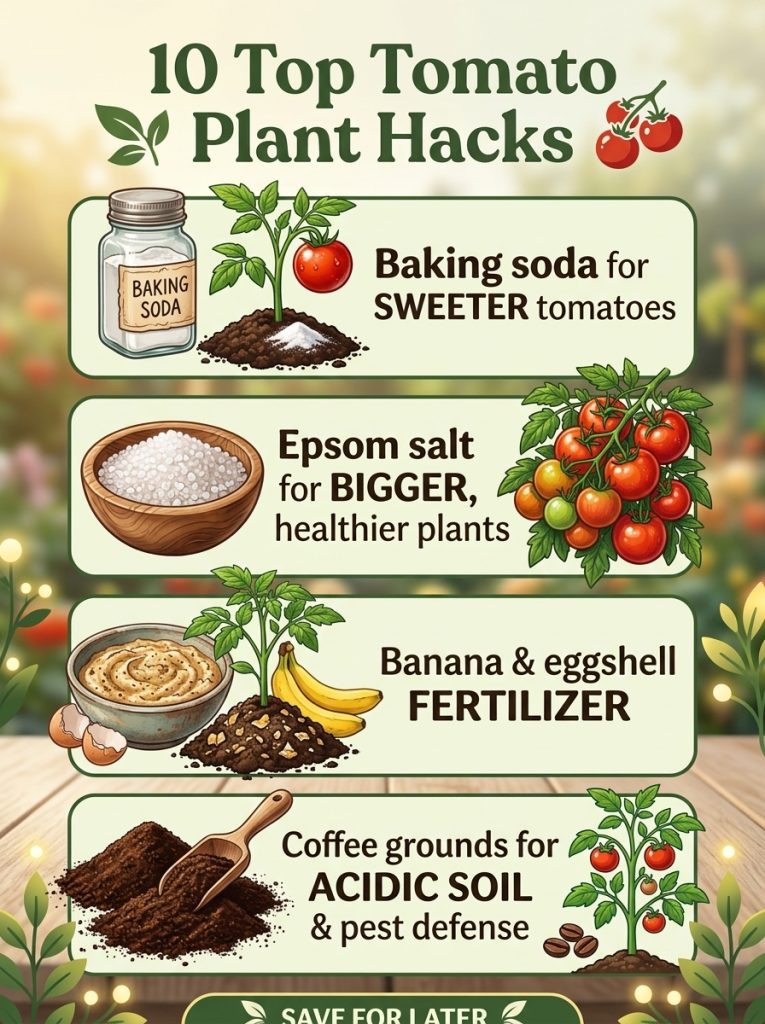
1. A Little Baking Soda Can Sweeten Tomatoes
This one sounds fake the first time you hear it, but gardeners have been doing it forever.
Just sprinkle about a teaspoon of baking soda around the base of each plant. Not directly against the stem—just around the soil nearby.
Why bother?
Because baking soda can slightly lower soil acidity, which may reduce the acidity inside the tomatoes themselves. The result? Tomatoes that taste a bit sweeter and less sharp.
Not candy-sweet obviously. They’re still tomatoes. But especially with varieties that tend to be acidic, people notice the difference.
Don’t overdo it, though. More is not better here. Too much can throw the soil out of balance and cause nutrient issues later.
2. Epsom Salt Is Basically the Garden’s Little Secret
Gardeners talk about Epsom salt the way grandmas talk about cast iron skillets. There’s always someone insisting it fixes everything.
To be fair… with tomatoes, it can genuinely help.
Mix:
- 1 tablespoon Epsom salt
- 1 gallon water
Then spray the leaves or water the base every couple of weeks.
The magnesium helps the plant produce chlorophyll more efficiently, which usually means greener leaves and stronger growth. Tomatoes are heavy feeders too, so they burn through nutrients faster than people realize.
If your plants are looking pale or tired halfway through summer, this can perk them up surprisingly fast.
3. Banana Peels and Eggshells Are Still Worth Saving
You know what’s funny? A lot of gardening hacks sound suspiciously like someone trying not to waste kitchen scraps.
But this one’s actually useful.
Banana peels add potassium and phosphorus to the soil, which helps fruit production and root development. Eggshells add calcium—which matters because tomatoes are notorious for blossom-end rot.
That ugly black spot on the bottom of tomatoes? Usually a calcium issue.
Chop banana peels into small pieces and bury them a few inches down near the roots. Crush eggshells well before mixing them into the soil.
And yes, technically it takes time for them to break down fully. But over a growing season, it helps more than people think.
4. Coffee Grounds Help—If You Don’t Go Overboard
Tomatoes love nitrogen early in the season. That’s where coffee grounds come in.
Used coffee grounds add slow-release nitrogen and improve soil texture at the same time. Worms love them too, which is one of those random gardening facts people get oddly excited about.
Just let the grounds dry first.
Fresh wet coffee grounds can compact together and sometimes make the soil hold too much moisture. A light sprinkle works better than dumping half your coffee filter outside every morning.
Which… some people absolutely do.
5. The Aspirin Trick Sounds Ridiculous—But There’s Science Behind It
This is the hack that makes people raise an eyebrow.
Dissolve one plain aspirin in a gallon of water and spray it on tomato leaves every few weeks.
That’s it.
Aspirin contains salicylic acid, which mimics a natural plant defense signal. Basically, it nudges the plant into “alert mode,” helping it defend itself against diseases more effectively.
Some gardeners swear their plants grow stronger and produce more tomatoes afterward.
Others think it’s overhyped.
Honestly? It’s probably somewhere in the middle. But enough university studies have explored it that it’s not just internet folklore anymore.
6. Mulch Does More Than People Realize
A lot of beginner gardeners skip mulch because it seems cosmetic.
It’s not.
Mulch quietly solves several tomato problems at once:
- keeps moisture from evaporating too fast
- regulates soil temperature
- blocks weeds
- reduces fungal disease spread
That last one matters especially.
When rainwater splashes dirt onto tomato leaves, it can spread fungal spores from the soil upward. Mulch creates a barrier that helps stop that cycle.
Straw works great. Dry grass clippings too—as long as they haven’t been treated with chemicals.
And during brutal summer heat? Mulch can be the difference between stressed plants and healthy ones.
7. Tomatoes Like Good Neighbors
Companion planting sounds trendy now, but gardeners have paired plants together for generations.
Certain plants genuinely help tomatoes grow better.
A few favorites:
- Basil
- Marigolds
- Garlic
- Chives
Basil may help repel pests and supposedly improves tomato flavor too. Marigolds are famous for helping deter nematodes and certain insects.
And honestly, tomatoes and basil growing together just feels correct somehow. Even visually.
Like the garden version of a good sandwich.
8. Pruning Feels Wrong at First
The first time someone tells you to cut healthy branches off a tomato plant, it feels slightly cruel.
But pruning matters.
Once plants get taller, removing lower leaves improves airflow and reduces moisture buildup near the soil. That helps prevent fungal diseases, especially during humid stretches.
Then there are the “suckers”—those little shoots growing between branches and the main stem.
Left alone, they turn into full branches that drain energy from fruit production.
Not every gardener aggressively prunes, and honestly there’s debate about how much is best. But removing at least some lower growth almost always helps.
9. Support Your Plants Early—Not After They Collapse
This is one of those mistakes nearly everybody makes once.
The tomato plant looks small when you buy it, so you think:
“I’ll cage it later.”
Then July happens.
Now the plant weighs 40 pounds, it’s leaning sideways, tomatoes are dragging in the dirt, and trying to cage it becomes a wrestling match.
Install stakes or cages early. Seriously.
Tomatoes grow fast once summer heat kicks in, especially indeterminate varieties that just keep climbing and sprawling like they’ve lost all self-control.
Keeping plants upright improves airflow, reduces rot, and makes harvesting way easier too.
10. Water Deeply—Not Constantly
Tomatoes hate inconsistent watering.
That’s when you get:
- cracked fruit
- blossom-end rot
- stressed plants
- weak roots
A deep soak a few times a week works better than tiny daily watering sessions.
And mornings are best.
Evening watering can leave plants damp overnight, which creates a cozy little environment for fungal problems. Morning watering gives plants time to absorb moisture before the heat really kicks in.
Also—and this matters more than people think—try watering the soil, not the leaves.
Wet tomato leaves plus summer humidity is basically an open invitation for disease.
The Funny Thing About Tomatoes…
No matter how many hacks you learn, tomatoes still humble people sometimes.
You can do everything “right” and still lose a branch in a storm or find a hornworm the size of your finger hiding under a leaf like a tiny green criminal.
That’s gardening.
But these small tricks really do stack together over time. Better soil. Better airflow. Better watering habits. Healthier plants.
And when those first ripe tomatoes finally show up? Totally worth it.