
Save This Recipe
We'll email this post to you, so you can come back to it later!
Chicken breast sounds simple. Too simple, honestly. It’s one of those foods people buy every single week without thinking much about it — until it suddenly turns weird in the pan.
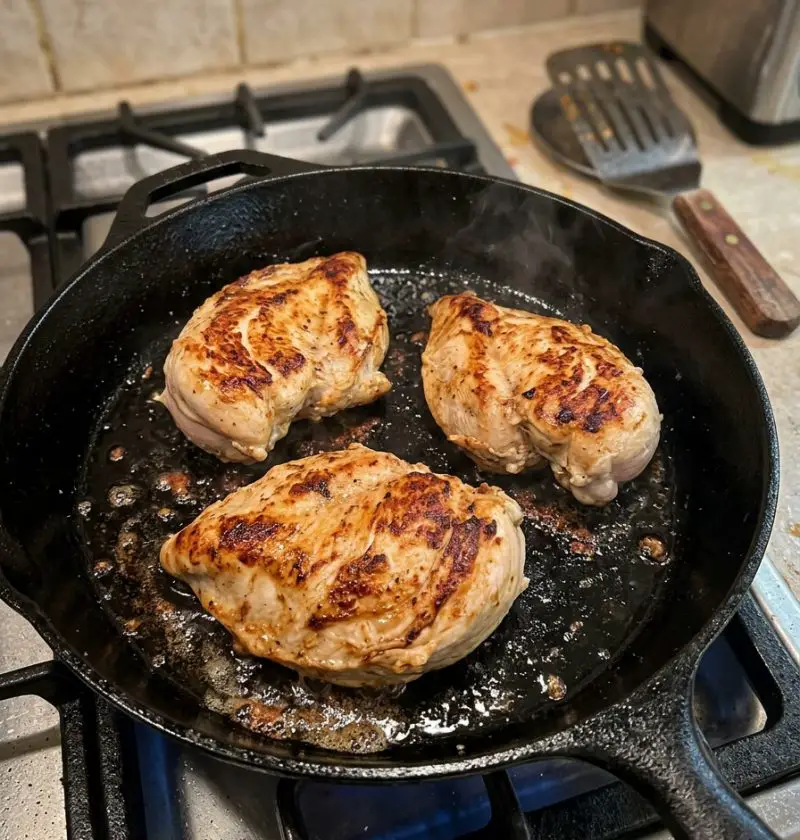
You start with a nice thick piece of chicken. A few minutes later it’s smaller, tighter, curved at the edges, and somehow drier than expected. Sometimes it even looks like it folded into itself while cooking. Not exactly the juicy golden chicken you pictured.
A lot of home cooks assume they did something wrong. But this happens for a reason, and it happens to almost everybody.
The short version? Heat changes the structure of the meat. The longer version is a little more interesting.
Your Chicken Is Basically Tightening Up
Chicken breast is made mostly of muscle and water. Once heat hits it, the proteins inside begin to tighten. That tightening squeezes moisture out little by little while the meat cooks.
That’s where the shrinking starts.
The proteins most responsible for this are called myosin and actin, though you definitely don’t need to memorize that unless you’re trying to win a food trivia night somewhere. What matters is what they do. They react to heat by contracting.
Think about a sponge being squeezed in your hand. Same basic idea.
As the chicken loses moisture, it becomes firmer and smaller at the same time. Some shrinkage is completely normal. There’s really no way around that part.
The curling, though, usually comes from uneven cooking.
High Heat Is Usually The Main Problem
People love cooking chicken over aggressive heat because it feels fast and efficient. A ripping-hot skillet sounds impressive. Restaurants do it. Cooking videos do it. The sizzling noise alone makes it feel like something good is happening.
Sometimes it is.
But chicken breast can go from juicy to tense and dry pretty quickly when the heat gets too high.
The outside cooks first. Naturally. And when those outer muscle fibers tighten faster than the center cooks through, the edges start pulling inward. That pulling creates the curling effect people notice in the pan.
You’ve probably seen the thinner side of a chicken breast curl upward before the thicker side is even fully cooked. That’s exactly what’s happening.
Meanwhile the moisture keeps leaving.
So now you’ve got smaller chicken and tougher texture happening at the same time. Kind of annoying, honestly.
Moisture Loss Changes Everything
Chicken breast doesn’t have much fat compared to darker cuts like thighs. That means moisture matters a lot more.
Once the water starts escaping too quickly, the texture changes fast. The meat gets firmer, denser, and less forgiving. That’s why overcooked chicken breast sometimes feels stringy or almost chalky.
Not the most appetizing word, but accurate.
And here’s the thing people don’t always realize: moisture loss doesn’t happen evenly. Some parts dry out first. Usually the thinner sections around the edges.
That uneven tightening is part of why the chicken twists or curls while cooking.
It’s not random. The meat is literally pulling against itself.
Crowded Pans Make It Worse
This part gets overlooked constantly.
If the pan is overcrowded, the chicken releases moisture faster than the heat can evaporate it. Instead of browning nicely, the meat starts steaming in its own liquid.
Steamed chicken behaves differently. The surface cooks unevenly and often stays pale while other spots get too hot.
And then there are hot spots in the pan itself. Some skillets heat unevenly, especially thinner pans. One side gets hotter, proteins tighten faster there, and suddenly the chicken starts curling on one edge first.
Cast iron usually handles heat more evenly. Heavier stainless steel pans do too once they’re properly heated.
Cheap lightweight pans? They tend to create chaos.
Cold Chicken Straight From The Fridge Doesn’t Help
A lot of people throw chicken directly from the refrigerator into a hot skillet. Totally understandable when dinner needs to happen fast.
But cold chicken cooks unevenly almost immediately.
The outside heats up rapidly while the center stays cold longer. That big temperature difference creates more stress inside the meat, which increases shrinking and curling.
Letting chicken sit out for about 20 minutes before cooking helps more than people expect. It won’t magically fix everything, but it gives the meat a more even starting point.
Small detail. Big improvement.
Thickness Is A Bigger Deal Than Most People Think
Chicken breasts are oddly shaped. One side is thick, the other side tapers thin, and that uneven shape practically guarantees uneven cooking.
The thinner parts finish first and start drying out while the thicker center still needs more time.
That’s why people pound chicken breasts flatter before cooking. It’s not just for appearance. It helps the entire piece cook at roughly the same speed.
Even a little flattening helps.
You don’t need to destroy it with a meat mallet like you’re filming an old cooking Show from 1994.
Just enough to even things out.
Brining Actually Works
There are a lot of cooking tricks online that sound helpful but barely change anything. Brining is not one of them.
Saltwater brines genuinely help chicken stay juicier because the salt changes how the muscle fibers hold moisture during cooking.
The chicken still shrinks some — all meat does — but usually less dramatically.
A quick brine for even 30 minutes can make a noticeable difference in texture. The meat tends to stay softer and more flexible instead of tightening aggressively.
Marinades can help too, though acidic marinades need balance. Too much lemon juice or vinegar for too long starts affecting the texture in a weird way.
Soft chicken sounds good in theory until it suddenly feels mushy.
Moderate Heat Usually Gives Better Results
This surprises people because high heat feels more professional somehow.
But chicken breast usually cooks better over medium or moderate heat. The Slower temperature rise gives the proteins less reason to panic and seize up immediately.
Baking around 350°F tends to work well. So does medium heat in a skillet.
Grilling works nicely too when the flames aren’t blasting the meat into another dimension.
Sous vide is probably the most reliable method overall because the temperature stays controlled the entire time, but most people aren’t pulling out immersion circulators for an average Wednesday dinner.
A Meat Thermometer Solves Half The Problem
Honestly, overcooking is probably the biggest reason chicken breast disappoints people.
Chicken only needs to reach 165°F for safety, and it keeps cooking slightly after coming off the heat. Pulling it around 160°F and letting it rest usually works beautifully.
Without a thermometer, most people keep cooking “just to be safe,” which slowly drains out the remaining moisture.
Then they wonder why the chicken feels dry.
Resting matters too. Cutting into chicken immediately sends the juices onto the plate instead of staying inside the meat.
Granted, almost everyone ignores this at least occasionally because the chicken smells amazing and patience suddenly disappears.
Some Small Tricks Help More Than You’d Expect
There are a few little kitchen habits that genuinely reduce curling:
- Pound the chicken lightly for even thickness
- Don’t overcrowd the pan
- Let the chicken warm slightly before cooking
- Use medium heat instead of blasting high heat
- Pat the surface dry before searing
- Press lightly with a spatula during the first minute
- Let the meat rest after cooking
Some cooks even use a grill press or small weighted pan to keep chicken flatter while it cooks.
Simple stuff, but it works.
The Biggest Myth? “High Heat Locks In Juices”
People still repeat this constantly, but it’s not really true.
High heat browns the outside quickly. That part is true. But moisture still moves through the meat and escapes during cooking.
Chicken isn’t sealing itself shut like a zip-top bag.
Good texture comes from balanced cooking, controlled heat, and not overdoing it. That’s really the whole secret.
Not fancy tricks. Not complicated equipment. Just better control.
And honestly, once you understand what’s happening inside the meat, chicken breast becomes way less frustrating to cook.