
Save This Recipe
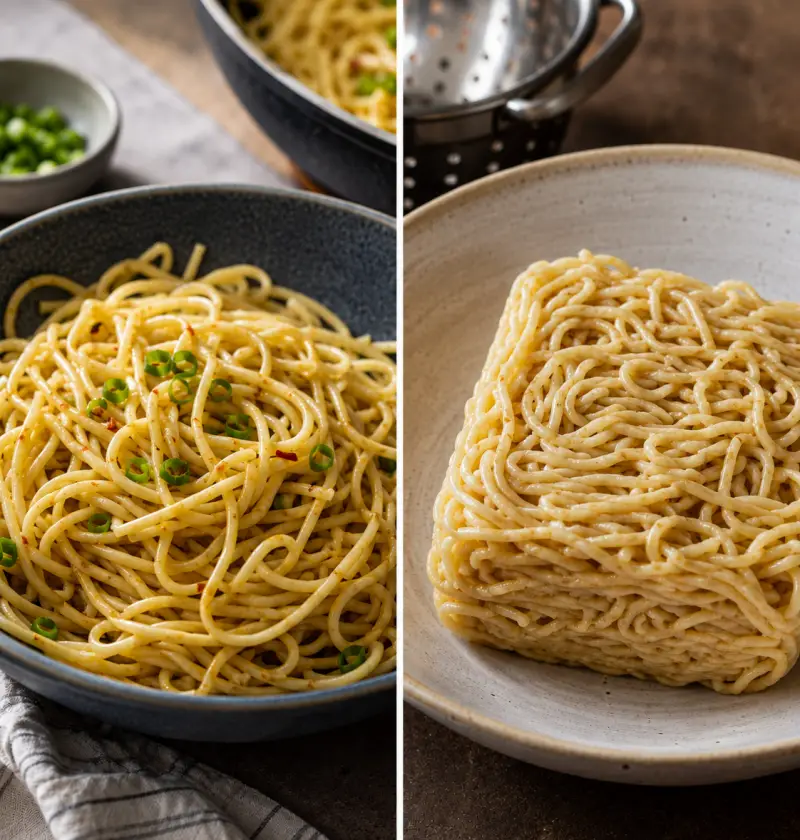
You drain your noodles, answer one text message, maybe wipe the counter for thirty seconds, and suddenly your pasta has transformed into one solid mass that could probably survive a fall off the kitchen table.
Not exactly the cozy bowl of noodles you had in mind.
Honestly, almost everybody does this at least once. Probably more than once. Noodles seem harmless right up until they glue themselves together like they’ve signed some secret agreement while sitting in the colander.
The good news is there’s an actual reason this happens — and once you understand it, it becomes way easier to prevent.
A lot of it comes down to starch, heat, timing, and a couple tiny cooking habits most people never think about. Tiny details, really. But those little details decide whether your noodles stay silky and separate or become a sad pasta brick.
The Real Reason Noodles Stick Together So Fast
The main culprit is starch.
As noodles boil, they release starch into the water. Some of that starch settles onto the surface of the noodles themselves, creating a thin coating that feels slippery while everything is still hot and moving.
Then the noodles sit.
The starch cools, dries slightly, and starts acting like glue.
That’s why noodles that looked perfectly fine thirty seconds earlier suddenly cling together in one stubborn lump. And if they’re packed tightly into a strainer or bowl without being tossed around, the problem gets worse fast.
It’s basically edible cement. Warm edible cement.
Residual Heat Keeps Cooking the Pasta Even After You Drain It
Here’s something a lot of home cooks don’t realize: draining noodles doesn’t actually stop the cooking.
The noodles stay extremely hot for several minutes afterward. That trapped heat keeps softening them, which means they continue releasing starch while they sit there steaming.
So now you’ve got hot starch plus moisture plus pressure from the noodles resting together.
That combination is exactly why ramen, spaghetti, and even rice noodles can turn into one giant clump if ignored too long.
Professional kitchens move quickly for this reason. Pasta gets drained and sauced almost immediately. There’s very little standing around.
Why Using Enough Water Actually Matters
People sometimes try to cook pasta in smaller pots to save time or water. Technically you can.
But crowded noodles release concentrated starch into a smaller amount of liquid, which increases sticking.
A bigger pot with plenty of boiling water gives noodles room to move around instead of collapsing onto each other.
That movement matters more than people think.
And yes, stirring during the first couple minutes helps too. Those first moments are when noodles are most likely to cling together.
After that, they usually behave themselves.
Usually.
That “One Extra Minute” Can Ruin the Texture
Overcooked noodles release more starch. More starch means more sticking.
Simple as that.
This is why timing matters so much.
A lot of pasta boxes recommend cooking ranges like “9–11 minutes,” but honestly, you should start checking before the shortest suggested time. Not after.
Because once noodles cross from al dente into overly soft territory, they become much more fragile and sticky.
And then if they sit in a colander for five minutes while everybody finds plates? Disaster.
Not dramatic disaster, obviously. But disappointing dinner disaster.
Should You Rinse Pasta? Sometimes Yes, Sometimes Absolutely Not
This part confuses people constantly.
For cold noodle dishes, rinsing is helpful.
Cold water stops the cooking immediately and washes away excess surface starch, which keeps noodles from sticking together later. That’s perfect for pasta salad, sesame noodles, or chilled soba.
But for hot pasta dishes?
Usually don’t rinse.
The starch coating actually helps sauce cling to the noodles better. Rinsing removes that layer and can make sauces slide right off instead of coating everything nicely.
So the answer depends entirely on what you’re making.
Which feels annoying, honestly, but cooking works like that sometimes.
Oil Helps — But Only If You Use It Correctly
People love debating oil and pasta online.
Adding oil directly to boiling water doesn’t really stop sticking the way many people think it does. Most of it floats on the surface anyway.
But tossing drained noodles lightly with oil afterward? That can absolutely help.
The key word is tossing.
A drizzle dumped on top without mixing won’t do much besides create oily spots. You need the noodles coated evenly so the strands stay separated.
Olive oil works beautifully for this, especially if the noodles won’t be sauced immediately.
Sauce Is Actually Your Best Defense
One of the smartest things you can do is move noodles directly from the pot into the sauce.
Not noodles first, sauce later.
Sauce acts like a protective coating that keeps starches from bonding together. It also finishes the noodles properly because they absorb flavor while staying loose and glossy.
This is why restaurant pasta often tastes smoother and more cohesive than homemade versions.
The noodles and sauce become one thing instead of two separate parts dumped together at the end.
Small difference. Huge result.
Some Noodles Stick More Than Others
Not all noodles behave the same.
Long thin noodles like angel hair and spaghetti tend to clump faster because they have more surface contact. Thick or ridged pasta shapes usually separate more easily.
Asian noodles vary too.
Rice noodles can get sticky very quickly if overcooked. Udon tends to stay softer and looser. Soba noodles cool down fast and benefit from rinsing.
Honestly, once you cook enough different noodles, you start noticing they each have their own personality. Some are forgiving. Some absolutely are not.
Can You Save a Pasta Brick After It Happens?
Usually yes.
Not perfectly, maybe, but enough.
If noodles have fused together, adding a splash of warm water or broth can help loosen the starch coating. Gentle heat works too.
A quick sauté in a pan with sauce or oil often separates the strands gradually.
What you don’t want to do is aggressively yank them apart. That usually tears the noodles and creates uneven texture.
Patience works better here.
Oddly enough, TikTok got this part mostly right.
Tiny Habits Make the Biggest Difference
The people who consistently make great pasta usually aren’t doing anything complicated.
They just move quickly.
They use enough water. They stir early. They drain at the right time. They sauce immediately.
That’s really it.
And once those habits become automatic, noodles stop turning into sticky bricks altogether.
Well…mostly.
Because honestly, every cook still gets distracted sometimes. Dinner happens in real kitchens, not cooking shows.
Final Thoughts
Noodles clump together because starch, heat, and time all work against you the moment the pasta leaves the pot. Understanding that makes the fix surprisingly simple.
Use enough water. Don’t overcook the noodles. Stir early. Move fast after draining. Toss with sauce or oil before the starch has a chance to glue everything together.
Those small adjustments make a huge difference.
And the next time you turn away from the stove for thirty seconds, your pasta probably won’t come back looking like a construction material.