
Save This Recipe
We'll email this post to you, so you can come back to it later!
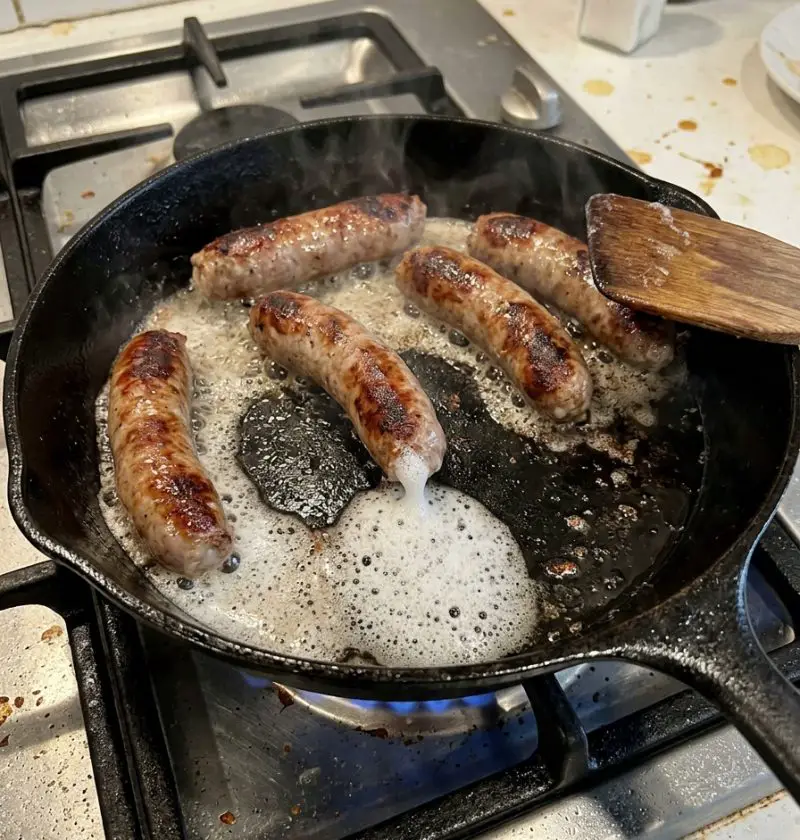
Few kitchen moments feel more confusing than watching sausages hiss and sputter in the pan while weird white foam bubbles out of them.
It doesn’t exactly scream appetizing.
For a second, you wonder if something has gone terribly wrong. Is the meat spoiled? Is it chemicals? Did you ruin dinner somehow?
Honestly, almost everyone has that moment the first time they notice it.
But here’s the reassuring part: in most cases, that white foam is completely normal. Not glamorous, sure, but normal.
It’s basically your sausage reacting to heat in real time — proteins tightening, fat rendering, moisture escaping. A tiny food-science experiment happening right in the skillet.
And once you understand what’s actually going on, the whole thing becomes a lot less mysterious.
So… What Is The White Foam?
The foam that leaks out of sausages during cooking is mostly a combination of:
- Protein
- Fat
- Water
That’s it.
As the sausage heats up, proteins inside the meat begin to coagulate and tighten. At the same time, fat starts melting and water trapped inside the sausage gets pushed outward.
When those ingredients hit the hot surface of a pan together, they create that pale foamy substance you see bubbling around the sausage casing.
It’s similar to what happens when you cook bacon and see white protein bubbles forming near the edges. Same basic idea.
Some sausages contain a surprisingly high amount of water — sometimes over 50% depending on the style and manufacturer. So when heat starts squeezing moisture out of the meat, the foam becomes even more noticeable.
Especially with cheaper supermarket sausages.
More on that in a minute.
Heat Changes Everything Inside The Sausage
Here’s the thing people don’t usually think about: sausages are tightly packed systems under pressure.
Seriously.
Inside that casing, you’ve got ground meat, fat, seasoning, moisture, and tiny air pockets all compressed together. Once heat enters the equation, everything starts shifting around fast.
Proteins shrink as they cook. Fat liquefies. Steam builds.
Eventually, some of that pressure needs somewhere to go.
So the sausage releases moisture through tiny gaps in the casing — or sometimes through microscopic tears you can’t even see. That escaping liquid carries proteins and rendered fat with it, creating the foamy residue on the outside.
If the heat is too aggressive, the process happens even faster.
That’s why sausages cooked over screaming-high heat tend to leak far more foam than sausages cooked gently.
It’s not unlike squeezing a sponge too hard under running water. Everything rushes out at once.
Most Of The Time, The Foam Is Totally Fine
This is the part most people need to hear.
White foam on sausages is usually harmless.
It’s not poison. It’s not soap. It’s not some mysterious chemical additive leaking into your pan. It’s mostly just cooked protein and fat from the meat itself.
You can eat it safely.
In fact, professional kitchens see this constantly. Especially when cooking fresh sausages in batches on a flat-top grill or stovetop.
Some sausage styles naturally produce more foam than others too:
- Bratwurst
- Italian sausage
- Breakfast sausage
- Fresh pork sausage
Fresh sausages generally foam more because they contain more moisture compared to cured or pre-cooked varieties.
And honestly? Certain cooking methods exaggerate it.
Simmering sausages in liquid or cooking them Slowly in a covered pan tends to pull out more moisture, making the foam easier to notice.
Grilling, meanwhile, often hides it because the liquid drips away.
Sometimes Excessive Foam Does Mean Lower Quality
Now — this is where things get a little more interesting.
A moderate amount of foam is normal. Excessive foam sometimes points toward lower-quality sausage.
Not always. But sometimes.
Cheaper sausages often contain:
- Added water
- Starches
- Breadcrumb fillers
- Soy protein
- Emulsifiers
These ingredients help manufacturers bulk up the product cheaply while keeping texture soft and juicy.
The downside?
Those fillers release water during cooking, which can create extra foam and leakage.
That’s why bargain-pack sausages sometimes look like they’re boiling from the inside out while premium butcher sausages stay relatively calm in the pan.
You can often feel the difference too.
Higher-quality sausages usually have a firmer texture and meatier bite. Lower-end versions can feel oddly soft or rubbery, almost springy in a processed-food kind of way.
Not terrible, necessarily. Just different.
High Heat Makes The Problem Worse
Honestly, this is probably the biggest cooking mistake people make with sausages.
They blast the pan heat too high.
The outside starts browning aggressively before the inside has time to cook properly. Meanwhile, internal pressure skyrockets and pushes moisture out rapidly.
Cue the foam explosion.
Gentler cooking works much better.
A medium or medium-low heat allows the sausage to cook evenly while reducing the violent protein leakage that causes excessive bubbling.
Chefs often use a gradual approach:
- Cook gently first
- Brown afterward
That order matters.
Trying to force deep browning immediately usually backfires.
The Poach-Then-Sear Method Works Ridiculously Well
If you want sausages that stay juicy with less foam and splitting, this method is hard to beat.
Start by simmering the sausages gently in water, beer, or stock for about 10–15 minutes.
Not boiling. Simmering.
That gentle heat cooks the interior evenly without shocking the proteins too quickly. Then, once they’re mostly cooked through, finish them in a hot skillet or on the grill for color and crispness.
The result?
- Less bursting
- Less foam
- More even texture
- Better browning
- Juicier sausage overall
Honestly, a lot of restaurants quietly use this technique because it’s reliable and hard to mess up during busy service.
Plus, beer-poached sausages smell incredible.
Frozen Sausages Behave Differently Too
Frozen sausages tend to release more liquid during cooking — especially if they weren’t fully thawed beforehand.
Ice crystals damage the meat’s internal structure a bit during freezing. Once cooked, that damaged structure releases moisture more easily.
So if your frozen sausages seem unusually foamy, that’s often why.
Proper thawing helps minimize it.
Overnight in the refrigerator is best. Not glamorous, but effective.
Cooking frozen sausages straight in a pan usually creates uneven heating and a whole lot of leaking moisture.
Foam Color Actually Tells You Something
Most normal sausage foam looks:
- White
- Pale beige
- Slightly creamy
- Light and airy
That’s generally fine.
But if the foam looks:
- Gray
- Greenish
- Yellowish
- Slimy
- Thick and gummy
…that can be a warning sign.
Spoilage changes both texture and smell. Bad sausages usually announce themselves pretty clearly once heated.
And honestly, your nose is often the best tool here.
Fresh sausage smells savory and meaty. Spoiled sausage smells sour, sulfur-like, or strangely sweet in a bad way.
If something feels off, trust that instinct.
Not every ingredient problem can be fixed with “cooking it more.”
Casings Matter More Than People Realize
Professional sausage makers spend a surprising amount of time thinking about casings.
Because good casings help regulate moisture loss.
Natural casings — often made from animal intestine — tend to breathe a little better and create that classic “snap” when bitten into. Synthetic casings can behave differently under heat, sometimes trapping moisture unevenly.
Poorly stuffed sausages also create problems.
Air pockets inside the sausage expand during cooking and increase pressure, which can force proteins and fat outward faster.
That’s one reason artisan butcher sausages often cook more cleanly than mass-produced ones.
Better meat distribution. Better casing quality. Fewer weird surprises in the skillet.
Should You Actually Eat The Foam?
In normal situations, yes.
It’s harmless.
Most people don’t eat spoonfuls of it, obviously, but the foam itself isn’t dangerous. It’s simply part of the cooking process.
That said, if the foam comes with:
- Sour smells
- Odd colors
- Slimy texture
- Excessive bitterness
- Suspicious expiration dates
…then the issue probably isn’t the foam itself. It’s the sausage quality or freshness.
And no dinner is worth gambling on questionable meat.
The Bottom Line
White foam coming out of sausages looks strange, but it’s usually just a natural reaction between heat, protein, fat, and moisture.
In other words: your sausage is behaving like sausage.
Most of the time, it’s completely normal and safe to eat. In fact, seeing some foam often means the meat contains real protein and natural fat doing exactly what they’re supposed to do during cooking.
The real trick is controlling the heat.
Cook sausages too aggressively and they’ll leak, split, foam, and dry out all at once. Cook them gently and they stay juicy, flavorful, and much easier to manage.
And honestly? Once you understand what the foam actually is, it stops looking alarming and starts looking like what it really is:
Just dinner doing its thing.