
Save This Recipe
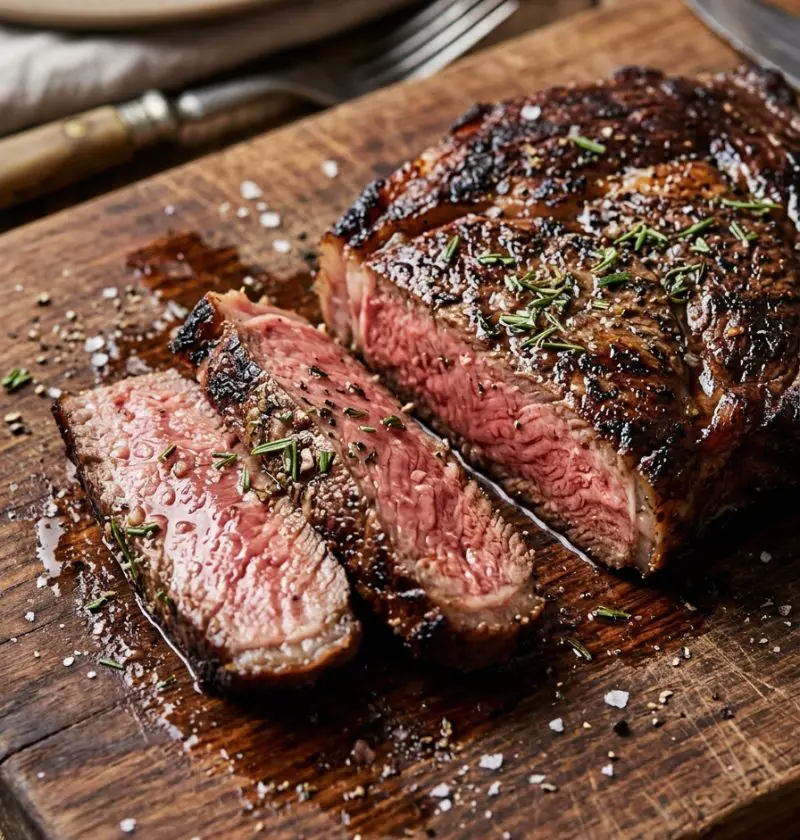
You pull a steak off the grill. It smells incredible. The crust is perfect, the center is warm and tender, and honestly? You’re already thinking about that first bite. Then you slice into it and see a little red liquid run onto the plate.
Suddenly, somebody at the table says it:
“Uh… is that still raw?”
If you cook meat often, you’ve probably heard that question more than once. Maybe you’ve even wondered the same thing yourself. It’s one of the biggest misconceptions in home cooking, and it’s surprisingly persistent. Part of the confusion comes from how similar that red liquid looks to blood. Another part comes from years of hearing that “pink means unsafe.”
But here’s the thing — that reddish juice usually has very little to do with whether the meat is safely cooked.
The truth is more scientific, a little messy, and honestly pretty interesting.
Let me explain.
So… What Is That Red Liquid Anyway?
Despite what many people assume, the red juice coming from cooked meat is not blood. Not really.
Most of the blood is removed during processing long before meat reaches your grocery store. What you’re seeing is mostly water mixed with a protein called myoglobin. And yes, myoglobin matters a lot when it comes to how meat looks before and after cooking.
Myoglobin lives in muscle tissue. Its job is to store oxygen for the muscles, kind of like a backup energy reserve. Animals that use their muscles more tend to have higher myoglobin levels, which is why beef is darker than chicken and why duck meat looks deeper red than turkey breast.
When meat heats up, muscle fibers tighten and push moisture outward. That moisture combines with dissolved proteins and pigments, including myoglobin, creating the reddish liquid that pools on your cutting board or plate.
So while it may resemble blood, chemically speaking, it’s something entirely different.
And honestly, once you know that, it becomes much easier to stop panicking every time a steak “bleeds.”
Why Meat Still Leaks Juice After Resting
Now here’s where cooking gets a little sneaky.
Even after you remove meat from heat, it keeps changing internally for several minutes. Proteins are still settling. Heat continues moving inward. Moisture redistributes throughout the meat.
That’s why resting matters so much.
If you slice a steak immediately after cooking, the juices rush out fast. It’s basically kitchen physics. The muscle fibers are still tense from heat and haven’t had time to relax.
Give that same steak 8 or 10 minutes? Totally different result.
The juices redistribute more evenly, which means more moisture stays inside the meat instead of flooding your plate. You still might see a little red liquid, but far less of it.
This is one of those tiny cooking habits that changes everything. Not dramatically. Just enough that your steak suddenly tastes restaurant-quality instead of slightly rushed.
And yes, patience is annoying when something smells amazing.
Color Can Be Misleading — Really Misleading
One of the biggest mistakes home cooks make is judging doneness by color alone.
It sounds logical at first. Red equals raw. Brown equals cooked. Simple, right?
Except meat doesn’t always cooperate.
Some burgers turn brown before reaching a safe temperature. Meanwhile, smoked chicken can stay pink even when fully cooked. Pork used to be cooked until gray and dry because people feared any hint of pink. Now food science tells us slightly pink pork can be perfectly safe at the right temperature.
That’s why professional kitchens rely on thermometers instead of visual guesses.
A digital meat thermometer removes all the uncertainty. No guessing. No cutting into meat repeatedly. No anxious staring at juices on a plate.
And honestly? Once you start using one consistently, it’s hard to go back.
Safe Internal Temperatures Actually Matter More Than Color
Here’s the number that matters most: temperature.
According to USDA recommendations:
- Poultry should reach 165°F (74°C)
- Ground meats should reach 160°F (71°C)
- Whole cuts of beef, pork, lamb, and veal should reach 145°F (63°C) followed by a short resting period
That resting period is important, by the way. Meat continues cooking slightly after leaving the heat source — what chefs call carryover cooking.
A steak pulled at 140°F may rise several degrees while resting. That’s normal.
And this is where a lot of people accidentally overcook meat. They wait until it “looks done,” not realizing the temperature keeps climbing afterward.
The result? Dry chicken. Tough pork chops. Sad steaks.
Nobody wants that.
The Science Bit — Why Myoglobin Looks So Much Like Blood
Here’s where science gets oddly fascinating.
Myoglobin and hemoglobin are structurally similar proteins. Both contain iron. Both bind oxygen. Both have deep red pigments.
That similarity is why meat juices visually resemble blood so closely.
As meat cooks, myoglobin changes form. At lower temperatures, it stays red or pink. As temperatures rise, it gradually turns brownish-gray.
But the change isn’t perfectly uniform. Factors like pH levels, animal age, oxygen exposure, freezing, and cooking method all affect the final color.
Which explains why two steaks cooked to the exact same temperature can still look slightly different inside.
Cooking isn’t always perfectly tidy science. It’s chemistry mixed with heat, timing, moisture, and a little unpredictability.
Honestly, that’s part of what makes it fun.
Different Cooking Methods Change Everything
Cooking style plays a huge role in how meat juices look.
Grilling and searing create intense exterior heat quickly, forming a dark crust while the interior remains pinker. Slow braising cooks meat more evenly, producing darker, less vibrant juices.
Smoking adds another twist. Ever notice smoked turkey sometimes stays pink near the edges? That’s due to chemical reactions from smoke gases interacting with myoglobin.
It’s called a smoke ring, and barbecue enthusiasts practically celebrate it.
Then there’s sous vide cooking — probably the ultimate example of why color can’t always be trusted. Meat cooked sous vide often appears much redder than traditionally cooked meat despite being perfectly safe.
That can seriously confuse people the first time they see it.
Resting Meat Longer Actually Works
You’ve probably heard chefs insist on resting meat, sometimes almost aggressively.
Turns out, they’re right.
Smaller cuts like steaks or chicken breasts usually need about 5–10 minutes. Large roasts may need 20–30 minutes.
During this time:
- Internal heat evens out
- Muscle fibers relax
- Moisture redistributes
- Fewer juices spill out during slicing
Skipping this step is kind of like opening a shaken soda bottle too early. Everything rushes out at once.
And yes, resting feels inconvenient when everyone’s hungry. But the payoff is noticeable immediately.
Juicier texture. Better slicing. More flavor retention.
Worth it.
The Myths That Refuse to Die
Food myths tend to stick around forever, especially ones passed through families.
One major myth says any pinkness means danger. Another claims well-done meat is the only safe option.
Neither is universally true.
A medium steak cooked properly can be perfectly safe. Meanwhile, undercooked ground beef carries greater risk because bacteria can spread throughout the meat during grinding.
Different meats behave differently. That nuance matters.
And honestly, part of the confusion comes from older food safety standards. Decades ago, pork was often cooked to very high temperatures because of trichinosis concerns. Modern farming practices dramatically reduced that risk, but the habit of overcooking pork stuck around.
That’s why older generations sometimes still insist pork must be completely white inside.
Food science evolved. Cooking habits took longer to catch up.
How to Keep Meat Juices From Going Everywhere
If you’re tired of juices flooding the cutting board, a few simple tricks help.
First, rest meat on a wire rack over a tray instead of directly on a plate. Air circulation prevents steaming while catching drips neatly underneath.
Second, use a sharp knife. Dull blades tear fibers apart, squeezing out more moisture.
Third — and this one matters more than people realize — slice against the grain whenever possible. Shorter muscle fibers hold moisture better and create a more tender bite.
Tiny adjustments, big difference.
Also, maybe don’t cut every steak immediately to “check if it’s done.” We’ve all done it, but it’s basically a fast pass to dry meat.
When Pink Juice Actually Is a Problem
Now, to be clear, there are situations where pink or red juices can signal undercooking.
Poultry is the big one. Chicken should always reach 165°F because harmful bacteria like Salmonella can survive at lower temperatures.
Ground meats also deserve extra caution since bacteria can exist throughout the product, not just on the surface.
That’s why burgers need higher internal temperatures than steaks.
If you’re relying only on color, especially with poultry or ground meat, you’re gambling a bit. A thermometer removes the uncertainty instantly.
Professional cooks trust temperatures for a reason.
What Butchers and Food Scientists Keep Saying
Ask experienced butchers, chefs, or food scientists about meat juices, and most will tell you the same thing:
Stop obsessing over the color of the liquid.
Instead, focus on:
- Proper cooking temperatures
- Resting time
- Cooking method
- Meat quality
- Accurate thermometers
Understanding the science makes cooking less stressful and far more enjoyable.
And honestly, once you stop fearing a little pink juice, meat becomes much easier to cook well.
You stop overcooking steaks “just to be safe.” You stop drying out chicken breasts from anxiety. You start paying attention to texture, temperature, and timing instead of visual myths.
That’s usually the moment home cooks level up.
Not because they memorized fancy techniques. Just because they finally understood what was happening on the plate all along.