
Save This Recipe
You know that moment. You’re at a gathering, maybe a brunch or one of those “try everything” kind of tables, and everything looks amazing. Golden toast, sizzling sausages, something dark and crisp on the edges that smells… interesting.
You take a bite.
And then—pause.
Not bad exactly. But not familiar either. There’s a richness, a slightly metallic note, maybe a texture you can’t quite place. You glance around, trying to play it cool. Then curiosity wins.
“What is this?”
Your friend laughs. Of course they do. And suddenly, you know—you’ve stepped into something cultural, something a little unexpected.
Wait—What Is Black Pudding, Really?
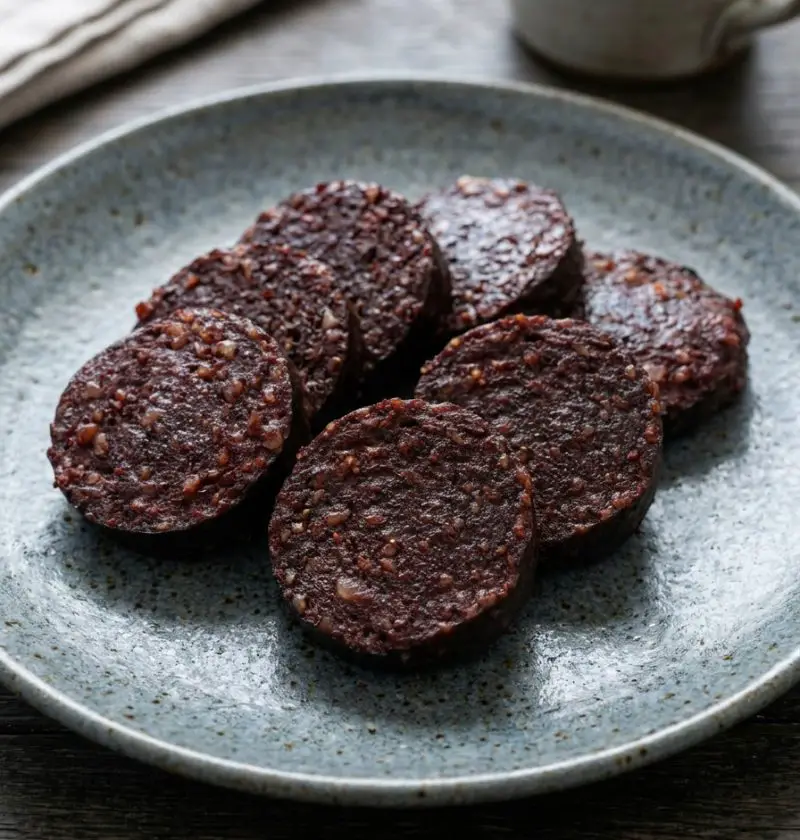
Here’s the simple truth: black pudding is a type of blood sausage.
Yeah. That part tends to catch people off guard.
It’s traditionally made from pork blood, mixed with fat and a grain like oatmeal or barley, then seasoned and Cooked into a firm sausage. It’s especially common in the UK and Ireland, where it’s a staple on a full breakfast plate.
And honestly? For people who grew up with it, it’s not strange at all. It’s just… breakfast.
What’s Actually Inside It? (And Why It Works)
Let me explain this in a way that makes sense beyond the initial shock.
Black pudding is built on a few key components:
- Pork blood – gives it that deep color and earthy flavor
- Fat (usually pork fat) – adds richness and keeps it from being dry
- Oatmeal or barley – gives structure and that slightly crumbly texture
- Seasonings – salt, pepper, sometimes herbs or onion
It might sound unusual, but when you think about it, it’s not that far from other sausages. It’s just… more honest about using the whole animal.
And historically, that mattered a lot.
A Little History (But the Kind That Actually Matters)
Long before modern grocery stores and neatly packaged cuts of meat, people didn’t waste anything. Not out of trendiness—out of necessity.
Using blood in cooking wasn’t weird. It was practical.
Across Europe, especially in rural areas, black pudding became a way to stretch ingredients and create something filling, nourishing, and surprisingly flavorful. Over time, it stuck—not because people had to eat it, but because they wanted to.
That’s why you still see it today, especially in traditional breakfasts. It’s comfort food, just from a different lens.
Why It Tastes… Different (Let’s Be Honest)
If it tasted “off” to you, you’re not wrong.
It’s just unfamiliar.
That slightly metallic note? That comes from the iron in the blood. The richness? That’s the fat doing its job. The texture? The grains give it that soft, almost crumbly bite.
For someone trying it the first time, your brain is basically going:
“Wait… what category is this?”
And when your brain can’t categorize food quickly, it feels strange—even if it’s technically well-made.
And Then There’s Your Friend…
Let’s talk about that laugh.
It wasn’t just about the food—it was about the moment.
People who know black pudding often expect that reaction. That hesitation, that raised eyebrow. It’s almost a shared joke at this point.
Not in a mean way. More like, “I remember my first time too.”
Food has this funny way of creating little cultural inside jokes, and black pudding definitely falls into that category.
It’s Not Just One Thing, Either
Here’s something a lot of people don’t realize—black pudding isn’t the same everywhere.
- In Spain, it’s called morcilla and often includes rice and warm spices
- In France, you’ll find boudin noir, softer and more delicate
- In parts of Asia, blood sausages take on completely different flavors and textures
Same idea. Totally different experience.
Which kind of makes it more interesting, right?
Can You Actually Learn to Like It?
Honestly… yes. But not everyone does.
And that’s okay.
If you’re curious, the best way to try it again is in a proper setting—served hot, slightly crisp on the outside, alongside eggs, toast, maybe grilled tomatoes. When it’s part of a full plate, it makes more sense.
On its own, it can feel intense. Balanced with other foods, it softens.
Kind of like strong cheese. First bite? Confusing. Third bite? You start to get it.
So What Did You Really Experience?
Not just a strange bite of food.
You stumbled into a piece of culinary history—something rooted in tradition, practicality, and culture. It just happened to come with a surprise.
And maybe that’s the real takeaway.
Food isn’t always about liking something immediately. Sometimes it’s about understanding it. Letting it sit for a second. Maybe even laughing about it after.
Next time you see black pudding on a plate, you won’t hesitate the same way.
Well… maybe a little. But at least now you’ll know exactly what you’re getting into.