
Save This Recipe
You’ve probably seen this play out before.
Someone opens their lunchbox at work, pulls out a container of cold rice, and just starts eating. No microwave. No hesitation. Meanwhile, someone across the table gives that look—you know the one. Slight concern mixed with curiosity.
“Wait… you’re eating that cold?”
And just like that, a whole debate kicks off.
Some people swear it’s risky. Others have been doing it their entire lives without a second thought. So who’s right here? Honestly, it’s not as black-and-white as people make it sound—but it’s also not something to brush off completely.
Let me explain.
So… Why Does Rice Get Such a Bad Reputation?
Here’s the thing: rice isn’t dangerous by default. Not even close. But it does have a bit of a reputation in food safety circles—and not for no reason.
The concern comes down to a bacteria called Bacillus cereus. It’s naturally present in many foods, including rice, and—this is the key part—it can survive cooking.
Sounds alarming, right? It kind of is. But also… not really, if you handle things properly.
The real issue isn’t the rice itself. It’s what happens after it’s cooked.
What’s Actually Going On Behind the Scenes
Once rice is cooked, it becomes warm, soft, and slightly moist—basically the perfect environment for bacteria to wake up and multiply.
If that rice sits out on the counter for hours (which, let’s be honest, happens more often than people admit), those bacteria can start producing toxins. And here’s the frustrating part: those toxins don’t go away with reheating.
So even if you microwave the rice until it’s steaming hot, the damage may already be done.
That’s usually where the confusion starts.
Cold vs Reheated Rice: Not the Argument You Think It Is
Most people frame the question like this:
“Is cold rice less safe than hot rice?”
But that’s not really the right question.
A better one would be:
“How was the rice stored after it was cooked?”
Because here’s the truth—slightly counterintuitive, but important:
- Cold rice that was stored properly? Generally safe.
- Reheated rice that sat out too long before going in the fridge? Potentially risky.
So it’s not about temperature at the time you eat it. It’s about the timeline before that moment.
That’s the part people tend to overlook.
A Few Misconceptions That Won’t Go Away
You’ve probably heard at least one of these:
- “Reheating kills everything.”
- “Cold rice is always unsafe.”
- “If it smells fine, it’s fine.”
Let’s clear those up quickly.
Reheating does kill many bacteria—but not the toxins they may have already produced. So it’s not a guaranteed fix.
Cold rice, on the other hand, isn’t inherently unsafe. If it was cooled quickly and stored in the fridge within a reasonable time, it’s no more dangerous than reheated rice.
And smell? That’s tricky. Food can look and smell completely normal and still cause issues. So relying on your nose alone isn’t the safest bet.
Where Things Usually Go Wrong (And No One Talks About It)
Honestly, most problems don’t come from eating cold rice. They come from habits like these:
- Leaving rice out “just to cool” for way too long
- Forgetting it on the stove overnight (we’ve all done something like this at least once)
- Storing it loosely covered instead of airtight
- Keeping it in the fridge for nearly a week and hoping for the best
It’s not dramatic. It’s just everyday stuff. But those small lapses add up.
What Safe Storage Actually Looks Like (In Real Life)
Nothing complicated here—just a few simple habits that make a big difference:
- Let rice cool slightly, but don’t leave it out for more than about 1–2 hours
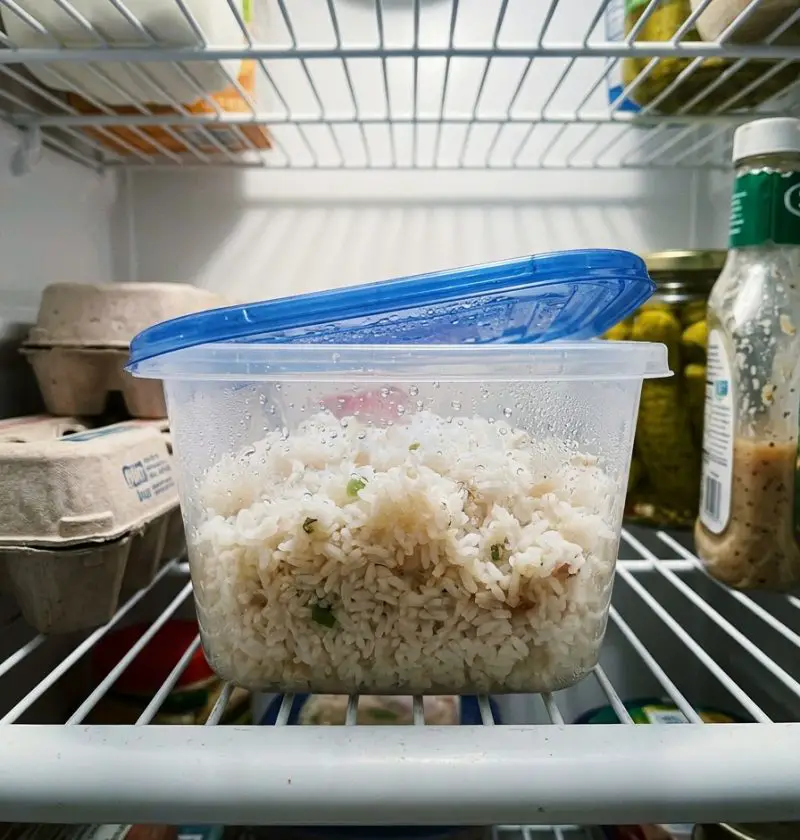
- Transfer it to a container and refrigerate it fairly quickly
- Keep it sealed (this part matters more than people think)
- Eat it within 1–3 days
That’s it. No need for anything fancy.
And yes, if you follow these steps, eating rice cold—straight from the fridge—is generally fine.
Why Some People Never Think Twice About It
If you grew up eating dishes like rice salads or sushi, this whole debate might feel a bit overblown.
Cold rice is completely normal in many cultures. It’s used in everything from packed lunches to quick leftovers turned into something new. In fact, sometimes it even tastes better cold—firmer, less sticky, easier to mix into dishes.
So the idea that cold rice is “wrong” or unsafe? That’s more of a modern kitchen worry than a universal rule.
So… Should You Be Worried or Not?
Here’s the honest answer: a little awareness goes a long way, but there’s no need to stress over it.
Cold rice isn’t the problem. Poor storage is.
If your rice went into the fridge on time and hasn’t been sitting there for days and days, you’re probably fine. If it sat out half the night? That’s when you might want to think twice.
Simple as that.
Final Thought: It’s Less About Fear, More About Habits
You don’t need to swear off cold rice. You don’t need to microwave everything “just in case” either.
Just build a couple of good habits around storage—and then eat your leftovers however you like.
Cold, warm, tossed into a quick salad, or straight from the container while standing in the kitchen (no judgment).
Because honestly? That’s how most of us are eating it anyway.