
Save This Recipe
You crack an egg into a bowl—maybe you’re half-awake, thinking about coffee—and then you pause.
Wait… what’s that?
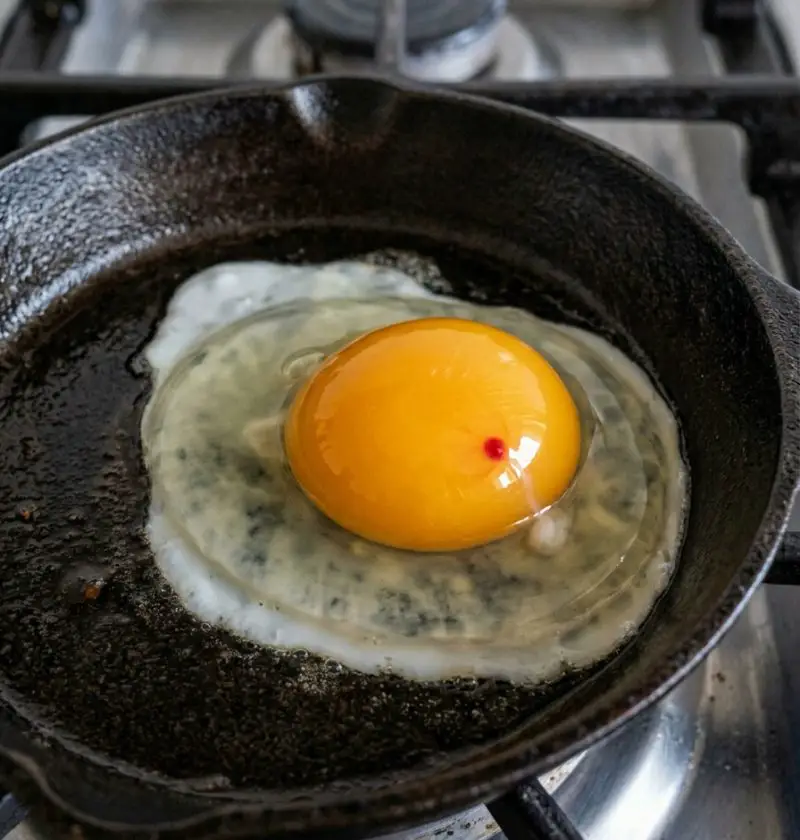
A tiny red dot. Floating there like it has no business being in your breakfast.
If you’ve ever had that moment (and most people have at least once), your brain probably ran through a quick checklist:
Is this bad? Is it spoiled? Should I throw the whole thing out?
Honestly, it looks worse than it is. Way worse.
Let me explain.
That “Gross” Red Spot? It’s Actually Pretty Ordinary
That little red speck has a name: a blood spot.
And despite how it looks, it’s not a sign your egg has gone bad. Not even close.
Blood spots are just tiny bits of blood that got into the egg during formation. It sounds dramatic, but it’s really not. They show up in less than 1% of eggs, so they’re uncommon—but definitely not rare enough to panic over.
In other words, your egg didn’t suddenly turn questionable overnight. It just… has a tiny flaw. Like a freckle.
How It Gets There (A Quick Peek Behind the Scenes)
Here’s the thing most people don’t think about: eggs are formed inside the hen in stages.
As the yolk develops and moves through the hen’s reproductive tract, a small blood vessel can occasionally break. When that happens, a tiny drop of blood gets trapped in the egg.
That’s it. No mystery. No contamination. Just biology doing its thing—slightly imperfectly.
And honestly? That imperfection is part of what makes real food… real.
Blood Spot or Meat Spot? Yep, There’s a Difference
Now, just to keep things interesting, not all spots are the same.
- Blood spots → red or dark brown, usually small
- Meat spots → brown, gray, or tan, and slightly more solid
Meat spots come from tiny bits of tissue, not blood. Sounds less appealing when you say it out loud, I know—but they’re safe too.
Most people don’t even notice them once the egg is cooked.
Let’s Clear This Up: It Does Not Mean the Egg Is Fertilized
This one comes up a lot.
People see a red spot and immediately think: Wait… was this egg fertilized?
Nope.
Fertilized eggs look completely different inside. They have a small white spot on the yolk (called a blastoderm), not a red one.
So if that thought crossed your mind—totally understandable—but you can put it to rest.
So… Can You Eat It?
Short answer: yes.
Longer answer: still yes.
Eggs with blood spots are perfectly safe to eat. They don’t affect taste, texture, or safety in any meaningful way.
That said, not everyone loves the look of it—and that’s fair.
If it bothers you, just scoop it out with the tip of a knife or spoon. Takes two seconds. Problem solved.
And if you leave it? Once the egg is cooked, you probably won’t even notice it.
Okay, But When Should You Actually Worry?
Here’s where things shift a little.
A blood spot itself isn’t a problem—but other signs are.
If you ever crack an egg and notice:
- A strong, unpleasant smell (you’ll know immediately)
- Egg whites that look oddly green or iridescent
- A yolk that’s pinkish or unusually discolored
That’s a different story.
At that point, it’s not about a harmless spot anymore. It’s about spoilage. And yeah—just toss it.
No second guessing needed.
Why You Almost Never See This in Store Eggs
Ever notice how this almost never happens with supermarket eggs?
That’s not luck. It’s process.
Commercial producers use a method called candling—basically shining a bright light through each egg to spot internal defects. If an egg has a visible blood spot, it usually gets pulled out before it ever hits the shelf.
So what you’re buying has already been screened.
Still, every now and then, one slips through. Nobody’s perfect.
Backyard Eggs? Whole Different Story
Now, if you’ve ever gotten eggs from a neighbor—or maybe you keep Chickens yourself—you’ve probably seen blood spots more often.
That’s because small-scale eggs usually aren’t candled the same way.
Plus, hens in backyard settings can have more variation in diet, stress, or age. All of that can slightly increase the chances of blood spots showing up.
It doesn’t mean those eggs are worse. In fact, many people prefer them.
They’re just… less filtered. More natural. A little less “factory-perfect.”
Does It Say Anything About the Hen?
Occasional blood spots? Totally normal.
But if they show up often, it can sometimes point to things like:
- Minor stress in the hen’s environment
- Nutritional imbalances
- Age-related changes
Nothing dramatic—but it’s a small signal that something could be tweaked.
Still, one random spot here and there? Not a red flag. Just part of the process.
So What Should You Actually Do?
Here’s the practical version:
- See a red spot? → Don’t panic
- Looks fine otherwise? → Go ahead and use the egg
- Don’t like it visually? → Remove it and move on
- Smells off or looks strange? → Toss it
Simple. No overthinking required.
One Last Thing (Because This Happens to Everyone)
That little moment—the pause, the hesitation, the “should I keep this?”—it’s something almost everyone goes through at least once.
And honestly, it says something good.
It means you’re paying attention to your food. You’re not just going through the motions.
So next time it happens, you’ll know. It’s not a ruined breakfast. It’s just a tiny, harmless quirk.
Crack the next egg. Keep cooking.