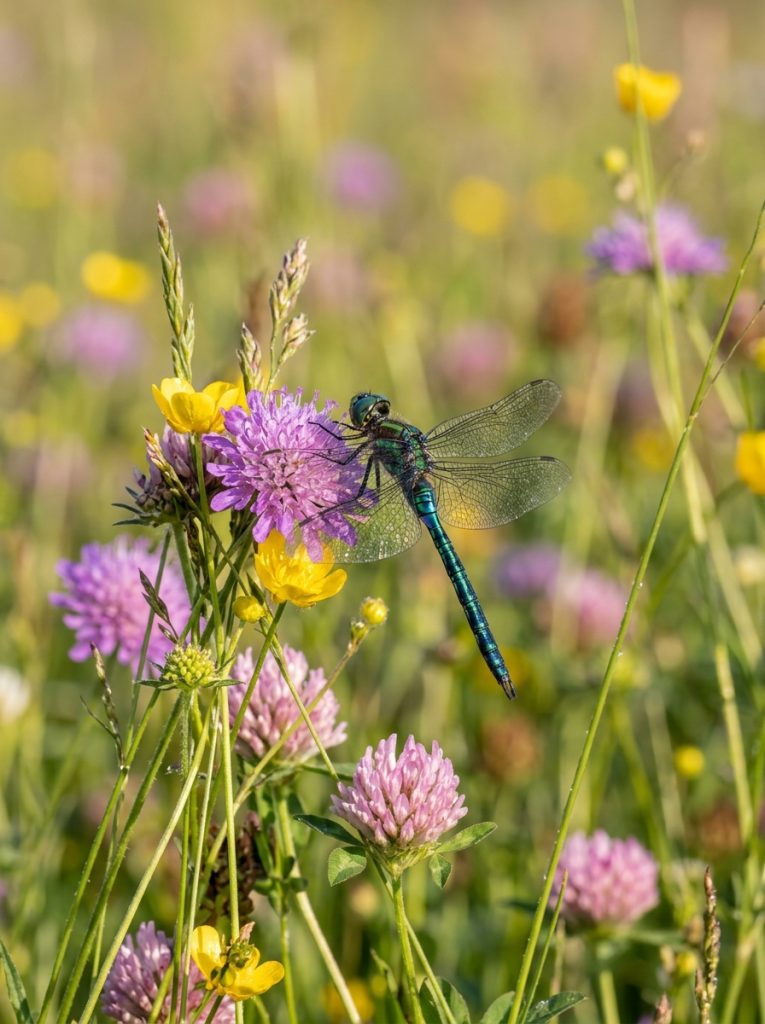
There’s something oddly peaceful about watching dragonflies zip across a backyard in the middle of summer.
They hover for a second, flash blue or green in the sunlight, then dart off like tiny helicopters with caffeine problems. Kids love them. Gardeners love them. And honestly, once you realize how many mosquitoes they eat, you start rooting for them a little harder.
A single dragonfly can eat hundreds of mosquitoes in a day. Hundreds.
So if your backyard turns into a mosquito convention every evening, attracting dragonflies might be one of the smartest things you can do. And no—you don’t need some elaborate pond setup that looks like a botanical garden designed by a millionaire retiree in Florida.
A few well-chosen plants can make a huge difference.
Why Dragonflies Hang Around Certain Yards
Dragonflies are picky in a very specific way.
They like places that feel alive. Water nearby helps, of course, because their babies (called nymphs) grow in water. But plants matter too—more than most people realize.
They need places to:
- perch
- hunt
- rest between flights
- find smaller insects to eat
A bare lawn doesn’t do much for them. But a layered garden with flowers, native plants, and a little variety? Different story entirely.
And here’s the funny part: a garden that attracts dragonflies usually ends up attracting butterflies and bees too. Everything starts stacking together naturally once the environment feels balanced.
1. Butterfly Weed
Despite the name, this one pulls in more than butterflies.
Butterfly weed has bright orange flowers that practically glow in late afternoon sun. Dragonflies love sturdy plants they can land on while scouting for prey, and this one gives them exactly that.
It’s also ridiculously low-maintenance once established. Hot summers? Fine. Dry soil? Usually fine too.
Honestly, it’s one of those plants that makes you look like a better gardener than you are.
2. Joe-Pye Weed
This plant gets tall. Like, surprisingly tall.
But that height is part of what makes it attractive to dragonflies. They like elevated perches where they can scan the area for insects. Joe-Pye weed basically works like a lookout tower.
By late summer, the pink-purple flower clusters become absolute insect magnets. Bees show up. Butterflies show up. Dragonflies start circling nearby.
Your yard suddenly feels busy—in a good way.
3. Black-Eyed Susan
These are cheerful little workhorses.
They bloom for a long time, tolerate heat, and somehow make every garden feel more relaxed and lived-in. The bright yellow petals also make dragonflies easier to spot because they tend to perch nearby before darting off again.
And you know what? There’s something nostalgic about them. They feel like the kind of flower you’d see near an old mailbox on a country road.
4. Swamp Milkweed
If you already have a damp area in your yard, lean into it.
Swamp milkweed thrives where other plants complain. Near ponds, low spots, soggy corners—it handles all of it beautifully.
Dragonflies naturally gravitate toward moist environments because that’s where mosquitoes breed. Which means this plant quietly helps pull predator and prey into the same zone.
Nature’s a little brutal sometimes, but efficient.
5. Yarrow
Yarrow has flat flower clusters that act almost like tiny landing pads.
Dragonflies use them constantly.
The plant itself is easygoing and tough. Once it settles in, it doesn’t need much attention. Plus, the feathery foliage adds texture to gardens that might otherwise look too stiff or overly planned.
A slightly messy garden, by the way, tends to attract more beneficial insects than a perfectly manicured one. That surprises people.
6. Meadow Sage
This one smells amazing when the sun hits it.
Meadow sage produces spikes of purple-blue flowers that pollinators absolutely swarm. Dragonflies aren’t really there for the nectar itself—they’re hunters—but they follow the activity.
More insects = more food.
Simple as that.
And visually? It adds that soft cottage-garden look people spend way too much money trying to recreate on Pinterest.
7. Coneflower
Coneflowers are basically garden anchors.
They bloom for ages, survive rough weather, and keep attracting insects well into late summer when many plants start looking tired and stressed.
Dragonflies love sturdy stems, and coneflowers provide perfect resting spots between hunting flights.
Also, goldfinches go crazy for the seed heads later in the season, which is a nice bonus.
8. Goldenrod
Goldenrod gets blamed for allergies constantly, even though ragweed is usually the real culprit. Poor goldenrod has been catching strays for decades.
But for dragonflies? It’s fantastic.
It blooms late in the season when many other flowers fade, helping keep insect activity alive into early fall. And where insects gather, dragonflies usually aren’t far behind.
9. Lavender
Lavender pulls double duty.
It attracts beneficial insects while helping repel certain pests with its strong scent. Plus, the fragrance drifting through the yard in summer is hard to beat.
Dragonflies often perch on the taller flower spikes before taking off again. If you sit outside long enough with coffee or iced tea, you’ll start noticing their patterns.
They patrol. Constantly.
10. Bee Balm
Bee balm looks almost chaotic when it blooms. Bright bursts of color everywhere.
Pollinators adore it.
And because it attracts so much insect activity, dragonflies tend to patrol around it heavily—especially in the evening when mosquitoes start getting bold.
One thing though: bee balm likes airflow. If it gets crowded, it can develop powdery mildew. Learned that one the annoying way.
11. Liatris
Tall purple flower spikes make liatris stand out immediately.
Dragonflies use vertical plants constantly because they provide visibility and easy takeoff points. Liatris basically functions like an airport runway for them.
It also blooms during peak mosquito season, which lines up nicely if your goal is fewer bites during backyard evenings.
12. Aster
Asters bloom late, which matters more than people think.
By early fall, many gardens start slowing down. But asters keep producing flowers when dragonflies are still active and hunting.
That late-season support helps maintain insect diversity longer, and healthier ecosystems tend to regulate pests better naturally.
It’s all connected. More than most yards probably realize.
A Few Things That Matter More Than Fancy Plants
Honestly, the plants help—but the overall environment matters too.
If you really want dragonflies to stick around:
- avoid heavy pesticide use
- include different plant heights
- leave a few natural areas slightly wild
- add water if possible, even a small feature
- plant in clusters instead of scattering everything randomly
And don’t expect overnight results.
Gardens take a little time to become ecosystems. But once they do, you notice it. More birds. More butterflies. Fewer mosquitoes hovering around your ankles like tiny vampires with rent due.
The Best Part? Your Yard Starts Feeling Alive Again
That’s really what people notice first.
Not just fewer mosquitoes—though that’s nice—but movement. Activity. The feeling that your garden is functioning instead of just sitting there looking decorative.
Dragonflies bring that energy with them.
And on humid summer evenings, when they skim across the yard catching mosquitoes midair while the sun drops behind the trees… honestly, it feels like your backyard figured something out before you did.