There’s a moment every tomato grower knows. You step outside, coffee in hand, glance at your plants—and think, “They should be doing better than this.”
You watered. You gave them sun. You even talked to them (no judgment). And yet… the harvest is just okay.
Here’s the thing—growing tomatoes isn’t just about the basics. It’s about the little extras. The quiet tweaks. The things experienced gardeners do almost without thinking.
Some call them hacks. Others call them old-school wisdom. Either way, they work.
Let’s get into ten surprisingly simple “secret ingredients” that can take your tomatoes from decent to genuinely impressive.
Eggshells: Not Trash—More Like Slow-Release Armor
You know those eggshells you toss without thinking? They’re basically calcium capsules.
Tomatoes need calcium to avoid blossom end rot—that frustrating black spot that ruins otherwise perfect fruit. And here’s the catch: it’s not always a lack of calcium in the soil. Sometimes it’s just not available to the plant when it needs it.
Crushed eggshells help with that.
Grind them down (the finer, the better) and mix about a cup into the soil when planting. Over time, they break down and feed the roots steadily. It’s not instant, but that’s kind of the point.
Slow and steady wins here.
Epsom Salt: A Little Boost, Not a Miracle Cure
Epsom salt gets talked about a lot—and honestly, it’s a bit overhyped. But used correctly? It’s helpful.
Magnesium plays a key role in photosynthesis, and when plants get enough of it, you’ll often see deeper green leaves and better fruit development.
Mix a tablespoon into a gallon of water and apply it every couple of weeks. Not more. More isn’t better—it’s just more.
And yes, many gardeners swear their tomatoes taste richer after using it. Coincidence? Maybe. But it’s a pleasant one.
Aspirin Water: Sounds Strange, Works Surprisingly Well
This one feels like a gardening myth—until you try it.
Aspirin contains salicylic acid, which triggers a plant’s internal defense system. Think of it like a gentle “wake-up call” for immunity.
Dissolve one tablet in a gallon of water and spray every few weeks. You’re not feeding the plant—you’re nudging it to protect itself better.
Healthier plants, fewer diseases, more tomatoes. It adds up.
Seaweed Extract: The Ocean’s Multivitamin
If tomatoes had a favorite supplement, this might be it.
Seaweed extract is loaded with micronutrients—zinc, iron, boron—the kind of elements plants need in tiny amounts but absolutely depend on.
Use it as a foliar spray or soil drench every few weeks. It won’t replace your main fertilizer, but it fills in the gaps.
And those gaps matter more than people think.
Baking Soda: Sweetness With a Side of Protection
This one’s a bit controversial. Some gardeners swear by it; others shrug.
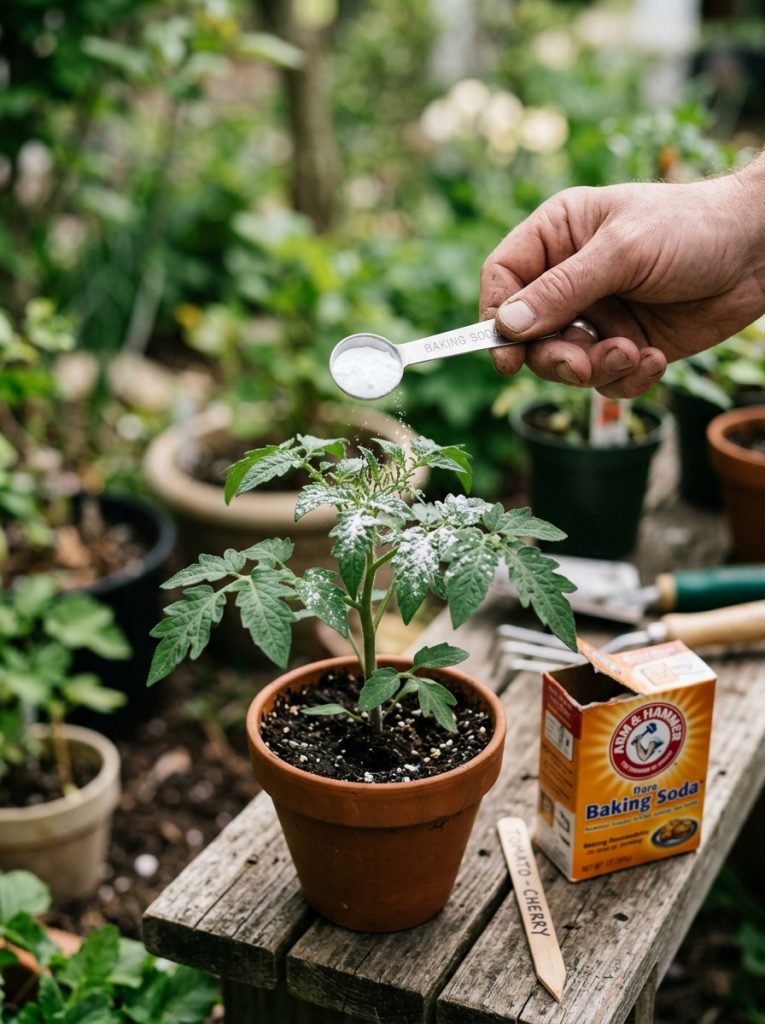
But here’s what’s happening: baking soda changes the surface pH of leaves, making it harder for fungal diseases to settle in. That alone is useful.
As for sweeter tomatoes? The theory is that slightly altering soil or leaf conditions affects fruit chemistry. It’s subtle—but noticeable to some.
Mix a tablespoon into a gallon of water, add a drop of soap, and spray lightly. Not daily. Not heavily. Just… consistently.
Powdered Milk: The Backup Calcium Plan
If eggshells are the long game, powdered milk is the quick assist.
It dissolves easily, delivers calcium faster, and even adds a touch of nitrogen. It’s not something you need all season—but it’s great when plants start showing stress.
A quarter cup per gallon of water, every couple of weeks, does the trick.
Simple. Effective. Slightly unexpected.
Molasses: Feeding the Soil, Not the Plant
Here’s a shift in perspective—because not everything you add should feed the plant directly.
Molasses feeds microbes. And those microbes? They’re doing a lot of the heavy lifting underground.
Healthier microbial life means better nutrient breakdown, better absorption, and overall stronger plants.
Mix a tablespoon into water and apply to the soil. You won’t see the effect immediately—but your plants will feel it.
Banana Peels: Potassium, the Quiet Hero
Nitrogen gets all the attention, but potassium is what really drives flowering and fruiting.
Banana peels are rich in it. Chop them up, bury them near your plants, and let nature take over.
It’s not glamorous. It’s not fast. But it works—and it costs basically nothing.
Sometimes the best solutions are the least complicated.
Coffee Grounds: Use With a Light Hand
Coffee grounds are one of those things people either love or misuse.
Yes, they add nitrogen. Yes, they can slightly acidify soil. But too much? You’ll throw things off balance.
Think of them like seasoning—not the main dish.
A thin layer around your plants every few weeks is enough. Your soil gets richer, and your tomatoes get a subtle boost.
Fish Emulsion: Fast Food (The Good Kind)
If your plants look tired—slow growth, pale leaves—fish emulsion is like flipping a switch.
It delivers nitrogen, phosphorus, and potassium in a form plants can absorb quickly. The results? Noticeable, often within days.
The downside? The smell. Let’s be honest—it’s not pleasant.
But gardeners tolerate it for a reason.
Mix according to instructions and apply every few weeks. Your plants won’t complain.
So… Is It Really About “Secret Ingredients”?
Yes—and no.
These additions help. They absolutely do. But they’re not magic.
What they really represent is attention. Observation. A willingness to experiment a little.
Because growing great tomatoes isn’t about following a perfect formula. It’s about responding—adjusting—sometimes even guessing a bit and seeing what happens.
And honestly? That’s half the fun.
So try one or two of these. See how your plants respond. Then tweak from there.
Your tomatoes will tell you what’s working.
You just have to listen.