
Save This Recipe
We'll email this post to you, so you can come back to it later!
I didn’t think much about storing potatoes… until I had to throw out half a bag.
They looked fine when I bought them. A week later? Soft spots, weird smell, a few suspicious sprouts staring back at me like I’d failed them somehow.
Sound familiar?
The thing is, potatoes are actually pretty forgiving—but only if you treat them right. And most of us, without realizing it, store them in exactly the wrong conditions.
Let me explain.
Potatoes last longer than you think… just not anywhere
Potatoes aren’t fragile. They can last weeks—even months—if they’re kept in the right environment.
But here’s where it goes wrong: we tend to treat them like onions, or worse, like something that belongs in the fridge.
They don’t.
Potatoes are a little particular. Not high-maintenance… just misunderstood.
The four things that quietly ruin your potatoes
You don’t need a fancy setup to store potatoes well. But you do need to watch a few key things:
- Temperature – too warm, and they sprout fast
- Light – encourages greening (and that bitter taste)
- Moisture – leads to mold and rot
- Airflow – without it, things go bad quicker
It’s not complicated. But ignore even one of these, and you’ll start noticing the difference within days.
So where should you actually keep them?
Honestly? Somewhere boring.
A cool, dark spot with a bit of air—like a pantry, cupboard, or even a basement if you have one.
You’re aiming for that slightly cool, dry feel—not cold, not warm. Around 7–13°C (45–55°F) is ideal, but you don’t need to obsess over numbers. Just avoid heat and sunlight.
And please—keep them away from the stove. That one mistake alone ruins more potatoes than anything else.
The fridge mistake (almost everyone makes it once)
It feels logical, right? Fridge = longer shelf life.
But with potatoes, it backfires.
Cold temperatures turn their starch into sugar, which sounds harmless… until you cook them and they taste oddly sweet and brown too quickly.
Not great.
So yeah—skip the fridge.

And don’t store them with onions (seriously)
This one surprised me.
Potatoes and onions seem like they belong together—they show up in the same recipes all the time. But in storage? Not friends.
They release gases that speed up spoilage for each other. So if you’ve been keeping them side by side, that might explain why things go downhill fast.
Separate them. It makes a difference.
A quick check before you store them
This part is easy to skip, but it matters.
Before you put potatoes away, take a second to look through them:
- Remove any that are bruised or soft
- Toss anything already starting to rot
- Leave them unwashed (moisture is the enemy here)
It’s kind of like apples—one bad one really can affect the rest.
What about sprouts? Are they still okay?
This is where people get unsure.
If a potato has tiny sprouts, it’s usually fine. Just cut them off and use the potato as soon as you can.
But if it’s shriveled, soft, or smells off? That’s your sign to let it go.
Trust your instincts here—they’re usually right.
The small habits that make a big difference
You don’t need to overthink this. Just a few simple habits go a long way:
- Use older potatoes first (don’t let them sit forgotten)
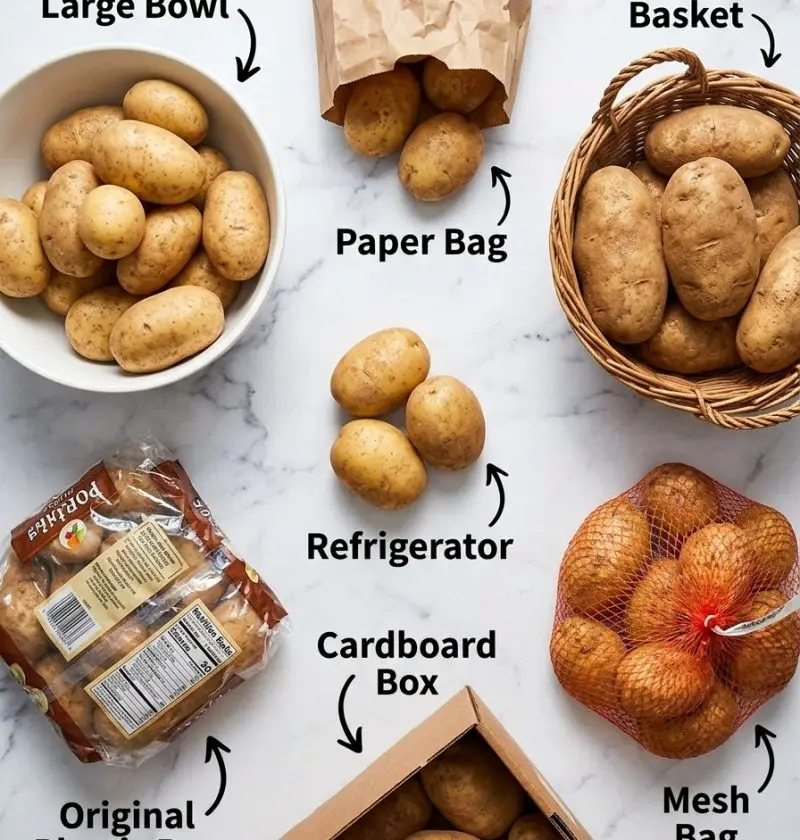
- Store them in something breathable—like a basket or paper bag
- Check on them every now and then
It’s low effort, but it keeps things from sneaking up on you.
If you bought too many… you’ve got options
Sometimes you just end up with more potatoes than you planned.
In that case, you can always:
- Freeze them (after cooking or blanching)
- Dehydrate them
- Prep and store them for later meals
Not necessary every time—but helpful if you don’t want anything going to waste.
Final thought (because this is what it really comes down to)
Potatoes aren’t hard to store.
They just don’t like being ignored.
Give them a cool, dark space, a bit of airflow, and a quick check now and then—and they’ll last way longer than you expect.
And honestly? Once you get this right, you stop throwing them out.
Which, if you’ve ever opened a bag of forgotten, mushy potatoes… feels like a small win.