
Save This Recipe
You’ve probably held a soda bottle a thousand times without really seeing it.
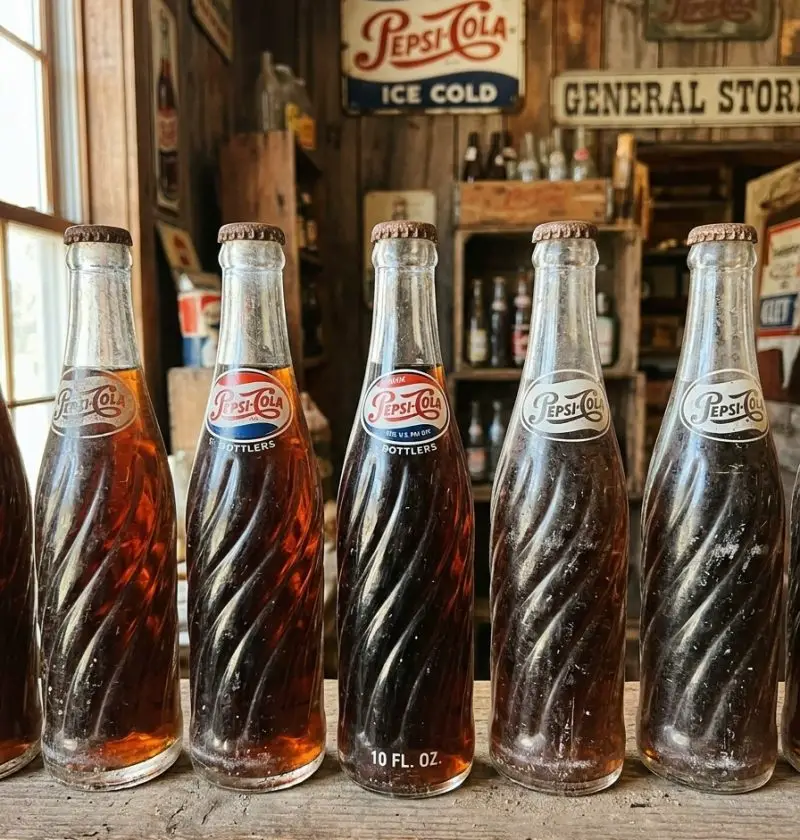
The label? Sure. The color? Maybe. But those subtle spiral ridges wrapping around the bottle? Easy to ignore.
And yet—those little swirls are doing a lot more work than you’d expect.
They’re not decorative. Not random. Not even optional, really.
They’re engineered.
Let me explain.
That “Swirl” You Never Think About… Until You Do
Take a standard plastic soda bottle and run your fingers along the side.
You’ll feel it immediately—those raised grooves, almost like a soft spiral or a set of waves.
At first glance, they seem like a design flourish. Something to make the bottle look a bit more dynamic on a crowded shelf.
But here’s the thing: in product design, especially in packaging, almost nothing is purely aesthetic.
Those ridges exist because they solve problems.
Multiple ones, actually.
A Bit of History (Because This Didn’t Happen by Accident)
Back when soda first became widely bottled, containers were mostly glass—thick, heavy, and relatively stable.
Then plastic entered the scene.
Lighter. Cheaper. Easier to transport.
But also… more flexible.
And that flexibility created a problem. Carbonated drinks are pressurized, and thin plastic alone wasn’t strong enough to handle that pressure reliably.
So designers had to get clever.
Instead of making bottles thicker (which would increase cost and material use), they changed the shape.
That’s where the swirl came in.
A small tweak in geometry—huge difference in performance.
The Science Behind It (Simplified, Promise)
Alright, quick physics moment—but nothing too heavy.
Carbonated drinks are filled under pressure to keep the gas dissolved. That pressure pushes outward on the bottle walls constantly.
A smooth, flat surface? It takes that pressure head-on.
But add ridges or curves—like the swirl—and suddenly that pressure gets distributed more evenly.
Think of it like this:
- A flat sheet bends easily
- A corrugated one? Much harder to crush
Same material. Different shape. Totally different strength.
That swirl acts like built-in reinforcement, allowing manufacturers to:
- Use less plastic
- Maintain durability
- Prevent deformation or collapse
It’s efficient. Quietly brilliant, honestly.
And Then There’s Grip—Because Real Life Is Slippery
Let’s get practical for a second.
Cold soda bottles sweat. A lot.
Condensation builds up, and suddenly that smooth plastic becomes… kind of slippery.
Now imagine a large 1.5L bottle with no grip texture.
Not ideal.
Those swirls create natural friction points. Your hand locks in better, even when the bottle is wet.
You don’t think about it—but you feel it.
And that’s good design. When something works so well, it disappears.
Stability Matters More Than You’d Expect
Here’s something subtle: bottles aren’t just designed to sit pretty—they’re designed to survive logistics.
Shipping. Stacking. Temperature changes. Pressure shifts.
A completely smooth bottle is more likely to:
- Warp slightly
- Tip over more easily
- Compress under weight
The swirl adds rigidity. It helps the bottle keep its shape—even when it’s packed tightly with dozens of others.
It’s a bit like adding beams to a structure. You don’t see them at first glance, but they’re doing the heavy lifting.
Pouring Without Chaos (Yes, That’s Part of It Too)
Ever noticed how soda pours… relatively smoothly, despite the carbonation?
That’s not just luck.
The bottle’s structure—including those ridges—affects how liquid moves inside and exits the neck.
It helps:
- Reduce sudden surges
- Control flow slightly
- Minimize aggressive foaming
Is it the main factor? No. But it contributes.
And when you combine small improvements like this, you get a noticeably better experience.
Let’s Be Honest—It Also Helps Sell the Product
Here’s where things get interesting.
Because function aside… the swirl looks good.
Brands know this.
Walk down a store aisle—what stands out more?
A completely smooth, generic bottle? Or one with a distinctive shape, texture, and silhouette?
Exactly.
That swirl:
- Adds visual identity
- Makes the bottle feel more “designed”
- Helps brands differentiate without changing the label
Some companies even customize the swirl pattern as part of their branding strategy.
It’s subtle—but effective.
The Internet Found Its Own Uses (Of Course It Did)
Leave it to the internet to turn a bottle design into a life hack.
People have used swirled bottles for:
- DIY watering tools
- Funnel-like pouring tricks
- Craft projects
It’s not what the designers intended—but it shows something interesting.
When a design is thoughtful, it often becomes versatile in ways no one predicted.
The Environmental Trade-Off (It’s Not All Perfect)
Here’s where the conversation gets a bit more nuanced.
The swirl helps reduce plastic usage—which is a win.
Less material, same strength.
But…
Complex shapes can make recycling slightly more challenging. The ridges can affect how bottles are processed, depending on the system.
That said, most modern recycling facilities are designed to handle these variations.
And manufacturers are constantly adjusting designs to balance:
- Strength
- Material efficiency
- Recyclability
It’s a moving target.
So Why Don’t People Notice It?
Because it works.
That’s the honest answer.
Good design doesn’t always demand attention—it supports the experience quietly.
Most people focus on:
- The drink itself
- The brand
- The convenience
The structure fades into the background.
Until someone points it out… and then you can’t unsee it.
Will the Swirl Stick Around?
Probably. At least in some form.
Packaging is evolving—biodegradable materials, aluminum alternatives, even refill systems.
But the principles behind the swirl—strength through shape, efficiency through design—aren’t going anywhere.
Even if bottles change, those ideas will carry forward.
The Bottom Line (A Small Detail That Does a Lot)
That little swirl?
It’s doing more than you think.
It strengthens the bottle. Helps you grip it. Improves stability. Supports carbonation. Even plays a role in branding.
All without asking for attention.
And maybe that’s what makes it interesting.
Because the best design choices—the ones that really matter—are often the ones we almost miss.