
Save This Recipe
You ever open the fridge, spot that container of last night’s dinner, and feel a tiny spark of hope? Like, yes, I already solved dinner yesterday. Love that for me.
Then you heat it up.
And somehow your juicy chicken now tastes like it spent the night in a wind tunnel.
Honestly, reheated leftovers have a reputation for disappointing us, and… they’ve earned it. Dry. Hard. Sometimes oddly rubbery. Sometimes soggy in one corner and fossilized in another. It’s a strange emotional roller coaster for something that started as perfectly good food.
So what gives? Why does food almost always lose its magic after a trip through the microwave? Is it just bad luck, or is there something sneaky happening behind the scenes?
Short answer: it’s mostly about water, heat, and the way food reacts when you mess with both more than once. Long answer… well, grab a fork.
It Starts With Moisture (Yep, Always the Moisture)
Food is basically a cozy bundle of water holding everything together. Even things that don’t seem wet, like bread or chicken, are quietly packed with moisture.
When you heat food again, that water gets excited. Molecules start bouncing around faster, some escape as steam, and some move toward the surface where they vanish into thin air. Once enough moisture leaves, texture changes fast. Soft turns stiff. Juicy turns chewy. Comfort turns… disappointing.
Think of it like reheating coffee without a lid. You walk away for a minute and suddenly half of it has evaporated. Same idea, just tastier and more tragic.
The Microwave Is Helpful, But Kinda Chaotic
Microwaves don’t heat food evenly. They send waves that make water molecules vibrate, which creates heat. Cool science, slightly chaotic execution.
Some parts of your food absorb more energy than others. That’s why you get scorching edges and a lukewarm center. It’s not personal. It’s physics having a mood.
Because the outside heats first, moisture escapes there fastest. That outer layer dries out and stiffens while the middle is still warming up. Ever bite into leftovers and notice the edges feel like cardboard but the center’s okay? Yeah. That’s the microwave doing its thing.
Where Did All the Water Go, Anyway?
Water doesn’t just disappear politely. It migrates.
As food heats, moisture moves toward hotter areas, usually the surface, and then evaporates. The longer you heat, the more moisture escapes. Thin foods lose water even faster because there’s more exposed area.
It’s like leaving a slice of pizza on the counter too long. It stiffens, dries, and loses that fresh bounce. Only the microwave speeds the whole process up.
Covering food helps trap steam so some moisture stays close instead of floating off into your kitchen air like a tiny ghost of dinner past.
Starches Get Weird When They Cool Down
Rice, pasta, bread, potatoes. The cozy carb squad. They’re full of starch, and starch has a memory.
When these foods cool, the starch structure tightens and pushes water out. That’s why bread goes stale and rice firms up in the fridge. When you reheat them, some softness comes back, but not always completely.
Ever notice leftover rice feels slightly grainy instead of fluffy? Or bread turns chewy instead of airy? That’s starch doing its stubborn little thing.
A bit of moisture and gentle reheating helps, but starch doesn’t always forget its past. Honestly, relatable.
Meat Tightens Up Like It’s Bracing for Impact
Proteins in meat change shape when heated. They tighten and squeeze out water. That’s why overcooked steak feels dry and tough.
When you reheat meat too aggressively, you’re basically repeating the squeeze. More moisture leaves. Fibers firm up. Suddenly your chicken breast feels like gym equipment.
Slower reheating helps. Adding sauce or broth helps even more. Meat likes humidity. It wants a gentle warm-up, not a boot camp.
Fats Quietly Mess With Texture Too
Fats make food feel rich and smooth. They coat everything and help keep textures pleasant.
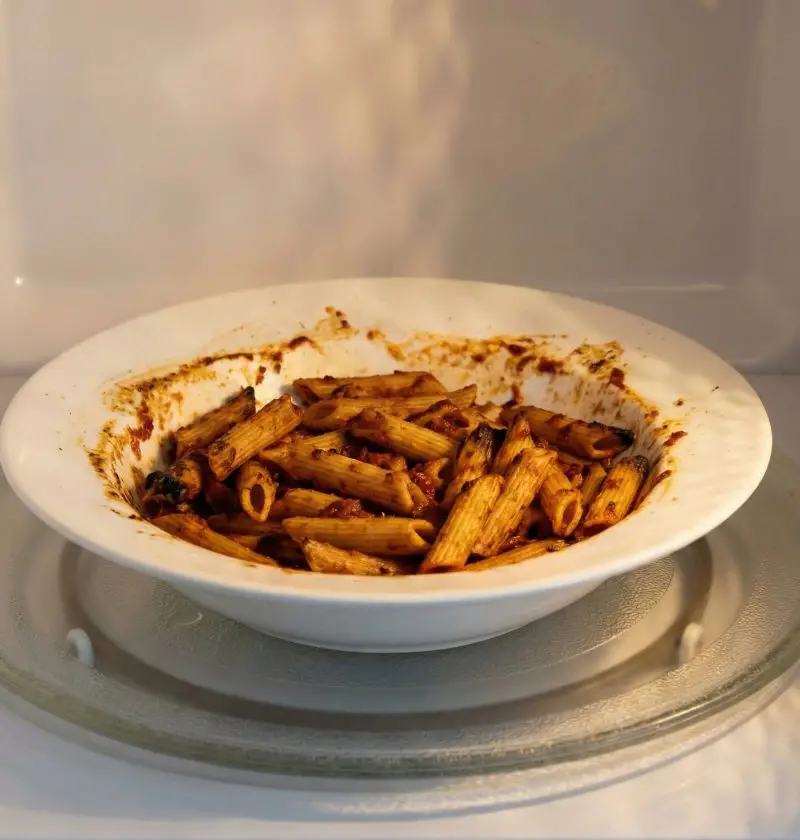
When reheated unevenly, fats can melt and drift away from where they started. Sometimes they pool on the surface. Sometimes they soak into one spot and leave another dry. You’ve probably seen this on reheated pizza or pasta, where some bites feel greasy and others oddly stiff.
A quick stir or rearrange helps redistribute everything so texture feels more balanced.
Why the Edges Always Suffer
The microwave hits the edges first. They heat faster. They lose moisture faster. They overcook while the center catches up.
So the edges harden, the middle stays soft, and you’re left chewing through the food equivalent of emotional whiplash.
Stirring halfway through or lowering the power gives heat time to spread more evenly. It feels slower, but the payoff is real.
Your Plate and Lid Matter More Than You Think
Some containers heat unevenly or create hot spots. Glass and ceramic usually behave better than thin plastic. Covers trap steam and keep moisture from escaping too quickly.
Just leave a small gap so pressure doesn’t build up. Nobody needs a leftover explosion in their microwave. Been there. Learned the hard way.
Reheating Without Moisture Is Basically a Trap
If you reheat food uncovered with no added liquid, you’re inviting dryness. Water evaporates. Texture stiffens. Sadness follows.
A splash of water, broth, or sauce gives moisture somewhere to circulate. A damp paper towel creates a little steam cloud around your food. It’s low effort and surprisingly effective.
Sometimes the smallest kitchen habits make the biggest difference.
Internet Hacks That Actually Work (Rare, I Know)
A few viral tricks genuinely help:
- Putting a mug of water in the microwave to add humidity
- Covering food with a damp paper towel
- Using lower power instead of blasting full heat
- Stirring halfway through
Not glamorous, but reliable. Kind of like your favorite old hoodie.
Mistakes We All Make Because We’re Hungry and Impatient
Let’s be honest:
- We crank the power because we want food now.
- We forget to cover the dish.
- We walk away and overheat it.
- We skip stirring.
- We reheat leftovers multiple times.
Life happens. Hunger wins. But these habits quietly wreck texture every single time.
The Foods That Suffer the Most (and How to Help Them)
Chicken: Add broth or sauce. Go slow.
Rice: Sprinkle water and cover.
Bread: Light moisture and short heating.
Pasta: Add sauce or water and stir.
Fish: Low heat and gentle steam.
Different foods need different care. One-size-fits-all reheating rarely works.
When Dryness Can’t Be Fixed (And When It Can)
Sometimes food is just… done. If it’s been overheated multiple times or stored too long, the texture may not bounce back. No amount of steam can save everything.
But plenty of leftovers can absolutely improve with better reheating. Not perfect. Better. And honestly, better is often enough on a busy night.
One Last Thought Before You Hit the Microwave Again
Leftovers don’t have to feel like punishment. With a little patience, a touch of moisture, and slightly gentler heat, they can stay surprisingly good.
Next time you’re hovering over the microwave, maybe slow it down, throw a cover on, and give your food a fighting chance.
Because nobody deserves a forkful of dry sadness after a long day. Not you. Not ever.