
Save This Recipe
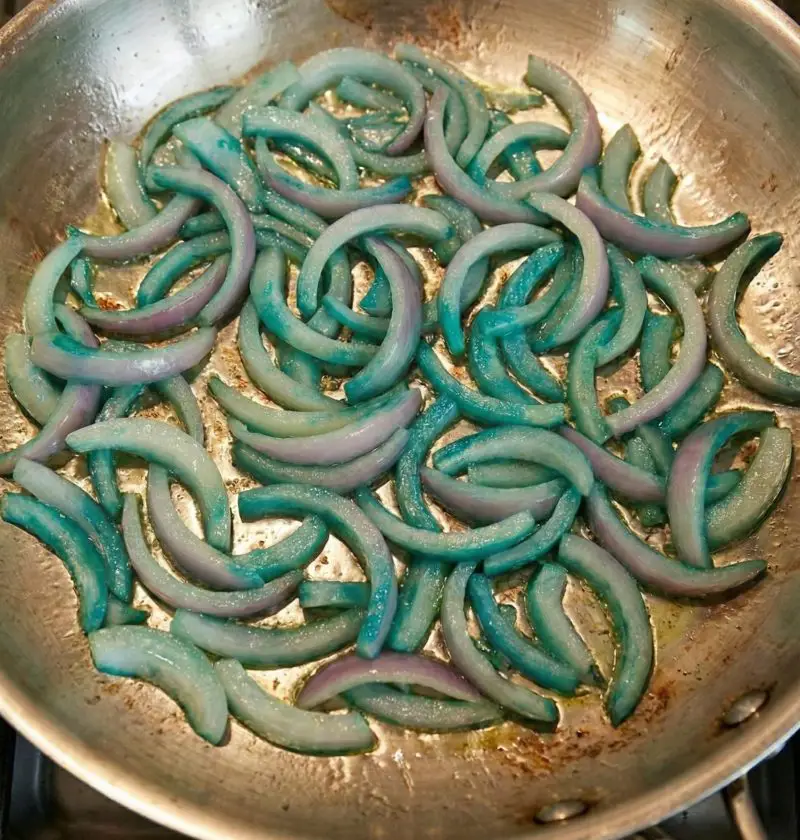
Cooking is supposed to be soothing, right? You’re standing at the stove, onions sizzling, that sweet smell floating through the house, and you’re already thinking about who’s getting the last dinner roll. Then you look down, and… well. The onions are not the color onions are supposed to be. They’ve gone all blue-green and odd, like they took a wrong turn on the way to dinner.
Your heart skips a beat. Mine would too. Nobody wants to serve something that looks like it belongs in a science fair.
Here’s the thing, though. This little kitchen surprise is far more common than most folks realize, and it usually has nothing to do with spoiled food. It’s chemistry doing a tiny tap dance in your skillet. Annoying, yes. Dangerous? Most of the time, not at all.
Let’s walk through what’s going on, nice and easy, no lab coats required.
That Moment of Panic We Don’t Talk About
If you’ve never seen onions change color while cooking, consider yourself lucky. For the rest of us, it usually happens when we’re already juggling three other things. The phone rings, the dog wants out, and suddenly the onions look like they’ve joined a strange new club.
Your brain goes straight to, “Did I poison my family?” That’s just part of being someone who feeds other people. We worry. A lot.
But before you dump the pan and start over, it helps to know why this happens in the first place.
A Little Kitchen Chemistry (Without the Headache)
Onions, especially red ones, carry natural pigments called anthocyanins. These are the same pigments that give blueberries, purple cabbage, and blackberries their deep colors. They’re sensitive little things, and they react when the environment around them changes.
The biggest factor? pH, which is just a measure of how acidic or alkaline something is.
Acidic leans toward sour, like lemon juice or vinegar.
Alkaline leans the other way, more like baking soda.
When anthocyanins sit in acidic conditions, they look red or pink. When things get more alkaline, those colors can drift toward blue or green. Not because the food went bad, but because the pigment is responding to its surroundings.
Kind of like how hydrangeas change color depending on soil, if you’ve ever gardened. Same idea, smaller scale, much messier apron.
pH, But Make It Make Sense
I know, pH sounds like something from a high school class you’ve happily forgotten. Honestly, you don’t need numbers or charts here. Just remember this:
Certain ingredients and even your water can push your cooking in a more alkaline direction. When that happens, onion pigments may change color. No mold. No bacteria party. Just chemistry doing what chemistry does.
And it doesn’t take much, either. Sometimes a tiny shift is enough to make onions look like they’ve joined the circus.
Flavor Compounds Have a Say Too
Onions are famous for their sulfur compounds. That’s what makes them smell strong and taste sharp when raw, then sweet and cozy when cooked down slow.
They also contain amino acids, and when heat gets involved, all these little compounds start chatting with each other. Most of the time, that conversation ends with better flavor and golden edges. Once in a while, it nudges the color in a strange direction, especially if minerals or alkaline ingredients are nearby.
So yes, the very things that make onions delicious can also make them look a bit odd under certain conditions. Cooking is funny that way.
When Your Tap Water Joins the Party
Here’s one that surprises people: hard water.
If you live in an area with lots of minerals in the water, like calcium and magnesium, that water can lean slightly alkaline. When you rinse onions or cook them with that water present, it can affect the pigments.
Most of the time, you never notice. But once in a while, especially with red onions, that mineral content is just enough to push the color toward blue-green.
It doesn’t mean your water is unsafe. It just means your onions are sensitive little divas.
Baking Soda: Helpful, But Sometimes Too Helpful
Let me be gentle here, because I’ve done this myself. Baking soda is one of those pantry items folks use to soften vegetables, speed cooking, or keep greens bright. And yes, it does those things.
But baking soda is very alkaline. Very.
Even a small pinch can change the pH of whatever you’re cooking. If onions are in that mix, the anthocyanins can swing toward blue or green faster than you can say, “Well, that’s not right.”
So if you ever added baking soda to beans, stew, or veggies and noticed your onions changing color, that’s your answer right there.
Helpful shortcut, but not always pretty.
Cookware, Utensils, and Sneaky Cleaning Residue
Now this one doesn’t get talked about much, but it matters.
Certain metals, especially copper and aluminum, can react with sulfur compounds in onions. That reaction can sometimes influence color, especially if the pan surface is worn or scratched.
And here’s another quiet culprit: leftover cleaning residue.
If a pan or cutting board wasn’t fully rinsed after using a cleaner, those alkaline traces can mess with onion pigments during cooking. It doesn’t mean your kitchen isn’t clean. It just means sometimes soap is a little too good at sticking around.
A quick extra rinse can save you from some very strange dinner colors.
So… Is It Safe to Eat or Not?
Let’s get to the part everyone really wants answered.
Most of the time, yes. Blue-green onions caused by pH changes are safe to eat.
They may look odd, and the texture can feel slightly softer, but they aren’t spoiled just because of color alone.
That said, your senses still matter. If the onions smell off, feel slimy, or taste bitter in a way that doesn’t belong, trust that instinct and toss them. No meal is worth second-guessing your gut.
Color change without other warning signs? Usually fine.
Color change plus bad smell or weird texture? That’s your cue to say goodbye and order pizza.
No shame in that game.
When Strange Colors Really Do Mean Trouble
Not all color changes are harmless, and it’s fair to want clear lines here.
Signs that point to real spoilage include:
-
Slimy coating that doesn’t cook away
-
Strong, unpleasant odor
-
Fuzzy spots or visible mold
-
Mushy texture before cooking even starts
Those aren’t chemistry issues. That’s bacteria or mold, and that pan should head straight to the sink, not the table.
Blue-green alone, especially when cooking, doesn’t fit that pattern.
What the Pros Say (In Plain Talk)
Chefs and food scientists see color shifts like this as normal reactions between pigments and their environment. In professional kitchens, it’s usually more of an annoyance than a safety concern.
They focus on controlling factors like water quality, cookware, and added ingredients so dishes look the way guests expect. Presentation matters when someone’s paying good money for dinner.
At home, we care too, but we also care about not wasting food and not stressing ourselves into knots over a pan of onions.
Understanding why it happens helps you keep your cool, and that’s half the battle in any kitchen.
How to Keep It From Happening Next Time
You don’t need to overhaul your whole cooking routine. A few small habits can cut down on surprise color changes.
Here are some simple ones:
-
Skip baking soda when onions are involved
-
Rinse cookware well after cleaning
-
If your water is very hard, use filtered water when rinsing produce
-
Stick with stainless steel or well-coated pans when cooking onions
That’s it. No special gadgets. No expensive fixes. Just small tweaks that keep your onions looking like, well, onions.
About Those Viral Kitchen Tricks…
Every few months, some new “hack” makes the rounds promising faster cooking or brighter vegetables. Some are harmless. Some are actually helpful. And some quietly mess with your food chemistry in ways nobody mentions in the caption.
Adding baking soda to speed softening, washing veggies in special solutions, mixing certain ingredients too early — all of that can change pH levels and lead to color shifts.
I’m not saying don’t try new things. Lord knows cooking would be dull if we never experimented. Just know that shortcuts sometimes come with side effects, and odd colors are one of them.
Not dangerous, just… surprising.
A Quick Word About Red vs. White Onions
You might be wondering why this seems to happen more with red onions.
That’s because red onions carry more visible anthocyanins. White and yellow onions have pigments too, but they’re less noticeable, so color shifts don’t jump out at you as much.
Red onions are basically wearing their chemistry on their sleeves. Dramatic, but honest.
When It’s Okay to Shrug and Keep Stirring
Here’s the part I wish more people heard sooner.
Cooking is full of moments that look alarming but aren’t. Food changes. Heat changes things. Ingredients react to each other in ways that don’t always match the picture in your head.
If your onions change color but smell fine, taste fine, and feel fine, it’s okay to keep going. Dinner doesn’t need to be perfect to be good. It just needs to be safe and shared with people you care about.
And honestly, some of the best meals come from pans that didn’t look quite right halfway through.
Trust Your Senses, Not Just Your Eyes
We’re taught to judge food by how it looks, and sure, that matters. But smell and texture tell a much clearer story.
Your nose is excellent at spotting trouble. Your fingers can tell when something’s off. Your taste buds will wave a red flag faster than any cookbook ever could.
So if the color is strange but everything else seems normal, you’re probably just witnessing a harmless reaction, not a disaster.
And if something feels wrong, you don’t need permission to throw it out. Peace of mind is worth more than a bag of onions.
One Last Thought From Someone Who’s Burned Plenty of Pans
After years of cooking for family, friends, church suppers, and the occasional overly ambitious holiday spread, I’ve learned this: kitchens are messy, unpredictable places. And that’s part of their charm.
Blue-green onions might look alarming, but they’re usually just a little reminder that food is alive with chemistry, even when it’s sitting in your skillet.
So take a breath. Give the pan a stir. Sniff, taste, and trust yourself.
Most of the time, dinner is still right on track — even if it took a scenic route getting there.
And if not? Well, there’s always toast and eggs. Nobody ever complained about that.