
Save This Recipe
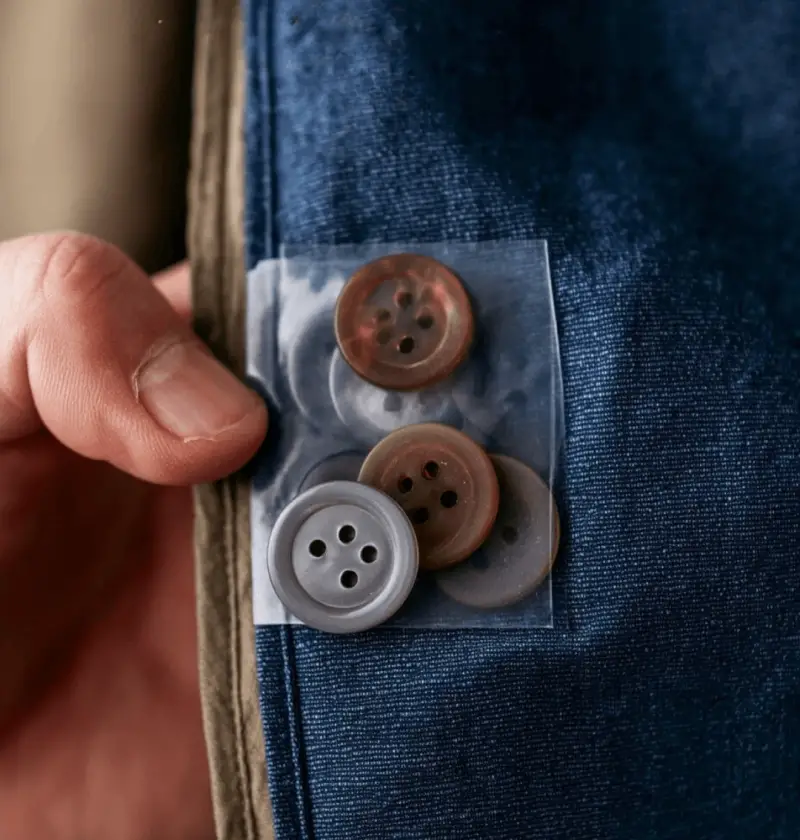
Have you ever pulled a new jacket out of the closet, slipped it on, and noticed a tiny plastic bag tucked into the lining—or maybe a neatly sewn little pouch hiding near a seam? Inside, a few spare buttons. Most people glance at them once and move on.
Honestly, that’s a mistake.
Those extra buttons aren’t random. They’re not there “just in case” in some vague, half-hearted way. They’re leftovers from a long, thoughtful tradition—one that says more about clothing quality, care, and even sustainability than most of us realize.
Let me explain.
That Old-School Tailoring Habit Still Hanging On
Long before clothing racks and size labels, garments were made one person at a time. Tailors measured, cut, stitched, and finished every piece with intention. And part of that care included spare buttons.
Buttons were practical, yes—but also precious. If one popped off, you didn’t toss the coat. You fixed it. Spare buttons meant the garment could keep doing its job for years.
That habit carried over into ready-to-wear clothing as a quiet signal of craftsmanship. Even today, when you find extras tucked inside a shirt or coat, it’s a small nod to that Slower, more careful way of dressing.
A Repair Kit You Didn’t Know You Owned
Here’s the thing—those buttons are a built-in fix waiting patiently for the day something goes wrong. And something always does.
A button loosens after one too many washes. A cuff button vanishes somewhere between the dryer and the sock void. When that happens, having the exact replacement—same size, same color, same finish—feels almost magical.
No searching. No settling. No mismatched stand-ins that quietly ruin the look.
Why Matching Matters More Than You Think
Buttons aren’t as interchangeable as they look. Colors shift. Materials change. Finishes dull or shine differently depending on the year, the supplier, or the trend cycle.
That’s why tossing spare buttons is such a loss. A matching button five years later? Nearly impossible. Manufacturers move on, dyes change, styles rotate.
Those little extras are your garment’s insurance policy.
A Quiet Clue About Quality
If you want a quick read on a piece of clothing, check the spare buttons.
Well-made garments usually include extras that feel just like the originals—same weight, same material, same finish. Cheaper pieces might toss in a flimsy plastic version instead, or skip extras entirely.
It’s subtle, but telling. Attention to buttons often mirrors attention everywhere else.
There’s a System to Those Extras
Ever notice that some garments include more than one type of spare button? That’s not overkill.
Larger buttons are meant for main closures. Smaller ones are reserved for cuffs, collars, or interior tabs. Once you recognize that, repairs feel less like guesswork and more like second nature.
It’s practical design, quietly doing its job.
Buttons as Emergency Problem-Solvers
You know what? Spare buttons are travel gold.
A single button, a needle, and a few minutes can save you from an awkward meeting, a dinner out, or a long day spent tugging at your clothes. Some folks even keep one or two in a wallet or cosmetic bag, just in case.
I’ve seen people use them as temporary cufflinks, zipper pulls, even quick fixes for handbags. Resourceful? Absolutely.
Laundry Mishaps Happen—Buttons Help
Dryers are rough. Dry cleaners make mistakes. Shirts come back missing pieces.
That doesn’t mean the garment is done for.
Having the original spare button can turn a frustrating moment into a five-minute fix. And saving a favorite piece from the donation pile feels quietly satisfying, doesn’t it?
A Small Way to Refresh Your Style
Here’s a fun twist: spare buttons can also spark creativity.
Switching buttons—even just on a jacket or cardigan—can change the entire feel of a piece. Classic becomes playful. Plain becomes personal.
It’s an easy way to update what you already own without buying something new. And that kind of mindful refresh never goes out of style.
Why Travelers Swear by Them
Seasoned travelers know better than to leave small details to chance. A loose button on the road is more than an annoyance—it’s a distraction.
Keeping spare buttons (and a tiny sewing kit) means you stay polished, calm, and prepared. No scrambling. No stress.
Just quiet competence.
The Sustainability Piece We Don’t Talk About Enough
Repairing clothes instead of replacing them matters. A lot.
Spare buttons encourage that habit. They make repair easier, more accessible, and less intimidating. Every fixed button is one less item tossed aside, one small push against fast fashion waste.
It’s not flashy—but it counts.
Why Their Absence Can Be a Warning Sign
Not every garment includes spare buttons. That’s true.
But when a jacket or shirt skips them entirely, especially at a higher price point, it’s worth noticing. Sometimes it signals rushed production or trimmed corners.
Quality often shows up in the small, thoughtful details.
Store Them So You’ll Actually Use Them
Here’s the practical part most people skip.
Keep spare buttons labeled. A small envelope, a zip pouch, even a handwritten note with the garment name works. Some people sew them into a little interior pocket so they’re always right there.
When the moment comes—and it will—you’ll be glad you did.
Sometimes, the smallest things tell the biggest stories. Spare buttons are one of those details. Quiet, practical, and oddly comforting, they remind us that clothes were once meant to last—and still can, if we let them.
And honestly? That’s a tradition worth keeping.