
Save This Recipe
Honestly, it’s one of those tiny kitchen annoyances that feels harmless until it isn’t. Grease burns sting. Cleanup takes forever. And nobody wants their favorite skillet looking like a crime scene before 9 a.m. So what’s actually going on in that pan? And more importantly, how do you keep the mess under control without giving up crispy bacon?
Let me explain.
The Real Reason Bacon Acts Like Fireworks
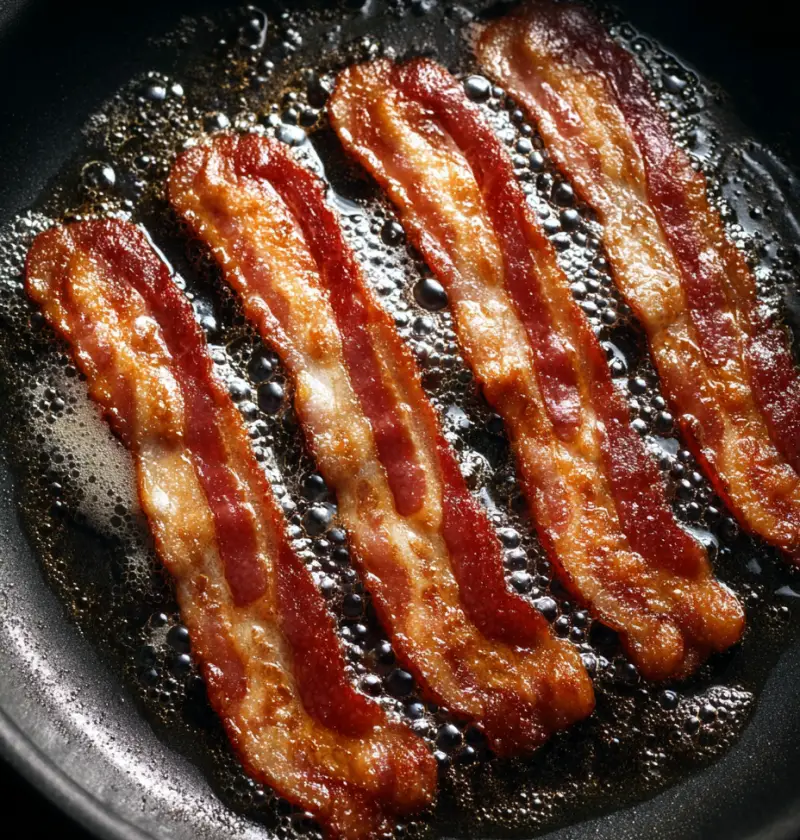
At its core, bacon popping is a simple physics problem wearing a greasy disguise. Bacon contains fat, protein, and small pockets of water tucked inside the meat. As the pan heats up, the fat starts to melt and pool. Meanwhile, the water heats, turns into steam, and tries to escape.
Here’s the tricky part. Water and oil don’t mix. So when steam gets trapped under hot fat, pressure builds until it finally breaks through. That release is the pop you hear, and the tiny grease droplets flying through the air are the mess you wipe later.
It’s not personal. It’s science doing its thing, just a little louder than necessary.
Moisture Is the Sneaky Trouble-Maker
If bacon had a nemesis, it would be excess water.
Sometimes the pan still has a few invisible droplets from washing. Sometimes the bacon itself carries moisture from packaging, thawing, or curing. Either way, once that water meets hot fat, it turns into steam almost instantly. Steam expands fast. The grease reacts even faster.
A quick wipe of the pan with a paper towel sounds boring, but it prevents a lot of drama. Same goes for patting bacon dry. Small habits, big payoff.
You know what? It’s like walking across an icy sidewalk. One tiny slick spot can ruin the whole trip.
Brine, Ice Crystals, and Store-Bought Realities
Many grocery-store bacons are cured in salty liquid to improve flavor and shelf life. That means extra water hiding inside the meat. When it hits heat, the water rushes out as steam and sends grease flying.
Frozen bacon adds another layer. Ice crystals melt into water before cooking even really begins. If you’ve ever tossed partially frozen strips into a pan and wondered why it sounded like popcorn night, that’s your answer.
Thaw fully. Pat dry. It’s not glamorous kitchen work, but it keeps your sleeves clean.
Cold Pan vs Hot Pan: The Slow-and-Steady Argument
Some cooks swear by preheating everything. Bacon quietly disagrees.
Starting bacon in a cold pan allows the fat to melt gradually. The water escapes more gently instead of exploding into steam bursts. The result is steadier sizzling, less spatter, and evenly cooked strips.
Dropping bacon into a blazing pan creates instant temperature shock. The water flashes into steam immediately, and the grease reacts like it’s under attack. More popping, more mess.
It’s one of those moments where patience actually pays off.
When Bacon Strips Cram Each Other
Crowding the pan feels efficient. More bacon at once, faster breakfast, right? Not quite.
Overlapping strips trap moisture between layers. Steam gets boxed in with nowhere to go. When it finally escapes, it pushes grease outward with extra force.
Give each strip a little breathing room. If the pan’s small, cook in batches. It takes a few more minutes, sure, but your stovetop will thank you later.
Your Pan Has a Personality (Really)
Different pans behave differently under heat.
Cast iron and stainless steel distribute heat more evenly, which keeps hot spots from triggering sudden bursts of steam. They’re sturdy, predictable, and forgiving once you learn their rhythm.
Nonstick pans can heat quickly and unevenly if pushed too hard. That can increase popping when moisture meets sudden high heat. They’re convenient, just not always the calmest partners for bacon.
Pans with higher sides also help contain stray splatter. Sometimes the solution isn’t technique. It’s simply better gear.
Extra Oil Is Usually a Bad Idea
It’s tempting to add butter or oil so nothing sticks. Bacon already has plenty of fat waiting to melt. Adding more just increases the volume of hot liquid in the pan, which raises the chance of splatter once moisture enters the mix.
Let the bacon handle its own grease. It doesn’t need backup.
This one surprises a lot of people. More fat feels like more control, but it often creates the opposite effect.
Heat Settings: Finding the Calm Zone
High heat feels productive. Things cook faster, right? With bacon, high heat often means louder popping, uneven browning, and occasional smoke.
Medium or medium-low heat allows fat to render steadily while moisture escapes without drama. It takes a bit longer, but the bacon cooks evenly and behaves itself.
Think of it like traffic flow. Smooth pacing beats sudden acceleration every time.
Tiny Prep Habits That Make a Huge Difference
A few small steps can dramatically reduce splatter:
- Pat bacon dry before cooking
- Start with a clean, dry pan
- Avoid overcrowding
- Use moderate heat
- Skip extra oil
None of these steps feel groundbreaking. But stacked together, they create a calmer cooking experience. It’s the quiet consistency that makes mornings easier.
Oven Bacon: The Method Everyone Keeps Talking About
If stovetop splatter drives you nuts, oven bacon might become your new favorite trick.
Lay bacon on a rack over a baking sheet so grease drips away as it cooks. Heat circulates evenly, and there’s far less popping. Cleanup is simple, and the bacon crisps beautifully.
Set the oven around 400°F and check after 15 to 20 minutes, depending on thickness and preference. It’s hands-off, predictable, and surprisingly satisfying.
Honestly, once people try this, many never go back.
Social Media Hacks: Fun, But Choose Wisely
Platforms like TikTok love kitchen experiments. Some of them actually work.
A small splash of water in the pan at the beginning can help render fat slowly before evaporating. Using parchment or a wire rack reduces grease contact. Both approaches have merit if done carefully.
Not every viral trick deserves a permanent spot in your routine, though. If something feels risky or messy, trust your instincts.
Tools That Actually Help
A simple splatter screen can change your cooking life. It lets steam escape while blocking grease droplets. Lids partially covering the pan work too, though they trap more moisture.
If bacon shows up often on your menu, these tools earn their drawer space fast.
Clean Pan, Better Next Time
Leftover grease, crumbs, and moisture from previous cooking sessions can trigger popping the next time you heat the pan. A thorough wash and full drying cycle prevent surprise splatter later.
It’s like resetting the stage before the next performance. A clean start keeps things predictable.
When Popping Becomes a Safety Signal
Some popping is normal. Excessive popping paired with smoke or burning smells is not.
That’s your cue to lower the heat and assess what’s happening. Overheated grease can become a fire risk if ignored. Keeping a fire extinguisher accessible in the kitchen is smart, even if you never need it.
Better safe than scrambling.
A Quieter, Happier Bacon Routine
Bacon doesn’t have to feel like a kitchen battle. Once you understand how water, fat, heat, and space interact, the behavior starts making sense. A few habit tweaks, a little patience, and maybe a splatter screen turn chaos into calm.
And honestly? When the bacon behaves, the morning feels smoother. Less mess. Fewer burns. More time to enjoy that first cup of coffee while the kitchen smells exactly the way it should.
Now that’s a breakfast win.