
Save This Recipe
You crack open an egg expecting that clean, smooth shell—simple, reliable, kind of reassuring. And then… you notice it.
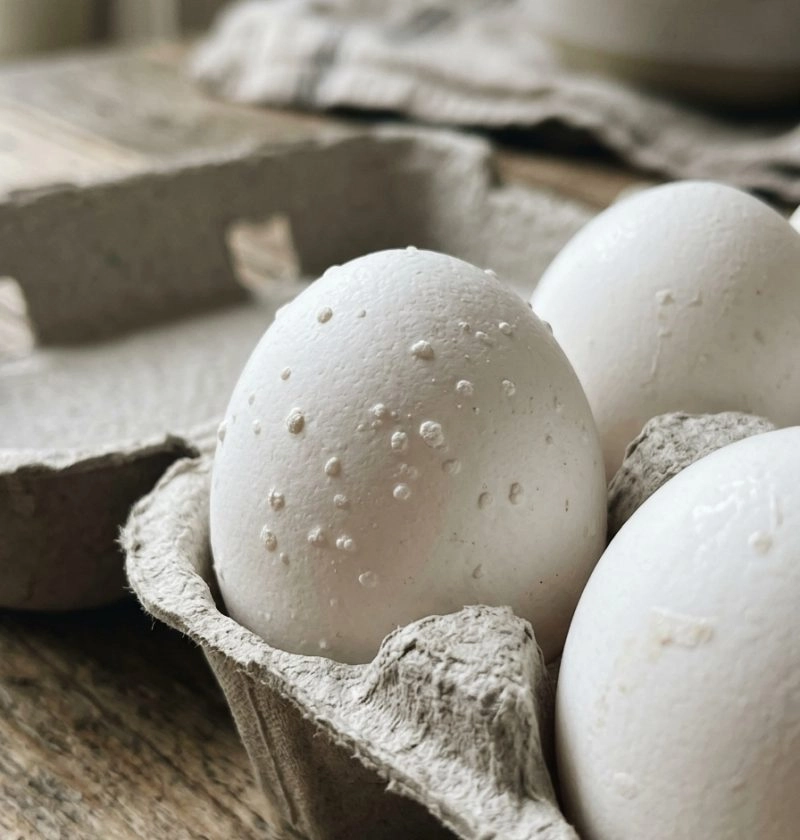
Tiny rough bumps. Chalky. Uneven. Almost like someone sprinkled grit onto the shell while it was still wet.
If you keep chickens, this moment is surprisingly common. Still, it can feel a little unsettling. Did something go wrong? Is it safe? Is your hen trying to tell you something?
Here’s the thing: eggshells are more like a report card than we realize. They quietly reflect what’s happening inside your hen’s body—her diet, her stress levels, even her age. So when the surface changes, there’s usually a reason.
Let’s break it down in plain terms.
So… What Are Those Rough White Bumps?
Most of the time, those bumps are simply extra calcium deposits.
Nothing mysterious. Nothing dangerous.
As the egg forms inside the hen, calcium is layered onto the shell in a controlled process. But sometimes—just sometimes—that process gets a little uneven. Instead of laying down a perfectly smooth surface, the hen’s body leaves behind tiny clusters of calcium.
That’s what you’re seeing.
They can look like:
- Small pimples scattered across the shell
- Thick patches in one spot
- A slightly gritty or sandpaper-like texture
And yes—they’re usually harmless.
When “Too Much of a Good Thing” Shows Up on the Shell
Calcium is essential. No calcium, no shell. Simple as that.
But here’s where it gets a bit counterintuitive: too much calcium can also cause problems.
A laying hen typically needs around 4 grams of calcium per day. Most balanced layer feeds already account for this. But if you’re also offering extras—like oyster shells, limestone, or calcium-heavy scraps—it can tip the balance.
When that happens, the hen’s body doesn’t always distribute the excess evenly. Instead, it deposits it where it can… which sometimes means right onto the shell in little clusters.
Think of it like over-salting a soup. A pinch? Perfect. Too much? You notice it immediately.
Those Tiny “Eggshell Pimples”? Often Totally Normal
Here’s the reassuring part: not every bump means something’s wrong.
In fact, occasional imperfections are just part of egg-laying.
You might see them more when:
- A young hen has just started laying
- A hen is adjusting after a diet change
- There’s been mild stress (heat, noise, new flock members)
The body isn’t a machine—it fluctuates. A little inconsistency here and there is normal.
If the eggs look fine otherwise and your hens are active, eating well, and behaving normally… you’re likely in the clear.
The Sneaky Nutrition Mistakes That Cause Buildup
This is where things get interesting.
It’s not always about too much calcium—it’s often about imbalance.
For calcium to be properly used, hens also need:
- Phosphorus
- Vitamin D3
Without those, calcium doesn’t get absorbed efficiently. And when it isn’t absorbed? It ends up in the wrong places—like those rough patches on eggshells.
Common slip-ups include:
- Free-feeding calcium supplements without monitoring intake
- Using feed not formulated for laying hens
- Forgetting that sunlight (or lack of it) affects vitamin D levels
It’s a bit like building a house. You can have all the bricks in the world, but if the mortar’s off, things won’t hold together properly.
When the Egg Is Hinting at a Health Issue
Now, occasionally—rarely, but worth mentioning—bumpy shells can signal something deeper.
Certain illnesses can interfere with shell formation, such as:
- Infectious bronchitis
- Egg Drop Syndrome
In those cases, the bumps usually aren’t the only sign.
You might also notice:
- A drop in egg production
- Thin or misshapen shells
- Lethargy or changes in behavior
If multiple hens are affected at once, or the problem appears suddenly and consistently, it’s time to look closer.
Age, Breed, and… Just Chicken Being Chicken
Some factors are simply out of your control.
Older hens, for example, don’t absorb calcium as efficiently. Their eggs may become thinner—or occasionally uneven in texture.
Younger hens, on the other hand, are still “figuring things out.” Their early eggs can be a bit… experimental.
Breed plays a role too. High-production breeds sometimes push their systems hard, which can lead to occasional irregularities.
And then there’s the environment:
- Heat waves
- Sudden cold snaps
- Changes in coop conditions
Chickens are sensitive. Even small shifts can show up in their eggs.
Could It Be Dirt or Mold Instead?
It’s possible—but not common.
Surface contamination (like dried mud or coop debris) can sometimes look like bumps, but it usually rubs off easily.
Mold is rare on freshly laid eggs, especially if you’re collecting regularly and keeping nesting boxes clean.
If the texture feels part of the shell rather than sitting on top of it, you’re almost certainly dealing with calcium deposits—not contamination.
Are Bumpy Eggs Safe to Eat?
Short answer: yes—almost always.
As long as:
- The shell isn’t cracked
- There’s no foul smell
- The inside looks normal
You’re good to go.
If you want a quick check, try the float test:
- Sinks and lies flat → fresh
- Stands upright → older, but still usable
- Floats → discard
Honestly, once cracked open, a normal-looking yolk and clear white are all the confirmation most people need.
Simple Fixes That Actually Work
If the bumps are happening often, a few small tweaks can make a big difference:
- Recheck your feed — make sure it’s formulated for layers
- Limit extra calcium — offer oyster shells, but don’t overdo it
- Support balance — ensure access to sunlight or vitamin D
- Keep things calm — reduce stress in the coop
- Clean nesting boxes regularly — always worth it
You don’t need a complete overhaul. Usually, it’s just a matter of fine-tuning.
When It’s Time to Pay Closer Attention
Most of the time, you can shrug it off and move on.
But keep an eye out if:
- Nearly every egg is affected
- The texture becomes extreme or unusual
- Other abnormalities appear (soft shells, odd shapes)
- Your hens seem off
Patterns matter more than one-off eggs.
If something feels consistently wrong, getting a vet involved is a smart move—not overreacting.
Watching the Eggs (Because They Tell You a Lot)
Here’s a simple habit that pays off: pay attention to your eggs over time.
You don’t need spreadsheets. Just notice:
- Changes in texture
- Color shifts
- Frequency of irregular eggs
Eggs are quiet indicators. They don’t shout—but they do signal.
And once you get used to reading them, you start spotting issues early, before they become bigger problems.
Final Thought (Because This Always Comes Up)
It’s easy to worry when something looks “off,” especially with food.
But in this case? Those rough little bumps are usually just a sign that your hens are doing their thing—sometimes a little imperfectly, but still perfectly fine.
A bit like home cooking, honestly. Not always flawless, but still good. Often better, even.